Solid wood for furniture: is it really worth it for everyday homes?
If you’ve been living with furniture that wobbles, chips, or looks tired far too quickly, it’s normal to start wondering whether solid wood for furniture is the upgrade that actually lasts. The sticking point is usually the same: solid wood costs more, and you want to know what you’re paying for—strength, beauty, longevity, or just a “nice idea” on a product description.
Here’s the practical truth: solid wood can be a brilliant choice for real homes (kids, pets, dinner parties, working-from-home), but it isn’t magic. The difference comes down to how it’s made, the type of timber, and whether the piece is designed for the way you live. This guide will help you compare materials clearly, know what to look for, and choose confidently—especially if you’re considering a dining table, where everyday wear really shows.
What “solid wood” actually means (and what it doesn’t)
“Solid wood” should mean the main structural parts of the furniture are made from real timber—planks or boards—rather than a man-made core. That matters because it behaves differently over time and generally has a more substantial feel.
A few helpful distinctions when you’re browsing product pages:
- Solid wood: the top and/or frame is timber all the way through. You’ll usually see natural grain variation and a bit of depth to the surface.
- Veneer: a thin layer of real wood bonded to a core (often MDF or particleboard). Veneer can look lovely, and it can be stable, but it’s more vulnerable to edge damage and can be harder to repair if it chips or lifts.
- MDF/particleboard: engineered boards made from fibres or chips. These can work for certain uses, but they’re often the reason flat-pack pieces feel temporary—especially in high-impact areas.
One important nuance: solid wood furniture can still include sensible engineered elements (for example, drawer bases) without that being a “bad” thing. The bigger question is whether the parts that take the daily strain—legs, rails, table tops—are made to last.
If you’re buying a dining table, focus on what you touch and use: the top, the underframe, the joints, and the finish.
Why solid wood for furniture tends to feel stronger (especially for dining tables)
Dining tables have a hard life. They’re leaned on, dragged, cleaned, knocked, and asked to handle everything from hot plates to homework sessions.
Solid wood tends to win here for a few reasons:
- Structural integrity: A well-made solid wood table frame can feel noticeably sturdier because the joints and rails have real material to bite into.
- Weight and stability: Solid timber often adds reassuring weight, which helps reduce wobble (though design and joinery matter just as much).
- Repairability: Everyday marks are part of living. Solid wood is often easier to refresh over time—light sanding, re-oiling, or refinishing—depending on the finish.
Real-world example: if you host friends often, a solid wood dining table can cope better with frequent chair movement and the constant wiping-down that quickly makes cheaper surfaces look cloudy or tired.
That said, strength isn’t only about material. A thin solid wood top with weak joints won’t outperform a well-engineered piece. Which leads to the most useful part: what to check before you buy.
What to look for before buying: the quick checklist that avoids regret
If you’re trying to avoid the cycle of replacing furniture every few years, these are the details that make a bigger difference than buzzwords.
1) Joinery and underframe support
Look for a solid, well-braced underframe (especially on longer tables). A table can be solid wood and still flex if it’s poorly supported.
2) Thickness and proportions
A dining table should feel balanced—top thickness that suits the size, legs that look (and feel) capable, and rails that don’t seem flimsy. If a table looks spindly in photos, it often feels that way in real life.
3) The finish (this affects maintenance more than the species)
- Oil/wax finishes tend to feel natural and are often easier to refresh, but they may need occasional reapplication.
- Lacquered/varnished finishes can be more resistant to day-to-day spills, but deep damage can be harder to disguise.
4) Sensible movement is normal
Solid timber expands and contracts slightly with seasonal humidity. Good furniture is designed to accommodate this rather than fight it. Don’t expect “never changes”—expect “built to handle change”.
5) Clear, honest material descriptions
If a product listing says “solid wood” but avoids stating which parts are solid, it’s worth asking. Transparent brands will tell you what you’re buying.
If you’re comparing different wood types for furniture, use this checklist first—then choose the timber that fits your style and lifestyle.
Best timber for furniture: how to compare wood types without overthinking it
The “best timber for furniture” depends on what you need the piece to do and how you want it to feel in your home.
A simple way to compare wood types for furniture is to think in three buckets:
1) Hardness and dent resistance
Harder woods tend to show fewer dents over time, but all real timber can mark (and that’s often part of the charm). If you’ve got young kids, you might prefer a wood and finish combination that disguises minor scuffs rather than highlighting them.
2) Grain character
- Some timbers have a calmer, more uniform look.
- Others have pronounced grain, colour variation, and figuring that adds depth.
If you like warm, organic interiors—Japandi, rustic modern, or mid-century-inspired spaces—more characterful grain can make a room feel instantly more layered.
3) Colour and how it sits with your palette
Think about what’s already in your home: flooring undertones, wall colour, and textiles. Warm-toned woods can soften cooler schemes; paler woods can brighten darker rooms.
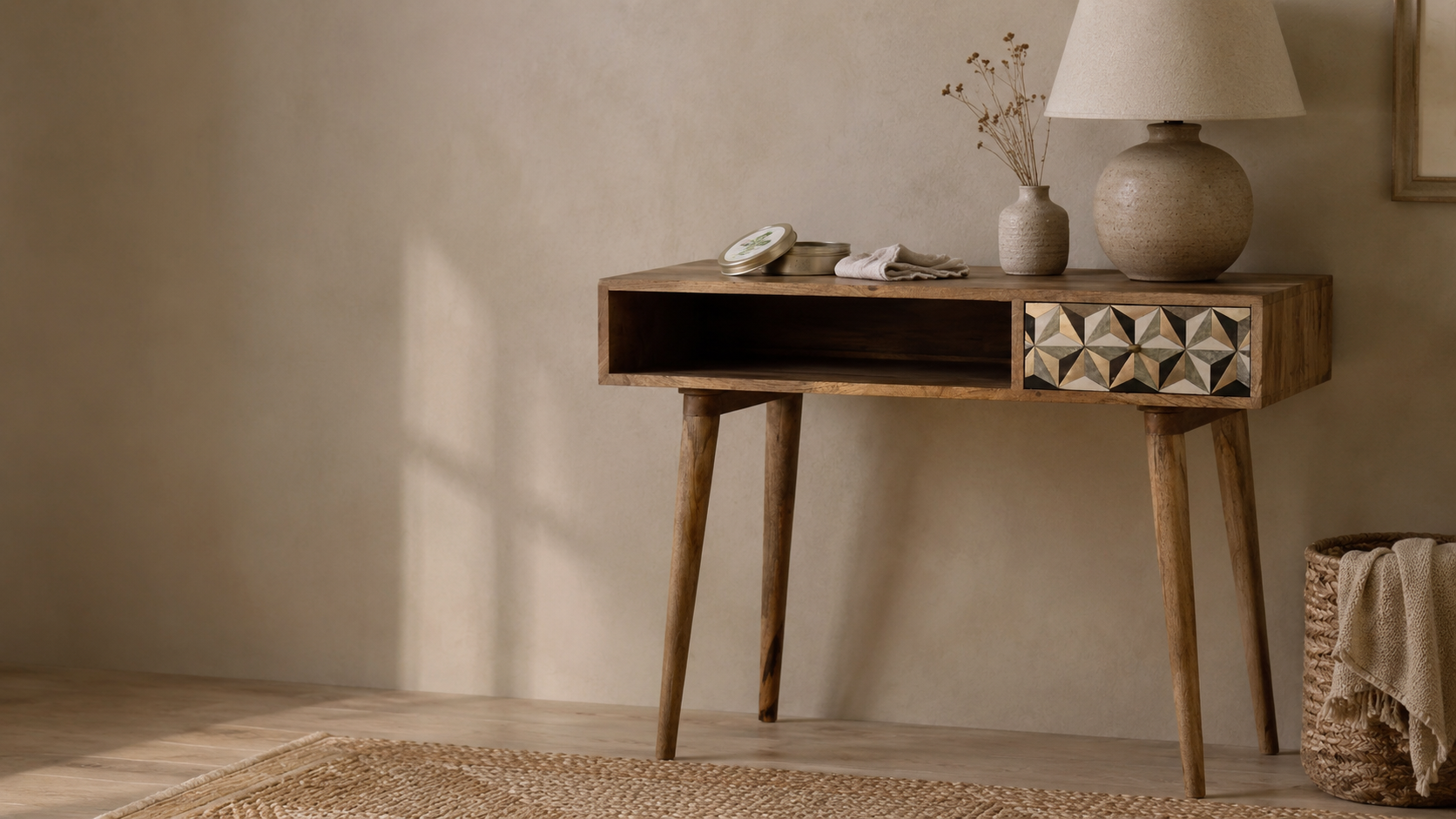
Where solid mango wood fits in: it’s known for a naturally warm tone and visible grain that adds life to a piece without feeling shouty. In dining rooms and open-plan spaces, that warmth can help the room feel more settled and “finished”—especially if you’re mixing modern lines with natural materials.
Rather than chasing an abstract “best”, aim for the wood that suits your home’s light, your existing finishes, and how relaxed you want the piece to feel.
Solid wood vs veneer vs MDF: which one suits your lifestyle?
If you’re deciding what’s right for your home, it helps to be honest about how the furniture will be used.
Solid wood tends to suit you if:
- You want something you can live with for years, not treat delicately.
- You like natural variation and a less “printed” look.
- You’d value being able to refresh the surface later.
Veneer can suit you if:
- You want a consistent, clean look with real-wood appearance.
- The piece won’t take heavy daily wear (or you’re happy to be a bit careful).
- You prefer lighter-weight furniture.
MDF/particleboard might be fine if:
- The piece is temporary (first flat, short lease, spare room).
- It won’t be moved much, and it won’t be exposed to knocks or moisture.
A realistic example: for a dining table in a busy kitchen-diner, solid wood usually offers the most peace of mind. For a sideboard in a low-traffic room, veneer might be perfectly workable if it’s well made.
The main risk with cheaper boards is that once edges swell, coatings chip, or fixings loosen, there’s often no satisfying way back. That’s usually the moment people start looking for solid wood for furniture in the first place.
How to style a solid wood dining table so it feels modern (not heavy)
One worry people have is that solid wood will feel bulky or too rustic. In reality, it’s all about pairing and proportions.
Keep the chairs visually lighter
A solid wood table with slimmer, shaped chairs can feel very Scandinavian or mid-century. If you love a calmer look, choose chairs in lighter tones, textured fabric, or simple black frames.
Use contrast to make the grain feel intentional
- Warm wood + soft whites and stone tones = organic modern.
- Warm wood + charcoal/black accents = more grown-up and graphic.
- Warm wood + muted greens/clays = relaxed, earthy, and inviting.
Add one “softening” element
A linen runner, a low ceramic centrepiece, or a simple pendant light stops the table feeling like a block and makes it feel lived-in.
Think about everyday practicality
If your table is the family landing zone (keys, post, laptops), add a tray or catch-all bowl. It protects the surface and makes the space feel styled rather than cluttered.
Solid wood works particularly well in open-plan homes because it adds warmth and anchors the dining area—especially if the rest of the space leans minimal.
Conclusion
If you’re weighing up whether solid wood for furniture is right for your home, the most helpful question isn’t “Is it better?”—it’s “Will it suit the way we actually live?” For dining tables especially, solid wood can offer the sturdiness, warmth, and long-term value that cheaper materials struggle to match, with the added bonus of natural grain that makes a room feel more considered.
If you’re ready to browse pieces designed for everyday use, explore our handcrafted solid mango wood furniture collection—starting with our dining tables.