Small Living Room Furniture Arrangement Ideas That Feel Calm, Functional, and Grown-Up
If your living room feels like it’s always one extra chair away from chaos, you’re not alone. The toughest part isn’t decorating—it’s creating a layout that supports real life (lounging, hosting, kids’ toys, work-from-home moments) without the space looking crowded or feeling hard to move through. The good news: a few smart decisions can make even a tight room feel intentional. These small living room furniture arrangement ideas focus on traffic flow, scale, and choosing fewer, better pieces so the room feels calm, functional, and warm.
Start with the “paths,” not the sofa
Most small-space frustrations come down to circulation. Before you decide where the couch goes, decide where people need to walk.
A practical rule: aim for a clear path of about 30–36 inches through main walkways when possible. If your room is very tight, even 24–30 inches can work—just keep it consistent.
Try this quick layout exercise:
- Mark the entry point(s): doorway, hallway opening, and any route to the kitchen or patio.
- Identify the “no-block” lane: the most-used path that should stay clear.
- Then place furniture to protect the path—not the other way around.
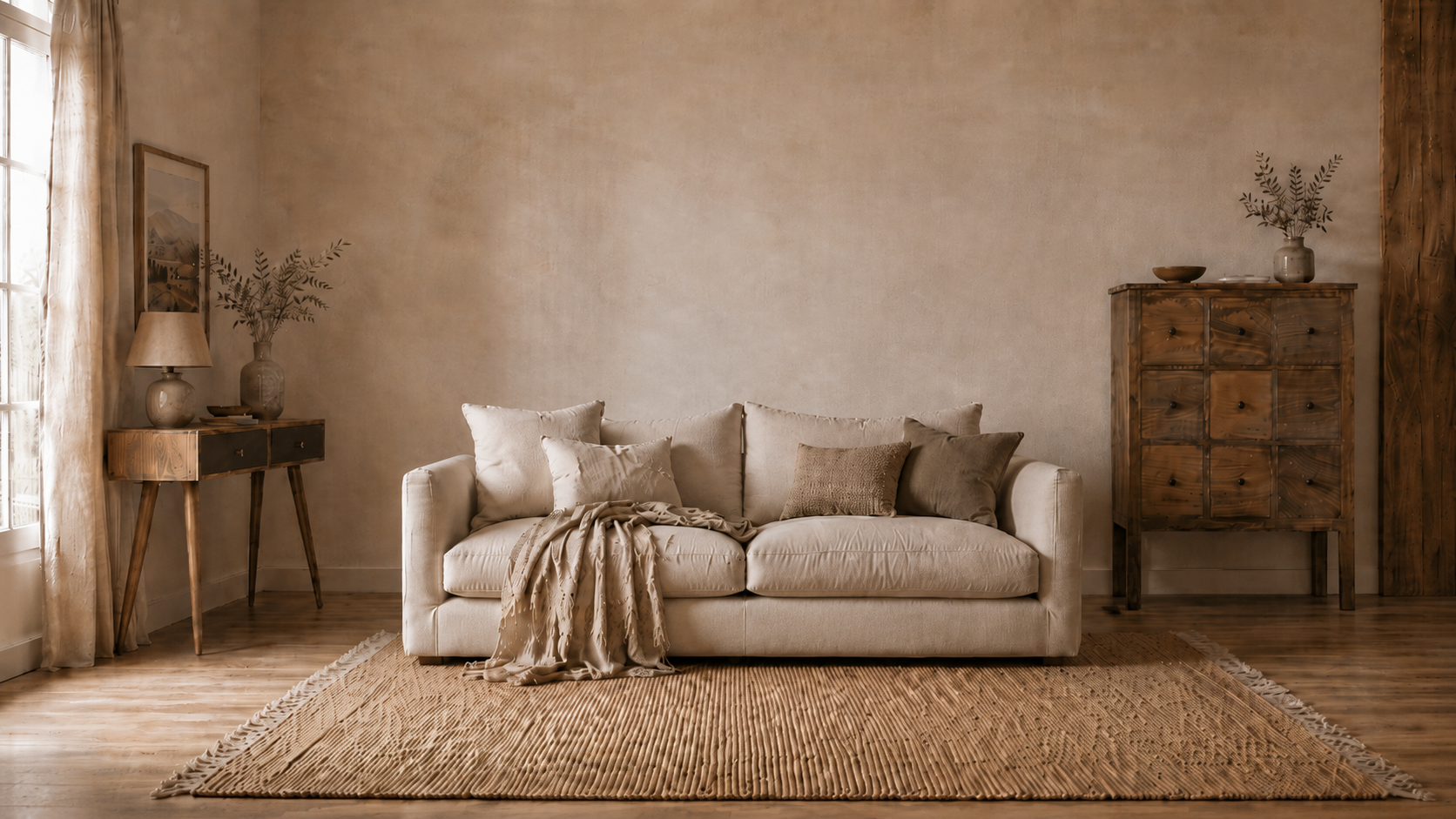
Real-world example: In an apartment living room where the front door opens into the space, it often works better to float a compact sofa slightly away from the wall (even 4–8 inches) and keep one side open for a clean walk-in path. This can feel more spacious than pushing everything to the perimeter and creating pinch points.
Once paths are set, your layout decisions become simpler—and you’ll avoid buying pieces that technically fit, but make the room frustrating to use.
Small living room furniture arrangement ideas: 6 layouts that actually work
There’s no single “best” layout, but there are patterns that consistently make small rooms feel balanced. Use these as starting points, then adjust for your doors, windows, and TV placement.
1) Sofa + two flexible seats (the “soft U”)
- Place a sofa facing the focal point (TV, fireplace, or window).
- Add two lighter chairs or stools that can angle in.
- Keep the center open with a compact coffee table.
Why it works: you get conversational seating without committing to a bulky sectional.
2) L-shape without a sectional
- Use a sofa plus a small bench, settee, or armless chair to form an L.
- The “secondary” piece can tuck closer to the wall when not in use.
Why it works: you get the cozy feel of a sectional with more flexibility.
3) Float the sofa, anchor with a console
- Float a sofa with a narrow console table behind it.
- The console becomes a landing spot for lamps, baskets, or chargers.
Why it works: the room feels designed, and you gain function without adding visual clutter.
4) Two-seat focus (loveseat + chair)
- A loveseat plus one comfortable chair can outperform a too-big sofa.
- Add a side table between them for drinks and lighting.
Why it works: better proportions make everything look more premium.
5) Wall-to-wall media + compact seating
- If the TV is non-negotiable, keep the media piece low and streamlined.
- Pair with a smaller sofa and a nesting table set.
Why it works: you reduce bulky visual weight on the “screen wall.”
6) No coffee table (ottoman or two small tables instead)
- Skip the big rectangle that blocks movement.
- Use a small upholstered ottoman, a round pedestal table, or two pull-up tables.
Why it works: easier circulation, fewer shin bumps, and more adaptability for everyday life.
If you’re torn between layouts, choose the one that uses the fewest large pieces. In small space furniture arrangement, the fastest way to make a room feel calmer is to reduce the number of “big rectangles.”
Choose the right scale: the #1 reason small rooms feel cluttered
A small living room can handle substantial furniture—but only if the proportions are right. Many rooms feel crowded not because they have too much furniture, but because the furniture is too deep, too tall, or too visually heavy.
What to look for when buying:
- Sofa depth: Deep seats can be cozy, but they steal floor space quickly. If your room is narrow, consider a more streamlined depth and add comfort with pillows and a throw.
- Legs vs. skirt: Pieces with visible legs often feel lighter because you can see more floor. (Not a must, but a helpful trick.)
- Low profile: Lower-backed sofas and low media consoles keep sightlines open.
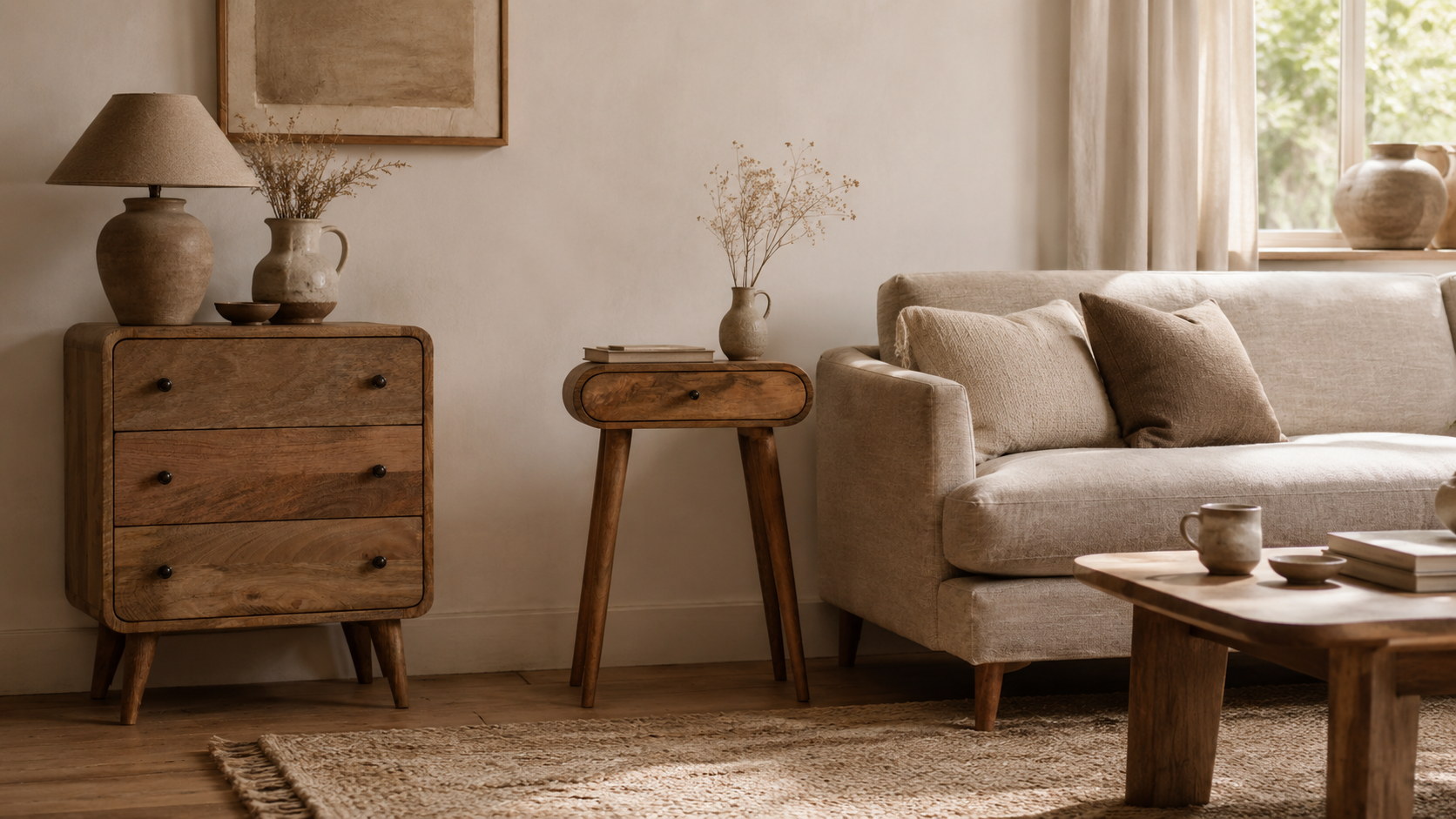
- Round and oval surfaces: A round coffee table or side table is a classic small-room fix—no sharp corners, easier flow.
A simple measuring method that prevents regret:
1) Tape the furniture footprint on the floor (painter’s tape works well).
2) Walk the room like you would on a normal day.
3) Open drawers/doors on nearby pieces (media storage, cabinets).
If you have to “shimmy” past the tape, the piece is likely too large—even if the measurements technically fit.
For compact living room furniture ideas, prioritize pieces that do double duty and feel substantial in material, not bulky in volume. Solid wood can be perfect here: it brings warmth and character without needing oversized shapes to feel grounded.
Pick versatile pieces that earn their footprint
In a small living room, every piece should solve a real problem: storage, seating, surfaces for everyday life, or visual calm.
High-impact, space-smart choices:
- A coffee table with storage (shelves or compartments) to corral remotes, board games, or kids’ items.
- A media console that’s wider than you think (within reason). A longer, low console can make the room feel more tailored and gives you closed storage—helpful for keeping a calm look.
- Nesting tables to pull out when guests come over, then tuck away.
- A compact cabinet or sideboard that replaces multiple smaller storage pieces.
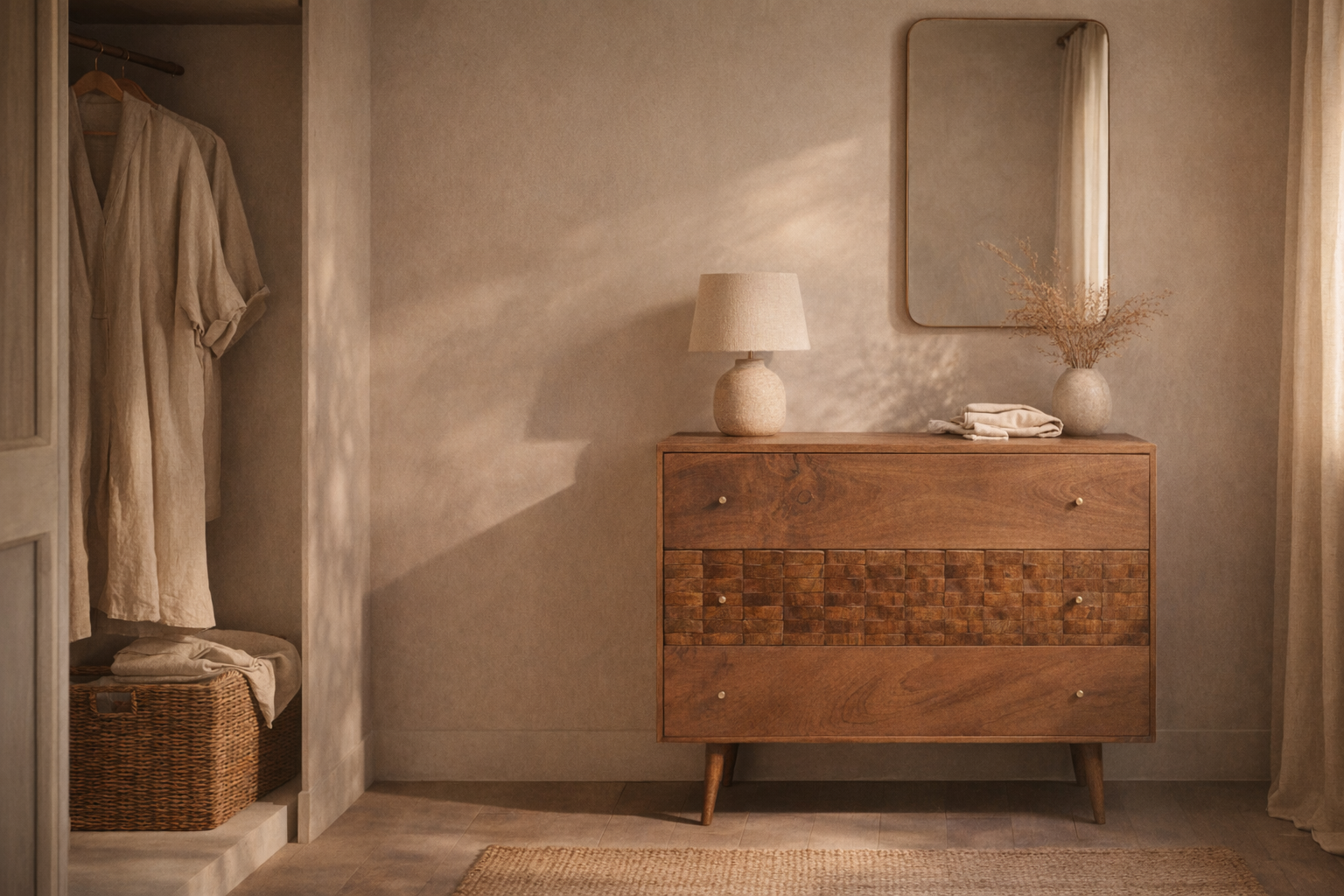
A note on materials: if you’re investing in fewer pieces, the material matters more. Handcrafted solid mango wood, for example, can bring a warm grain and a “lived-in” character that makes a small room feel layered and grown-up—without relying on lots of decor. It’s also a practical choice for daily use, where light bumps and constant handling are part of life.
Real-world example: In a family living room where toys tend to migrate, a closed-door cabinet can instantly make the room feel calmer at the end of the day—more than adding another basket ever will.
Anchor the room with a focal point (and keep it visually quiet)
Small rooms feel busy when your eye doesn’t know where to land. A focal point gives the space structure.
Common focal points:
- TV wall
- Fireplace
- A large window
- A statement piece of furniture (like a low, beautiful console)
Once you pick it, support it:
- Keep the main seating oriented toward the focal point.
- Use one larger rug (when possible) to unify the seating area.
- Limit the “competing zones.” If the living room is also a play space or work nook, define that zone with one clear element (a small desk, a cabinet, or a floor lamp), not multiple small pieces.
Styling that helps small rooms feel bigger:
- Use fewer, larger decor pieces instead of many small ones.
- Repeat one or two finishes (wood tone, black metal, warm neutral textiles) for cohesion.
- Leave some negative space on surfaces. A console or coffee table doesn’t need to be fully styled to look finished.
If you love natural wood tones, keep them consistent. Mango wood’s warm color can pair beautifully with creamy whites, oatmeal linen, matte black accents, muted greens, and soft clay tones—great for Japandi, Scandinavian, and organic modern interiors.
Make the “edges” work: corners, walls, and vertical space
Small rooms win or lose on edge management. If the perimeter is messy, the whole room feels smaller.
Use these edge strategies:
- Corners: A corner floor lamp or a compact accent chair can make a corner feel intentional. Avoid stuffing corners with random storage bins.
- Walls: Consider one substantial storage piece rather than several small, mismatched ones.
- Vertical space: If you’re short on storage, go up with shelving—but keep it edited. Open shelves look best when they’re not overfilled.
A helpful balancing trick: mix closed storage (to hide clutter) with open breathing room (to keep it light). If everything is open, the room can feel visually loud; if everything is closed and bulky, it can feel heavy.
Real-world example: In a narrow living room, a low media console with closed storage can replace a TV stand, a bookshelf, and two side tables—freeing up floor space and making the room feel calmer instantly.
Conclusion
The most effective small living room furniture arrangement ideas aren’t about squeezing in more—they’re about choosing a layout that protects movement, picking pieces scaled to your room, and investing in versatile furniture that earns its footprint. When the storage is thoughtful and the materials feel warm and substantial, a small space can look intentionally designed—not temporary.
If you’re ready to simplify your layout with fewer, better pieces, explore our handcrafted solid mango wood furniture collection for the living room.