How to Arrange Bedroom Furniture for a Calm, Functional Space
A bedroom can look “fine” and still feel off—tight walkways, a bed that’s awkwardly placed, nightstands you can’t actually use, or storage that crowds the room. If you’ve been staring at your space wondering how to arrange bedroom furniture so it feels calm and functional, you’re not alone. The good news: a few layout rules (plus the right-scale pieces) can make your room feel bigger, more restful, and easier to live in—without a full renovation.
Start with the non-negotiables: doors, windows, and daily pathways
Before you slide anything around, take two minutes to map what *cannot* move: where the door swings, where closet doors (or sliding doors) need clearance, and which windows you want to access for light and airflow.
A bedroom layout works best when you can move through it on autopilot—especially in the morning. As a baseline, aim for clear, comfortable walkways:
- About 24–30 inches for a primary walkway (bed to door, bed to bathroom, bed to closet).
- At least 18 inches in tighter spots (like the side you rarely use), though more is always nicer.
Real-world example: In many US homes, the path from the bed to a reach-in closet gets blocked by a dresser. If you’re forced to sidestep around furniture, the room will always feel smaller than it is. Often, swapping the dresser wall or choosing a lower, wider storage piece solves the problem without losing storage.
Tip: Use painter’s tape to outline your bed and key pieces on the floor. It’s the fastest way to “feel” the traffic flow before you commit.
How to arrange bedroom furniture around the bed (the anchor of the room)
The bed is your visual and functional anchor, so bed placement comes first. Most bedroom furniture arrangement problems trace back to a bed that’s floating in the wrong spot or squeezed into a corner that forces everything else to compromise.
The most reliable placement: center the bed on the main wall you see when you walk in (often the longest uninterrupted wall). This creates instant symmetry and makes it easier to place nightstands and lighting.
If that wall has a window, it can still work—especially with a sturdy headboard that sits just below the window trim, or with the bed centered under higher windows. What you want to avoid is blocking HVAC vents or making curtains impossible to use.
Aim for balanced breathing room:
- If possible, leave 24–30 inches on each side of the bed.
- If your room is tight, prioritize one “good” side (the side you use most) and keep the other side workable.
- Try to leave at least 36 inches at the foot of the bed if that’s a main path; 24 inches can work in a pinch.
Common layout fixes that actually help:
- If the bed is on a short wall and feels crowded, rotate it to the longer wall—even if it means rethinking where the dresser goes.
- If you’re tempted to push the bed into a corner to “save space,” check your routine: making the bed, changing sheets, and sharing the space becomes harder fast.
Because the bed is a long-term piece, it’s worth choosing one with a solid feel and timeless lines. In a warm, natural bedroom, a handcrafted solid mango wood bed can add visual weight and character without needing a lot of extra decor.
Nightstands: get the height, spacing, and surface area right
Nightstands are small, but they’re where functionality shows up every single day. Too low, too tiny, or too far from the mattress—and your bedroom never quite feels resolved.
Height rule of thumb: the top of your nightstand should land within 2 inches of the top of your mattress (or slightly higher). That keeps your phone, water, and book within easy reach.
Spacing: leave a small gap—1–3 inches—between the bed and the nightstand so it doesn’t look jammed in, but keep it close enough that you don’t have to reach.
Surface vs. storage:
- If you read in bed, you’ll want enough surface for a lamp plus a book.
- If you hate visual clutter, choose a nightstand with a drawer to hide chargers, hand cream, or tissues.
Real-world example: In a primary bedroom where one side of the bed is tight (because of a closet), use a slimmer nightstand on that side and a slightly wider one on the open side. Mismatched widths can still look intentional if the heights are similar and the finishes coordinate.
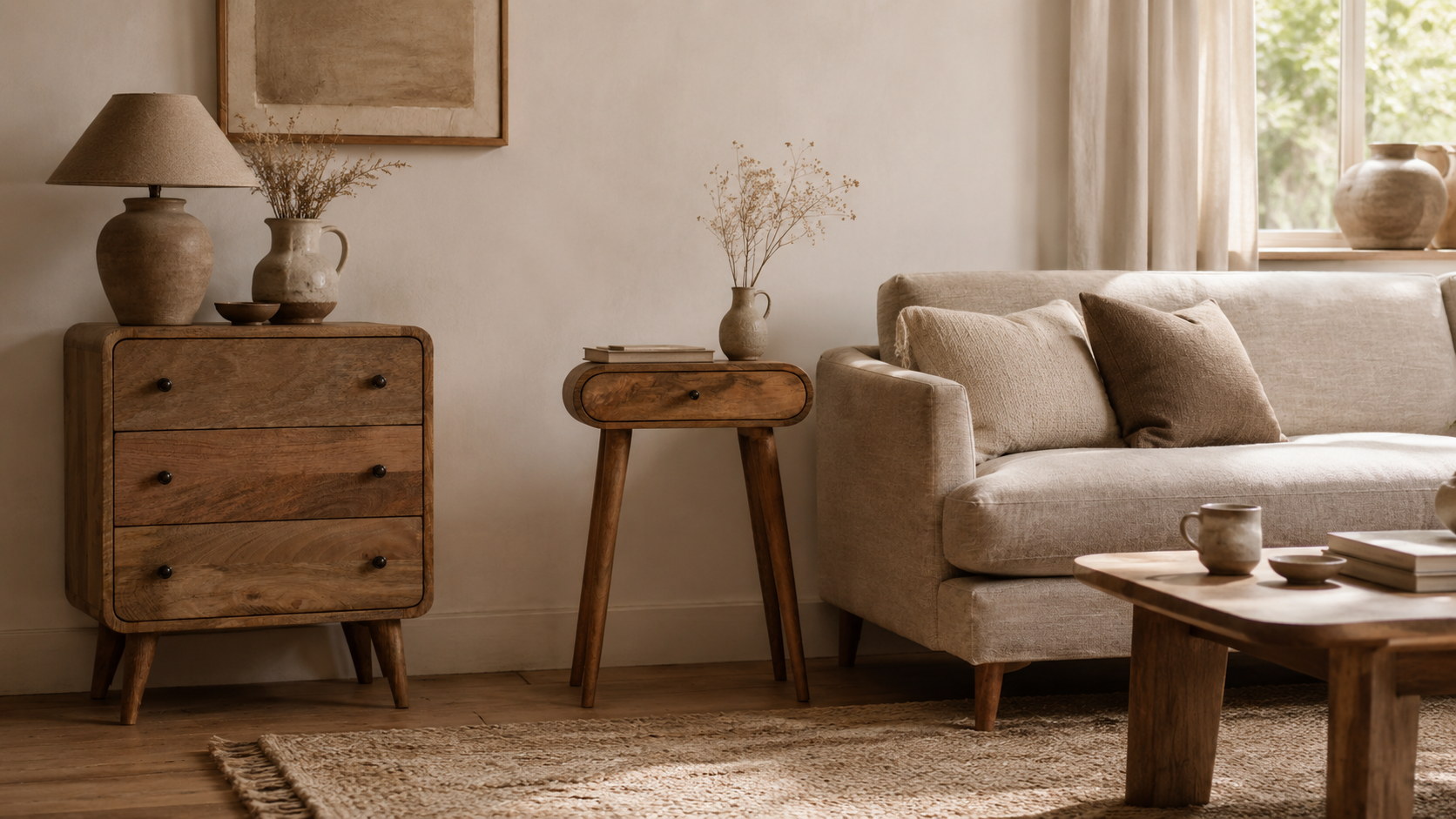
If you’re upgrading, start here: a pair of well-proportioned nightstands can make the whole room look more “grown-up,” even before you change anything else.
Dressers and bedroom storage: balance the room, don’t block it
Storage is essential, but bulky pieces in the wrong location are the #1 reason bedrooms feel cramped. The goal is to distribute visual weight and keep your access points clear.
Where a dresser usually works best:
- On the wall opposite the bed (especially if you also plan to mount a TV above it).
- On a long side wall if the foot-of-bed clearance is limited.
When to skip a tall dresser: If it blocks window light, crowds the closet path, or towers over smaller pieces, a lower, wider storage piece often feels calmer and more intentional.
A practical storage approach:
- Use your closet for hanging and seasonal items.
- Use a dresser for foldables and everyday essentials.
- Add a small cabinet or chest only if it has a clear job (extra linens, workout gear, baby supplies).
Bedroom layout tips for smaller rooms: consider pieces that do more than one job—like nightstands with drawers—so you can choose a slightly smaller dresser without losing function.
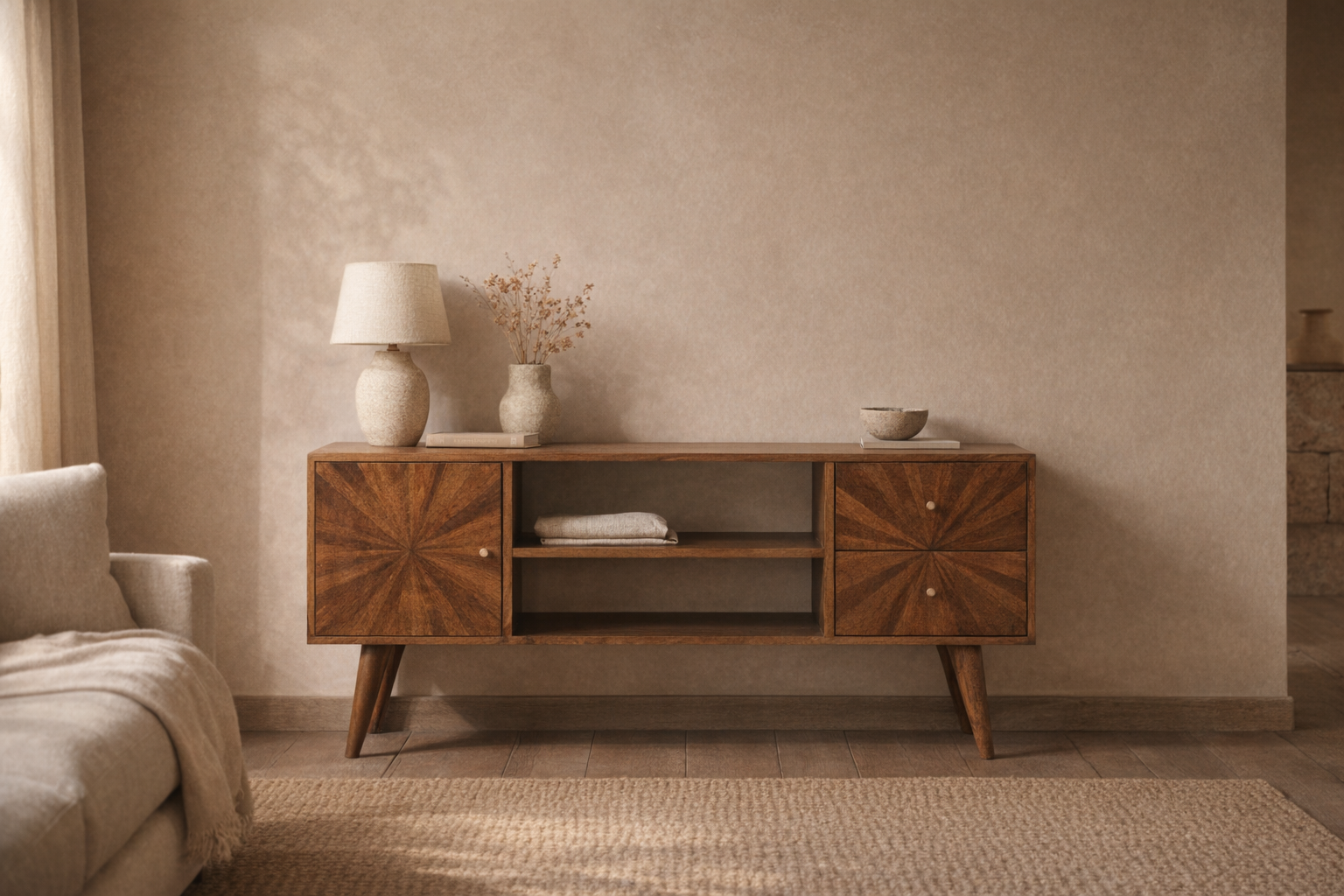
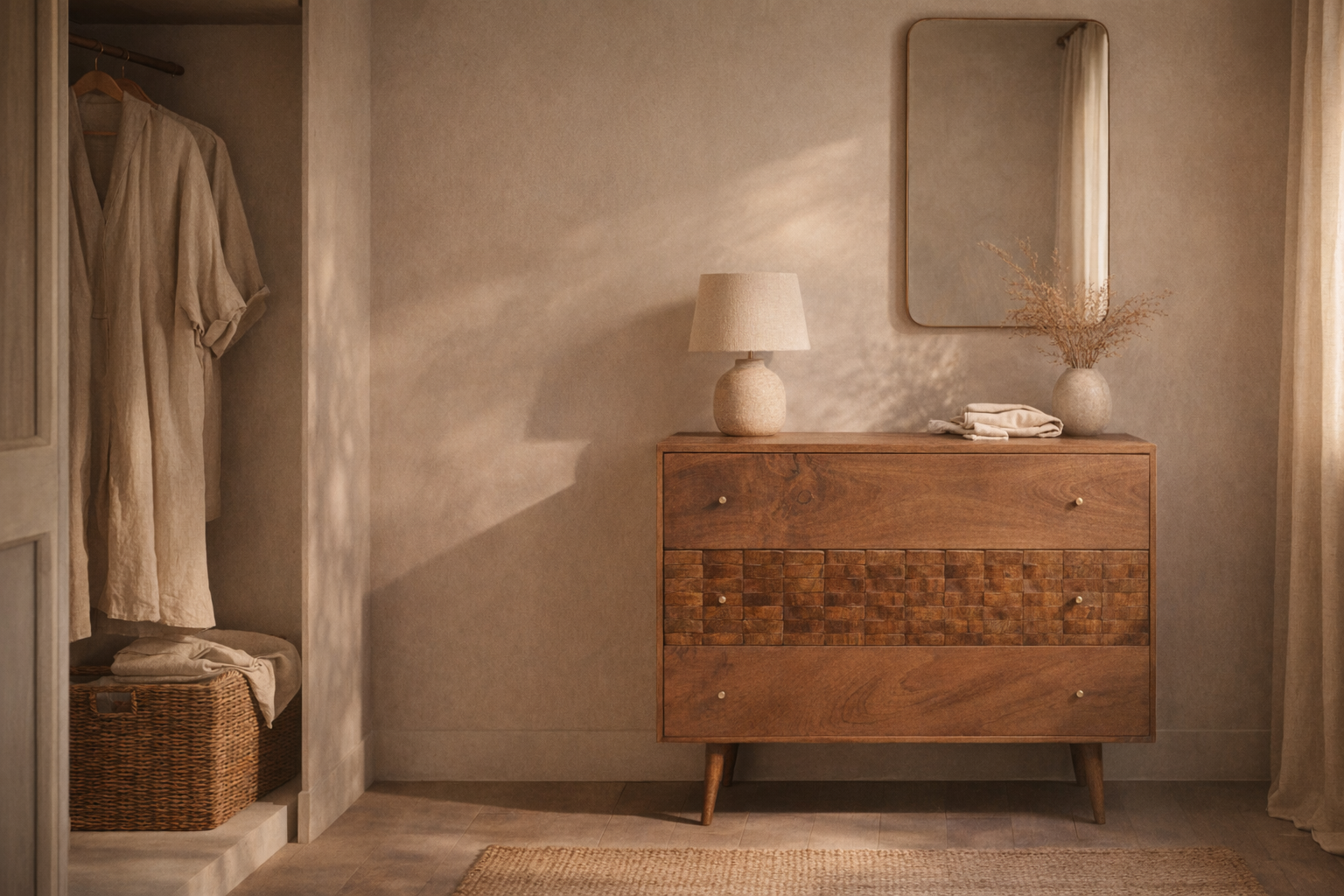
Materials matter here, too. Solid wood storage tends to feel steadier and more substantial in daily use—drawers track better, corners hold up, and the finish doesn’t look tired as quickly. With mango wood, the natural grain variation adds warmth and texture, which helps a bedroom feel layered rather than flat.
Create a “quiet zone” for sleep (and a “getting ready zone” for mornings)
A harmonious bedroom often has two invisible zones:
1) Sleep zone: bed + nightstands + lighting
2) Getting ready zone: dresser + mirror + laundry/hamper + maybe a small bench
When these zones overlap too much, the room feels busy. When they’re clearly defined, the space feels calmer—even if it’s small.
Easy zoning moves that don’t require more square footage:
- Place a mirror near the dresser (not necessarily over it) so you’re not doing everything at the bedside.
- Keep laundry contained: a lidded hamper instantly reduces visual noise.
- If you have space, add a bench at the foot of the bed *only* if you still have comfortable clearance. Otherwise, skip it.
Real-world example: In a shared bedroom where one person wakes earlier, keep the dresser and mirror on the side of the room closest to the door. That creates a quieter “sleep side” and reduces the feeling of disruption.
This is also where lighting helps: a pair of bedside lamps or wall sconces supports the sleep zone, while brighter overhead or task lighting supports the getting-ready zone.
A simple bedroom furniture arrangement checklist (so it looks intentional)
Once the big pieces are placed, use this checklist to refine. These are the small adjustments that make a bedroom feel designed rather than shuffled.
- Center the bed on its wall if possible, and align nightstands to match.
- Keep your main paths clear: bed to door, bed to closet, bed to bathroom.
- Maintain consistent visual weight: if one side has a dresser, balance with art, a floor lamp, or a taller plant on the other side.
- Mind the scale: a tiny nightstand next to a king bed will always look off. Choose pieces with enough presence.
- Leave breathing room: even 2–4 inches between pieces prevents that “stuffed in” look.
- Edit surfaces: one tray on a nightstand reads calmer than five separate items.
If you’re shopping while planning, measure your room (and note door swings), then compare against furniture dimensions. It’s not just about fitting—it’s about living comfortably once everything is in place.
Conclusion
Learning how to arrange bedroom furniture is less about rigid rules and more about supporting real life: a bed that feels settled, walkways that stay clear, nightstands that work at arm’s reach, and storage that doesn’t fight the flow of the room. If you’re ready to upgrade pieces that feel temporary or flimsy, explore our handcrafted solid mango wood furniture collection—thoughtful beds, nightstands, and bedroom storage that bring warmth, durability, and calm character to your everyday routine.