What to Look for in a Quality TV Stand: A Practical Buying Guide for a Warmer, More Durable Living Room
You’re not alone if you’ve bought a TV stand that looked great in photos—then showed up feeling lightweight, wobbly, or oddly proportioned once it was in your living room. The right piece should do two jobs at once: quietly handle real-life storage (devices, remotes, games, kids’ stuff) and make the room feel more grounded and intentional. If you’ve been wondering what to look for in a quality TV stand, use this checklist to separate “fine for now” from furniture you’ll be happy to live with for the long haul.
1) Start with the material: why it matters more than the finish
A TV stand takes daily wear—sliding components, opening doors, vacuum bumps, kids’ toys, pet traffic, and heat from electronics. That’s why the core material matters more than a pretty finish.
Solid wood is often the most satisfying option for long-term use because it has real structure and can be refinished or refreshed over time. You’ll also tend to feel it in the details: a solid wood TV stand usually has more natural weight, a steadier stance, and edges that don’t look “wrapped.”
Veneer isn’t automatically bad, but the quality varies widely. Thick, well-applied veneer over stable core materials can look beautiful; thin veneer over low-grade substrate is where you see bubbling, chipping at corners, or swelling if moisture gets in.
Particleboard/MDF is common in budget pieces. It can work for light duty, but it’s more vulnerable to chipped edges, screw holes loosening, and water damage—especially around cable cutouts or under a humidifier.
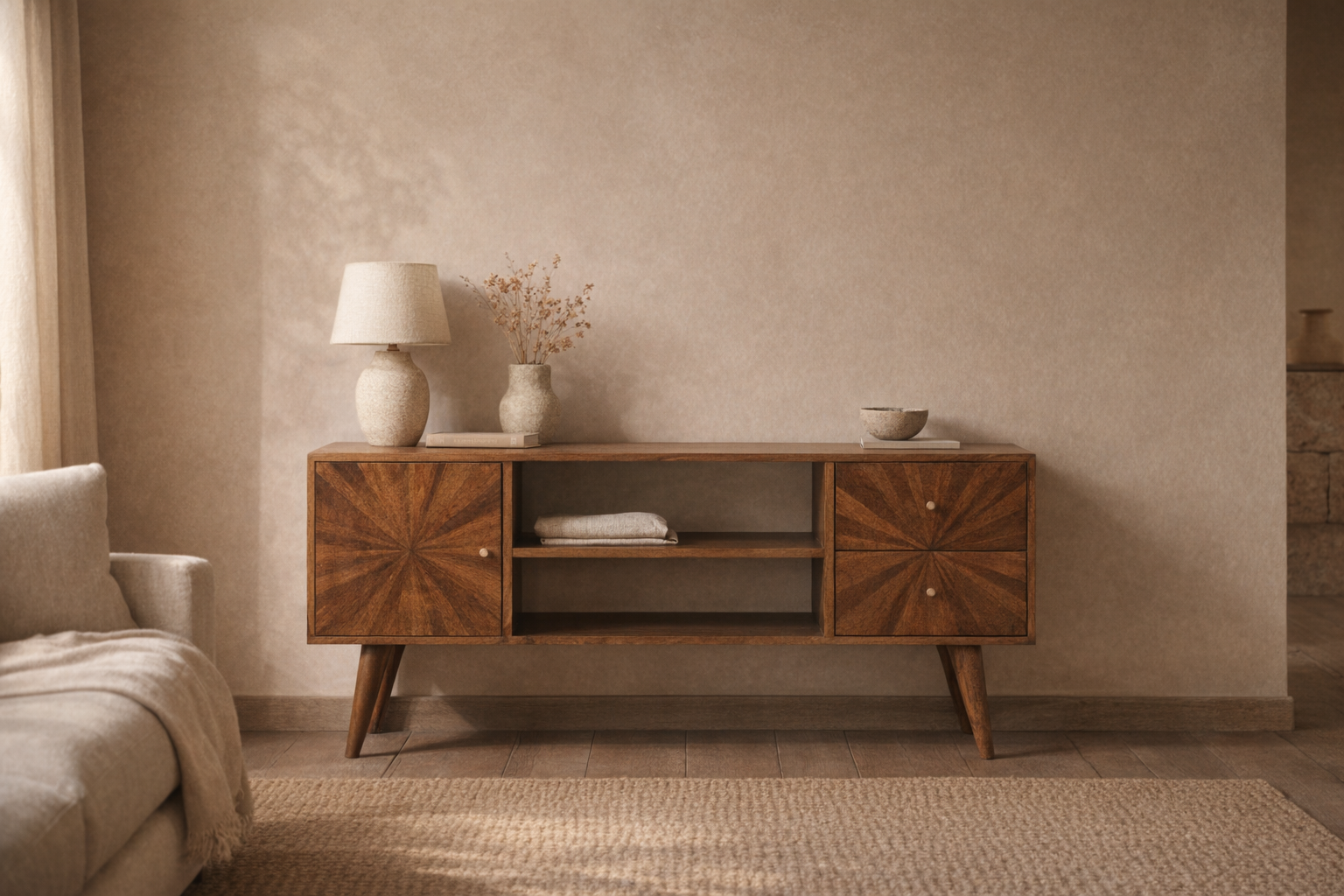
If you love warm, characterful grain, solid mango wood is a strong candidate to consider. It tends to bring a naturally rich tone and visible variation that makes a media area feel less flat and more “furnished,” especially in organic modern, Japandi, rustic modern, and Scandinavian-leaning spaces.
2) What to look for in a quality TV stand: construction details that prevent wobble
A lot of the frustration with TV stands comes down to structure. Here’s what to check (or look for in descriptions and close-up photos) so the piece stays solid.
Joinery and how it’s assembled
- Look for frames that are built like furniture, not like packaging: tight seams, consistent alignment, and sturdy corner connections.
- If the stand uses bolts/cam locks, that doesn’t automatically mean “bad,” but the best pieces still have strong underlying frame parts so the fasteners aren’t doing all the work.
Back panel and racking resistance
A TV stand that sways side-to-side often lacks rigidity across the back. A stronger back (or well-designed internal bracing) helps the whole case resist racking—especially important if you have plush carpet or slightly uneven floors.
Door and drawer quality
- Doors should sit evenly and open without scraping.
- Drawers should glide smoothly and feel supported when extended (not drooping).
- Hardware should feel substantial in the hand. Tiny lightweight pulls and hinges can be an early red flag.
Legs and base stability
A stable base is everything. If legs are thin, widely spaced, or poorly joined, you’ll notice movement when you plug in devices or when kids bump past. A grounded silhouette—either a solid plinth base or sturdy legs—usually feels more grown-up and calm in a living room.
3) Size and proportion: get the “anchored” look (and avoid the too-small stand)
Most people focus on whether the TV fits on top. The bigger question is whether the stand looks proportional to the TV and wall, and whether it feels anchored in the room.
A simple sizing rule of thumb
Many designers aim for a stand that’s wider than the TV, not equal to it. That extra width helps the setup look intentional and gives you breathing room for styling—like a ceramic lamp, a stack of books, or a plant—without crowding.
Think about height from your seating
A stand that’s too tall can force the TV higher than comfortable; too low can feel casual in a way that doesn’t match the room. Consider your sofa height and where your eyes naturally land when you’re relaxed.
Depth matters for real devices
Soundbars, gaming consoles, cable boxes, and routers take depth—plus airflow space. If you’re using an Apple TV, PlayStation/Xbox, or a larger center speaker, double-check interior shelf depth and door clearance so you’re not forced into awkward diagonal storage.
Real-life example: In an open-plan American living room, a wider stand can visually connect the TV zone to adjacent seating. It helps the media wall feel like part of the design—not a screen floating above a narrow table.
4) Storage and functionality: match the stand to your actual living habits
A beautiful TV stand that doesn’t fit your day-to-day quickly becomes frustrating. Before you buy, take five minutes to list what needs to live there.
Common “must-haves” to plan for
- A place for remotes, controllers, and chargers (drawers help)
- Adjustable shelves for devices of different heights
- Closed storage for visual calm (especially in small spaces)
- Open bays if you use IR remotes or need easy access
Cable management (the underrated feature)
Look for thoughtful cutouts or channels that let cords route cleanly without bending sharply. Also consider where your outlets are. If your power is off to one side, you’ll want a layout that doesn’t force cords to cross visible open shelves.
Ventilation for electronics
Consoles and receivers generate heat. A quality TV stand should allow airflow—either with open backs in certain sections or enough space around components so you’re not trapping heat behind closed doors.
Real-life example: If you’re a young family, closed cabinets can be a sanity-saver—hide the clutter fast, reduce visual noise, and keep certain items out of reach. If you’re a design-focused couple in a condo, a mix of open and closed storage can keep the look airy while still providing a place for the not-so-pretty essentials.
5) Style that lasts: warm wood, calm lines, and easy-to-live-with design
Trends move fast; a TV stand is large, central furniture. The goal is a piece that still feels right when you repaint, swap rugs, or upgrade your sofa.
Design cues that age well
- Clean, calm lines (not overly ornate)
- Balanced proportions (not too chunky, not too thin)
- Thoughtful negative space and consistent spacing between doors/drawers
- Hardware that feels classic and tactile
How wood tone affects the room
A warm-toned solid wood TV stand can soften a screen-heavy wall and make the whole area feel more inviting. Natural grain also adds depth—especially helpful if you have a lot of flat surfaces (large TV, smooth painted wall, minimal décor).
Pairing tips by interior style
- Mid-century modern: look for tapered or refined legs and a long, low profile.
- Scandinavian/Japandi: prioritize simplicity, warm wood, and clutter-hiding storage.
- Farmhouse modern/rustic modern: lean into substantial silhouettes and visible grain that feels honest and grounded.
- Organic modern: choose natural texture (like mango wood grain) and keep styling minimal—ceramics, linen, and soft lighting go a long way.
6) Finish, care, and long-term value: what “durable” really looks like
Durability isn’t just whether the stand survives a move. It’s whether it keeps looking good through normal life.
What to check about finishes
- A finish should feel smooth and consistent, without sticky spots or overly glossy “plastic” shine.
- Matte or satin finishes often hide fingerprints and minor wear better than high-gloss.
- Ask yourself: will you be able to live with this finish when it gets a small ding? Natural wood tends to wear in a way that feels more forgiving and characterful.
Maintenance reality (simple is best)
For most solid wood pieces, regular dusting and quick wipe-ups are the routine. Use coasters for drinks on top and avoid leaving damp items near edges. If you like to decorate the surface (vases, candles), a small tray can prevent scratches and create a finished look.
Why “value” can beat “cheap”
A well-made solid wood TV stand can be something you keep through multiple layouts—apartment to house, first sofa to forever sofa. If you’re tired of replacing furniture every few years, focusing on material and construction usually pays off more than chasing the lowest price tag.
Conclusion
A TV stand is one of those pieces you interact with every day, so it’s worth choosing one that feels steady, stores what you actually use, and brings warmth to the room—not frustration. When you’re deciding what to look for in a quality TV stand, focus on solid materials, strong construction, smart storage, and proportions that make your setup feel intentional.
If you’re drawn to natural grain and timeless, livable design, explore our handcrafted solid mango wood furniture collection—and take a look at Grain and Loom’s TV & Media Units to find a piece that fits your space and your routines.