How to Layout Bedroom Furniture: Practical Layouts That Feel Calm, Spacious and Grown-Up
If your bedroom feels tighter than it should, the problem often isn’t the size of the room—it’s the layout. An awkward radiator, a window that steals a full wall, a door that swings into your only wardrobe spot… it’s easy to end up with a bed you can’t walk around, drawers that clash, or a space that looks “busy” even when it’s tidy.
Knowing how to layout bedroom furniture is mostly about getting the basics right: clear walking routes, sensible proportions, and storage that works with the room rather than against it. Once that’s sorted, the room naturally feels calmer, more spacious and more inviting—especially when you choose solid, well-made pieces that add warmth instead of visual noise.
Start with the non-negotiables: measure, map, and prioritise flow
Before you buy anything (or wrestle your bed into yet another position), do three quick checks. They’ll save you from the most common bedroom layout regrets.
1) Measure the room properly
Measure wall-to-wall, and note ceiling height if you’re considering tall wardrobes. Then mark:
- Door positions and door swing
- Windows (including how far the sill and any bay projects)
- Radiators
- Chimney breasts or alcoves
- Plug sockets and light switches
2) Decide your “clear paths”
A bedroom feels luxurious when you can move around without sidestepping furniture. As a rule of thumb, aim for clear walking routes from the door to the bed, and from the bed to the wardrobe.
If space is tight, don’t force symmetry at the expense of movement. One generous side of the bed is often better than two cramped sides.
3) Choose what matters most
Different households need different priorities:
- If mornings are hectic: prioritise easy wardrobe and drawer access.
- If you read in bed: prioritise a proper bedside surface and comfortable reach.
- If you’re short on storage: prioritise a chest of drawers (often more flexible than a bulky wardrobe).
These decisions guide everything else—especially the size of your bed and where larger storage pieces should go.
How to layout bedroom furniture around the bed (the anchor piece)
The bed is the visual and practical anchor, so start here and let the rest of the room support it.
Place the bed on the longest uninterrupted wall where possible
That usually gives the most balanced look and the best access on both sides. Avoid pushing the bed into a corner unless you truly need the space—corner beds can make the room feel more like a spare room than a main bedroom.
Keep the bed clear of problem zones
- Under a window: can work, but check the headboard doesn’t block curtains or make the window hard to open.
- Next to a radiator: not ideal long-term; heat and dryness can be uncomfortable, and it limits where you can place bedside pieces.
- Facing a door: not wrong, but if it feels exposed, soften the sightline with a bench at the foot of the bed or a low chest placed elsewhere.
Think in “zones”
A good layout typically creates three zones:
1) Sleep (bed + nightstands)
2) Dressing (wardrobe + mirror)
3) Storage (chest of drawers, baskets, shelves)
When those zones aren’t fighting for the same wall space, the room instantly feels more settled.
Real-world example
In many UK bedrooms, one wall is taken up by a window and radiator, leaving the opposite wall as the best bed wall. With the bed centred there, you can keep dressing storage on the wall nearest the door, so you’re not walking through the sleeping zone every time you grab clothes.
Bedroom furniture layout ideas for small rooms (without making it feel cramped)
Small bedrooms aren’t just about fitting furniture in—they’re about avoiding that “boxed in” feeling.
1) Choose fewer, better pieces
A sturdy, well-proportioned bed and one generous nightstand often looks calmer than two tiny, mismatched tables plus extra add-ons. Solid wood pieces (like mango wood) bring warmth and natural grain, so you can keep the palette simple and still have depth.
2) Float a nightstand where it helps most
If one side of the bed sits close to a wall, place one nightstand on the open side and use a slim wall shelf or sconce on the tighter side. It keeps the room functional without forcing symmetry.
3) Use a chest of drawers as your main storage
In tight rooms, wardrobes can dominate. A chest is often easier to live with:
- It can sit under a window (as long as it doesn’t block it)
- It gives you a surface for a lamp, tray, or mirror
- It’s easier to position without door clearance issues
4) Keep drawer and door clearance in mind
This is where many layouts fail. If drawers hit the bed frame, they won’t get used properly. Leave enough space so they open comfortably.
Real-world example
If your bed must go against one long wall, place a compact nightstand at the accessible side and a chest of drawers opposite. Add a mirror above the chest to create a dressing spot without needing a separate vanity.
How to arrange bedroom furniture in awkward spaces (bay windows, alcoves, sloped ceilings)
Awkward architecture can actually help you—if you treat it like built-in zoning.
Bay windows
- Avoid blocking the bay with a tall wardrobe.
- A lower chest can work well in or near the bay (check the window opens fully).
- Consider placing the bed on the wall adjacent to the bay, so the bay becomes a light-filled “dressing” corner.
Alcoves and chimney breasts
- Alcoves are ideal for a chest of drawers or narrow storage.
- If the chimney breast forces your bed off-centre, lean into it: centre the bed to the usable wall space and use a larger nightstand on the wider side to visually balance.
Sloped ceilings (loft rooms)
- Put lower pieces (chests, benches, baskets) under the slope.
- Keep the bed where you can sit up comfortably.
Radiators and plug points
Plan around what’s already there. If sockets are only on one side, it may be more practical to place the nightstand where the lamp and charging naturally want to live, and keep the other side minimal.
Real-world example
In a loft bedroom, the best use of the lowest wall is often a chest of drawers under the slope, with the bed positioned where there’s full head height. It keeps storage accessible without making the space feel top-heavy.
Getting wardrobes, chests and nightstands in the right place (and the right size)
Large pieces are where people worry most about making a mistake—especially if you’re investing in solid wood furniture you plan to keep.
Wardrobes: give them breathing room
Wardrobes need space not just to fit, but to function.
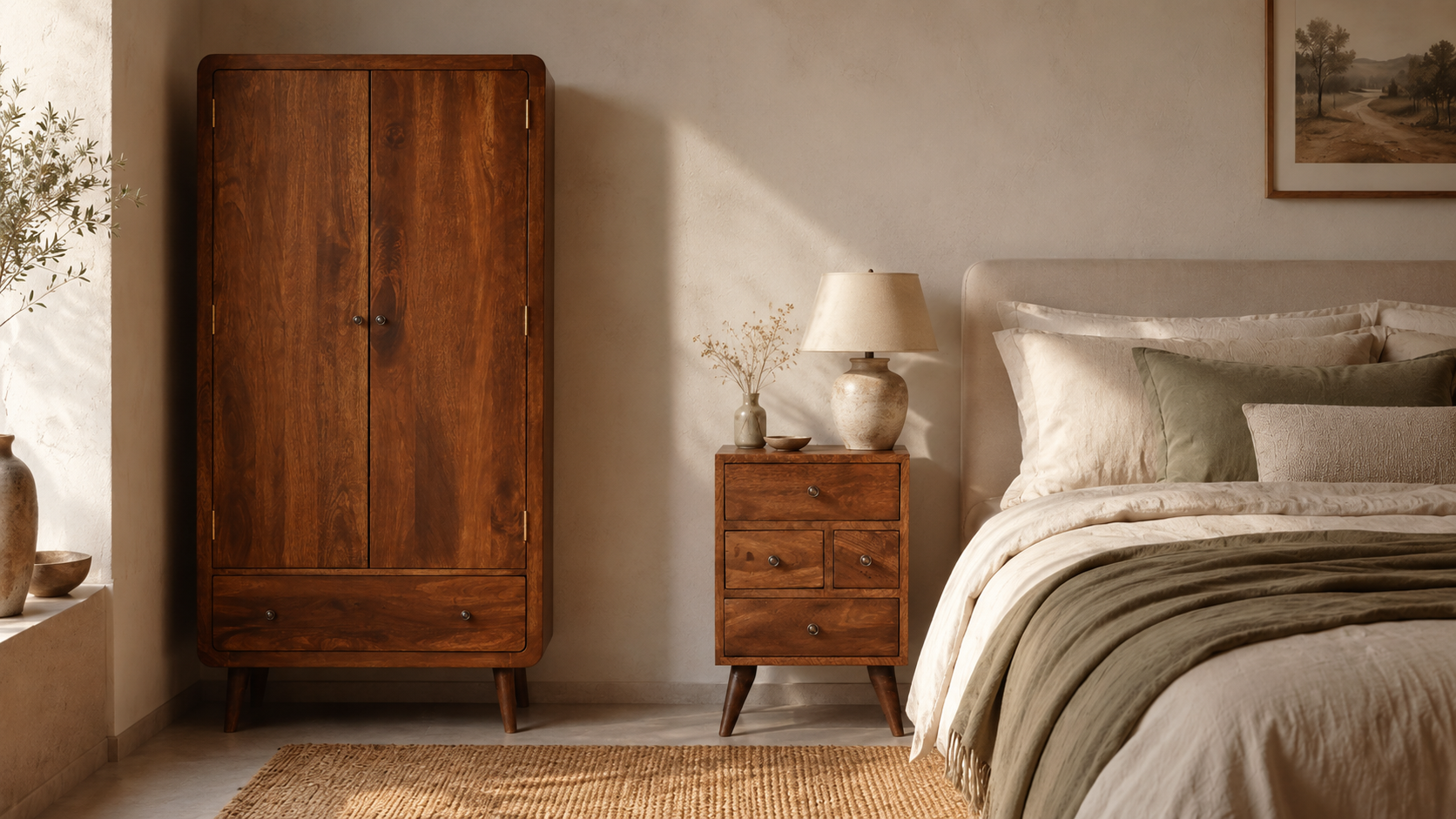
- Make sure doors can open without hitting the bed or a wall.
- If you’re choosing a wardrobe for a narrow room, consider whether a chest plus hanging rail elsewhere would work better.
Chests of drawers: the flexible workhorse
A chest can:
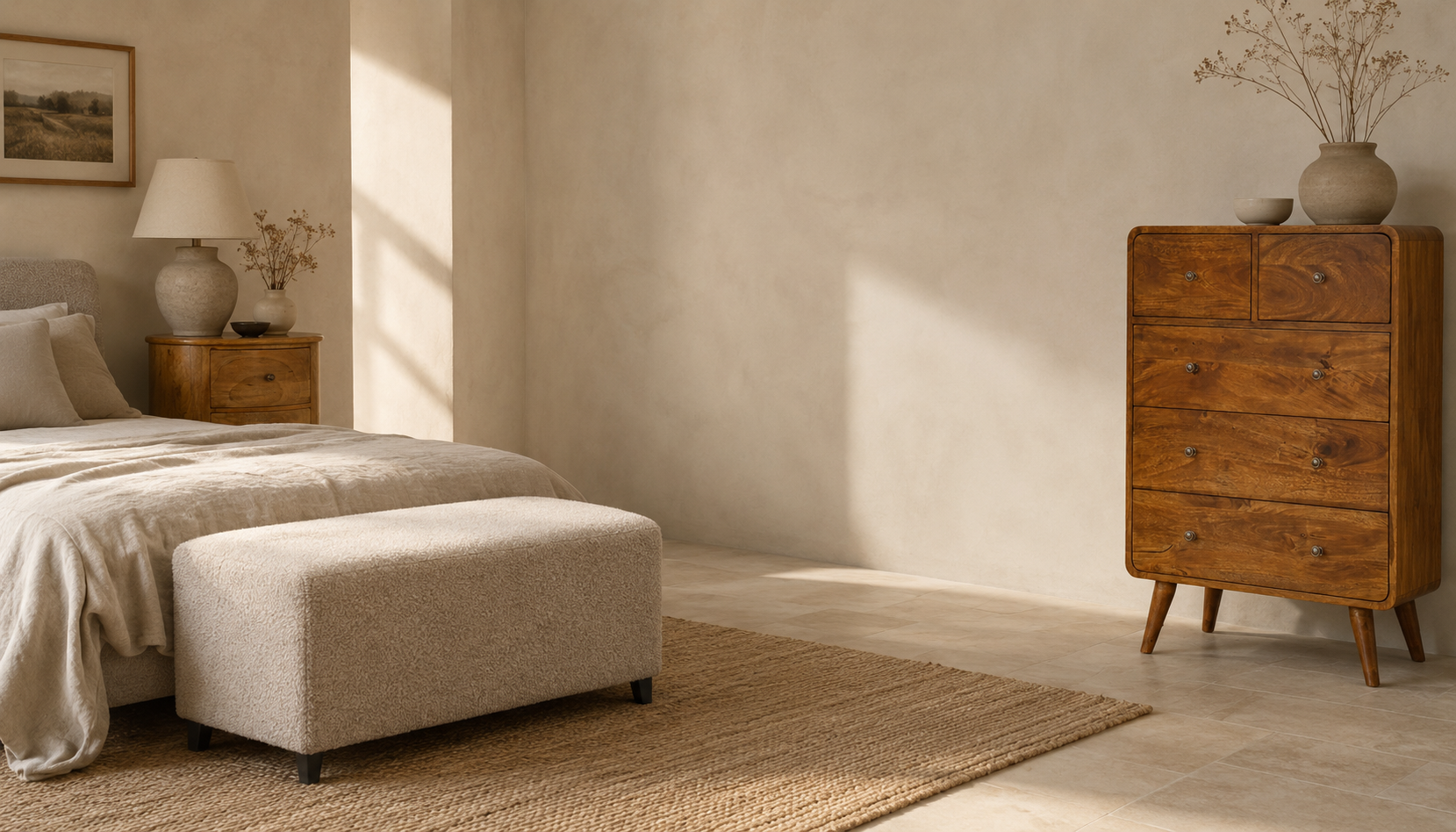
- Sit opposite the bed as a visual “counterweight”
- Work near the door as a drop zone for folded laundry
- Double as a dressing surface with a mirror above
If you’re unsure what to buy first, a well-sized chest is often the safest investment because it can move rooms easily as your needs change.
Nightstands: match height and function
Aim for a nightstand height that sits close to your mattress height, so it’s comfortable to use. Practical details matter:
- If you like a clear surface, choose one with a drawer.
- If you want quick access, an open shelf can be handy.
Why material matters here
Nightstands and chests get daily use—drawers opened constantly, mugs placed down, phones charging. Solid mango wood is valued for its durability and the warmth of its natural grain; it tends to look better with time than flimsy, laminated alternatives that chip or peel.
Real-world example
In a standard double room, placing a chest opposite the bed keeps the layout balanced and gives you a natural spot for a mirror and a lamp—so the room works for mornings as well as bedtime.
Styling tips that make a bedroom layout feel bigger and calmer
Once the layout works, a few styling choices can make the room feel noticeably more spacious.
Keep the “middle” clear
Try not to clutter the central floor area. If you’re adding a bench, choose something slim and keep it close to the foot of the bed.
Use pairs where it helps, not because you “should”
Matching nightstands can look beautifully settled, but only if you have the space. Otherwise, balance with:
- One nightstand + a floor lamp on the other side
- One larger nightstand + a smaller stool or wall shelf
Let wood bring the warmth; keep everything else quiet
If you have characterful wood grain, you can keep bedding, walls and curtains more understated. That contrast is what creates a calm, grown-up feel without the room looking flat.
Add one strong vertical element
A tall mirror or artwork draws the eye up and reduces that “everything is at bed height” feeling—especially helpful in smaller rooms.
Mind the lighting
If your only light is a central pendant, corners can feel heavy. Bedside lamps or wall lights help the layout feel intentional and make the room nicer to use.
Conclusion
A good bedroom doesn’t need to be huge to feel spacious—it needs a layout that supports everyday life. Once you know how to layout bedroom furniture with clear walkways, sensible storage placement, and the bed properly anchored, the room becomes calmer, easier to keep tidy, and far more enjoyable to spend time in.
If you’re ready to upgrade from temporary pieces to furniture with real warmth and staying power, explore our handcrafted solid mango wood furniture collection—starting with the bed, then building out with nightstands and storage that fit your space and the way you live.