Living Room Furniture Arrangement Ideas That Feel Warm, Grown-Up and Easy to Live With
If your living room never quite feels “finished”, it’s rarely because you haven’t bought enough. More often, the layout is fighting you: the sofa blocks the natural walkway, chairs feel like afterthoughts, the TV dominates, and everything ends up pushed to the walls. The good news is you don’t need a bigger room—you need a clearer plan. These living room furniture arrangement ideas will help you create a space that feels warm, practical and properly pulled together, with seating that suits real life (feet up, guests over, weekday clutter and all).
Start with the room’s job (not the Pinterest photo)
Before you measure anything, decide what the living room needs to do most days. This single step prevents the classic mistake: buying a beautiful sofa, then realising the room can’t comfortably support how you actually live.
A helpful way to define the “job” is to pick your top two priorities:
- Conversation and hosting: You’ll want seating that faces inwards, with a coffee table you can actually use.
- Relaxing and TV: You’ll want a clear sightline, comfortable distance, and a layout that avoids everyone craning their neck.
- Family life: You’ll need robust surfaces, generous circulation routes, and a layout that can handle toys, laundry baskets and the occasional dens.
- Quiet reading: You’ll want a dedicated chair-and-lamp corner that feels intentional.
Real-world example: In a Victorian terrace with a through lounge, the front zone can become a conversational seating area (sofa + two chairs), while the back zone stays open for play or dining. In a modern flat, you might prioritise one strong “anchor” seating piece and keep everything else visually lighter.
Once you’re clear on the job, you can choose the best of the living room layout ideas rather than forcing a layout that looks good online but feels awkward at home.
Measure for comfort: the small distances that change everything
A room can have great furniture and still feel off if the spacing is wrong. These simple guidelines help you land on proportions that feel calm and considered:
- Walkways: Aim for a clear route through the room so you’re not constantly sidestepping a coffee table or brushing past a sofa arm. If the room is tight, prioritise one obvious “main path”.
- Sofa-to-coffee-table distance: Close enough to reach a mug without leaning forward uncomfortably, but not so close that knees feel trapped. (As a rule, leave a practical gap.)
- Rug sizing: A rug that’s too small makes everything feel like it’s floating. If you can, choose one large enough that at least the front legs of seating sit on it.
- TV sightline: Instead of centring everything on the TV by default, decide where it can live without hijacking the room. Sometimes the best move is an off-centre TV position with seating angled gently towards it.
If you’re considering furniture arrangement for small living rooms, measuring becomes even more important. The goal isn’t to cram more in—it’s to make the room feel easy to move through, with seating that’s genuinely comfortable.
Living room furniture arrangement ideas: 6 layouts that work in real homes
Below are six reliable arrangements you can adapt to your room shape and lifestyle. Think of them as starting points rather than rigid rules.
1) The “anchored” layout (sofa + coffee table + rug)
- Best for: open-plan spaces and modern flats.
- How it works: Float the sofa slightly off the wall (even a small gap helps), centre a rug and coffee table, then add one accent chair.
- Why it feels good: The rug creates a ‘zone’ so the living area looks intentional, not like furniture dotted around.
2) The conversational U-shape
- Best for: hosting and cosy evenings.
- How it works: Sofa opposite two chairs (or a loveseat), with a coffee table in the middle. Keep angles soft—chairs can be slightly turned rather than rigidly facing.
- Tip: Add a side table at each seat so every spot feels “claimed”.
3) The L-shape with a flexible chair
- Best for: family living rooms.
- How it works: Main seating forms an L (sofa + chair, or sofa + additional seat), leaving one chair that can swing towards the TV or towards conversation.
- Practical bonus: It’s easy to reconfigure for guests without the room feeling messy.
4) The two-sofa layout (balanced and grown-up)
- Best for: larger living rooms or long rooms.
- How it works: Two sofas facing each other, coffee table between. Add a rug and one statement light.
- Why it works: It instantly reads as intentional and makes the room feel like a destination, not a corridor.
5) The “broken-plan” layout for through lounges
- Best for: terraced houses with a long, narrow front room.
- How it works: Create a seating zone at one end (sofa + chair), and keep the other end lighter (console, bookcase, reading chair). Use a rug or lighting to define the seating area.
- Tip: Avoid lining everything along the walls—bringing pieces inward stops the room feeling like a passageway.
6) The small-room diagonal (the clever cheat)
- Best for: awkward corners, bay windows, and very compact rooms.
- How it works: Angle one chair or the coffee table slightly to soften tight right angles. Keep the main sofa straight for calm, and let one piece “break” the box.
- Why it helps: It creates movement and makes a small space feel designed rather than squeezed.
As you test living room layout ideas, use masking tape on the floor to mark out the footprint of the sofa and key pieces. It’s a simple way to spot problems before you commit.
Choosing a sofa that supports the layout (and doesn’t swallow the room)
A sofa is usually the biggest item in the living room, so it should be chosen with the layout in mind—not the other way around.
Here’s what to look for:
- Proportions and visual weight: In smaller rooms, a sofa with a cleaner profile can feel more spacious than one with bulky arms. In larger rooms, a more substantial shape helps the space feel grounded.
- Back height and placement: If the sofa will float in the room (not against a wall), consider how it looks from behind. A well-finished piece feels more ‘grown-up’ in open-plan spaces.
- Legs vs skirt: Visible legs often make a room feel airier; a fully skirted base can feel heavier. Both can work—just be deliberate.
- How you actually sit: Do you lounge with feet up? Do you perch with a laptop? Do you host? Your answers should guide depth and cushioning preference.
If you’re investing in a piece you’ll live with daily, it’s worth considering materials and build quality. A well-made sofa paired with complementary pieces in solid mango wood can add warmth and natural character—grain you can see and feel—without needing lots of extra décor to make the room feel inviting.
For product browsing, you can explore Grain and Loom’s sofa options here: https://www.grainandloom.com/collections/sofas
Use wood, texture and placement to make the room feel warmer (without clutter)
If your living room feels flat, the fix is often texture and tone rather than more accessories.
A few high-impact moves:
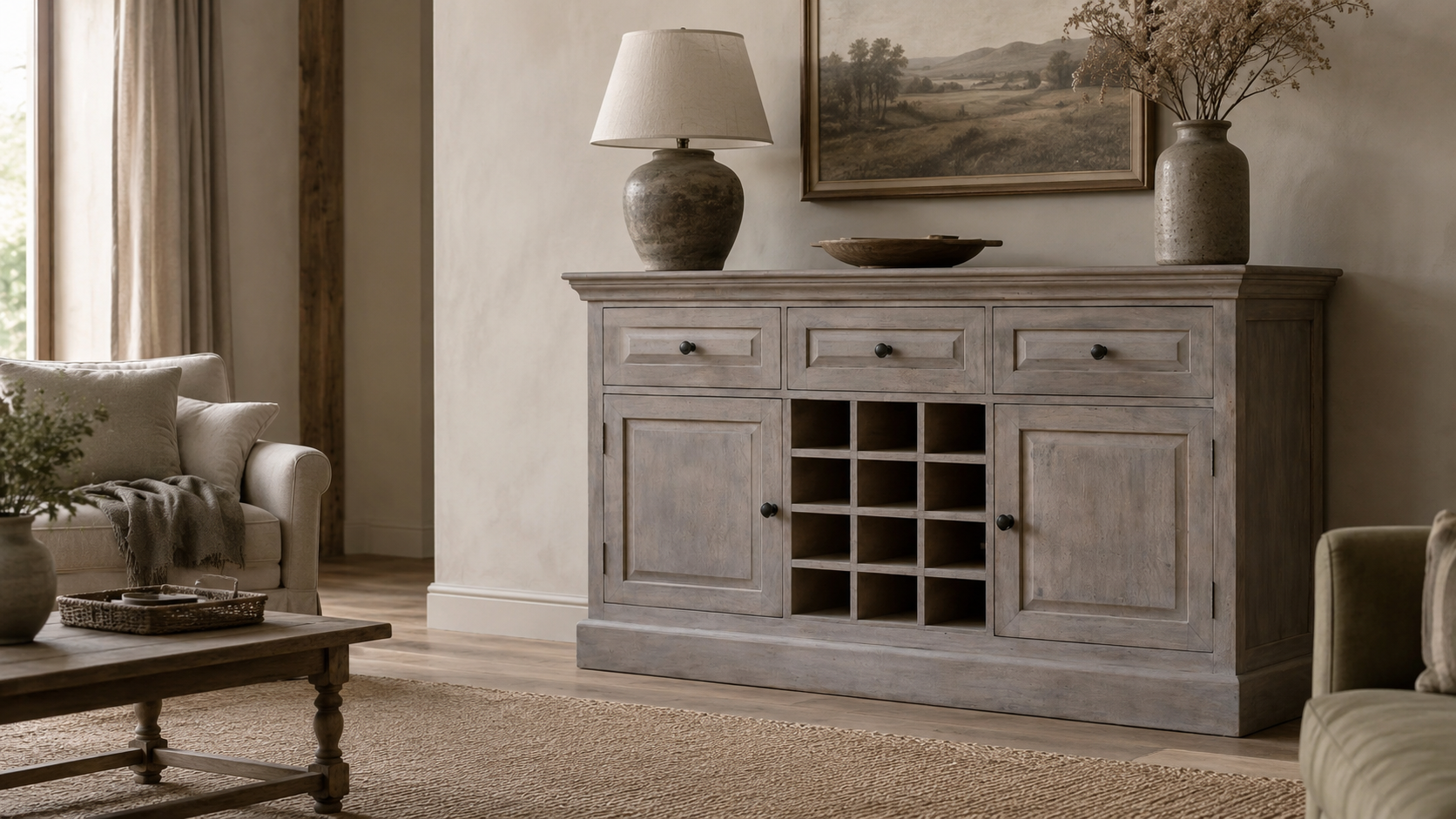
- Bring in one “warming” material: Natural wood is the classic. A coffee table or sideboard in solid mango wood adds depth and variation through the grain, which helps a room feel layered even with a simple colour palette.
- Repeat tones: If your sofa is a mid-tone neutral, echo it in a rug or curtains, then add contrast with a darker wood or black accents for definition.
- Anchor seating with a rug: Especially in open-plan rooms, the rug tells the eye where the living area starts and ends.
- Layer lighting: One ceiling light isn’t enough. Add a floor lamp near the sofa and a table lamp on a sideboard to create a warm evening feel.
- Give every seat a ‘landing spot’: A side table within reach makes the layout feel practical and intentional.
Real-world example: In a rental flat with white walls and grey carpet, a warm wood coffee table, a textured rug and a lamp with a soft shade can change the whole mood—without painting a thing.
If you’re looking for complementary pieces for a cohesive look, browse the living collection here: https://www.grainandloom.com/collections/living
Common layout mistakes (and quick fixes that make it feel more expensive)
A few predictable issues make living rooms feel awkward, even when the furniture itself is lovely.
- Everything pushed to the walls
- Fix: Pull the sofa forward slightly and anchor it with a rug. Even small shifts can make the room feel more designed.
- No clear focal point
- Fix: Decide whether the focal point is the fireplace, the view, or the TV. Arrange seating to acknowledge it, but don’t let it dominate if it doesn’t need to.
- A coffee table that’s the wrong size
- Fix: Choose a table that suits the sofa length and leaves enough space to move around it comfortably.
- Not enough surface space
- Fix: Add side tables rather than over-styling shelves. Practical surfaces make a room feel calm because clutter has somewhere to go.
- Tiny art and floating accessories
- Fix: Go larger with wall art (or group pieces) and keep décor in clusters. A couple of considered items looks more intentional than lots of small ones.
- Ignoring how you enter the room
- Fix: Keep the entrance line clear. If you walk into the back of a sofa, consider a console behind it to create a purposeful “landing” zone.
These tweaks are particularly helpful when working out furniture arrangement for small living rooms, where one poorly placed piece can make the whole space feel tight.
Conclusion
The best living room furniture arrangement ideas don’t aim for perfection—they aim for ease. When the layout supports how you actually live, the room feels calmer, warmer and more grown-up, even before you add the finishing touches. Start with the job the room needs to do, measure the key clearances, then choose a sofa and supporting pieces that feel properly proportioned and built to last.
If you’re ready to pull your space together with characterful, practical pieces, explore our handcrafted solid mango wood furniture collection.