Can You Mismatch Bedroom Furniture Without It Looking Messy?
If you’ve ever asked yourself, “can you mismatch bedroom furniture and still have it look put-together?”, you’re in good company. Most people don’t replace a whole bedroom suite in one go—and honestly, you don’t need to. The worry is that mixing wood tones, finishes or eras will look accidental, messy, or a bit “make do”. The good news: mismatching can look more considered than a perfectly matched set, as long as you follow a few simple rules that create cohesion.
Below is a practical, designer-style approach to mixing pieces so your bedroom feels calm, intentional, and grown-up—whether you’re working with existing furniture, adding a new bed, or slowly upgrading the whole room.
1) Why mismatched bedrooms often look better than matching sets
A fully matching set can feel a bit flat—everything has the same colour temperature, the same visual weight, and the same “voice”. A well-mixed room, on the other hand, has layers: it feels collected over time.
Mismatching also solves a very real problem: you can invest in the pieces that matter most (often the bed frame and mattress first), then add supporting items when it suits your budget and space.
The key is understanding the difference between intentional contrast and randomness:
- Intentional contrast: a streamlined bed with a slightly more vintage bedside table; light walls with warmer wood; modern lighting with a classic bench. It feels curated.
- Randomness: too many competing shapes, wood tones that clash hard, or pieces that don’t share any common thread (scale, colour palette, or material).
If your current furniture isn’t a perfect match, you’re not behind—you’re halfway to a more characterful room.
2) Can you mismatch bedroom furniture and still keep it cohesive? Yes—use a “hero” piece
If you’re mixing bedroom furniture styles, the easiest way to keep the room feeling calm is to choose one “hero” piece that sets the direction—usually the bed, because it takes up the most visual space.
Once the bed is chosen, let everything else support it.
A simple approach that works in real homes:
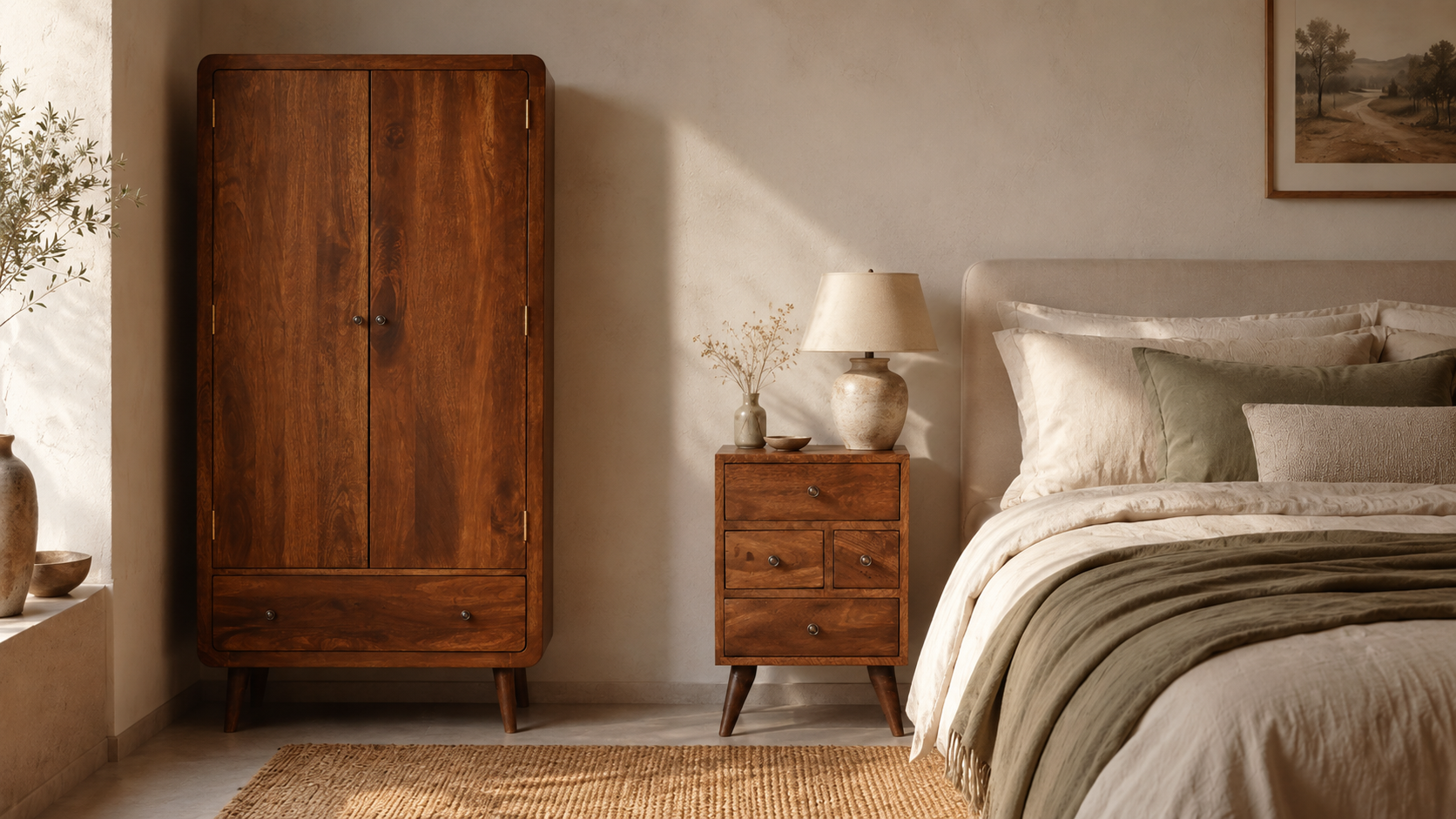
- Pick one dominant wood tone (for example, a warm mid-tone wood) and let it appear in one or two more places: picture frames, a bench, or a bedside table.
- Choose one consistent metal finish for details (black, brushed brass, chrome) and repeat it in lighting or handles.
- Keep the lines consistent: if the bed is clean and minimal, aim for bedside tables that aren’t overly ornate.
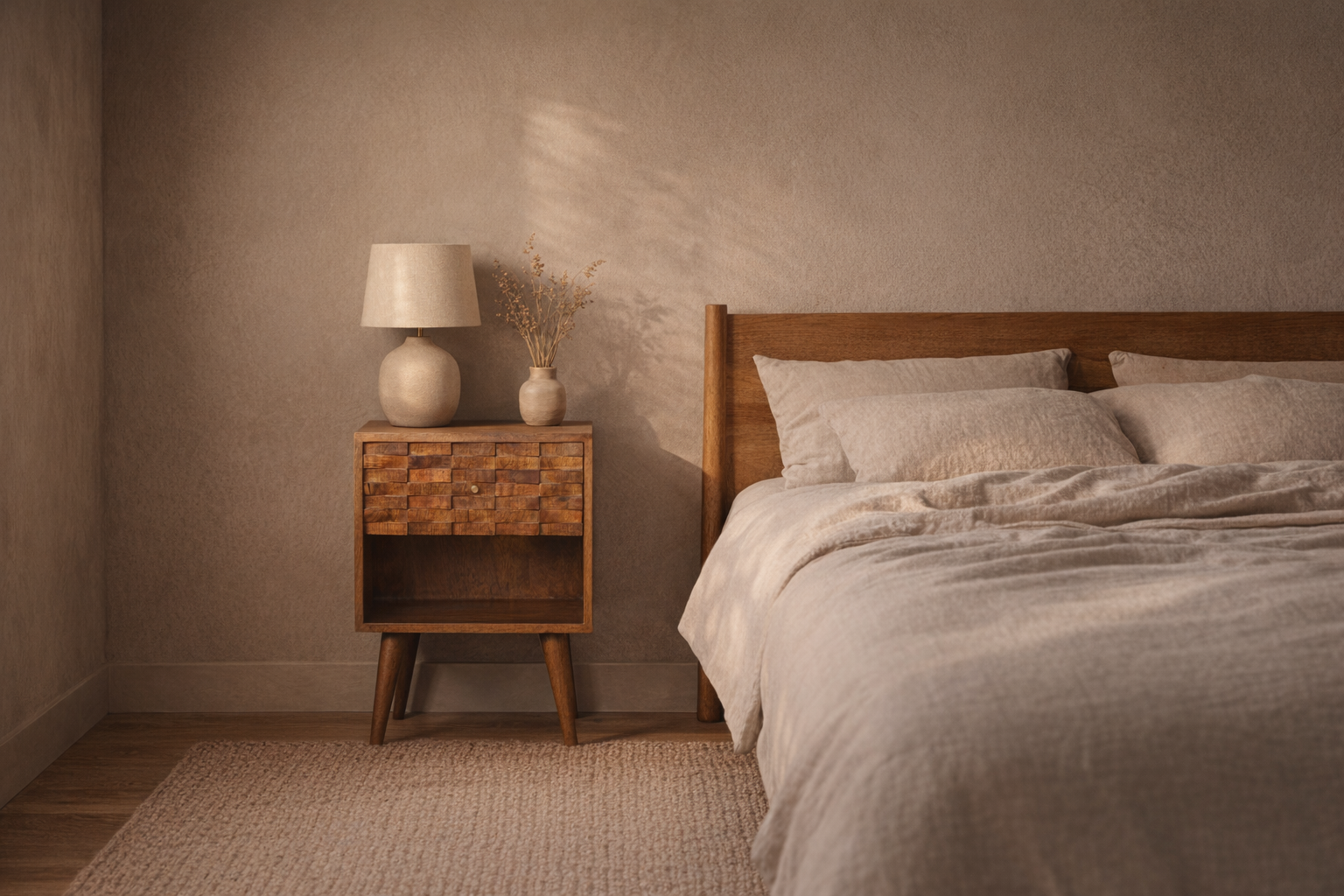
If you’re upgrading gradually, start with a bed you genuinely love living with—solid wood is often a good anchor because the grain and warmth add depth without needing lots of extra decoration. A handcrafted solid mango wood bed, for example, can sit comfortably alongside painted pieces or upholstered items because it reads as natural and grounded rather than overly “matchy”.
3) Mixing wood tones without clashing: a practical checklist
Mixing wood tones is where most people freeze. The trick is to focus on undertone and contrast level, not “matching” exactly.
Use this checklist before you buy anything new:
A) Check undertones (warm vs cool)
- Warm woods often lean golden, honey, caramel, or reddish.
- Cool woods can look greyed, ashy, or very dark/inky.
You can mix warm and cool, but do it with intention—don’t add five different undertones in one small room.
B) Aim for clear contrast, or close harmony—avoid the awkward middle
The hardest combinations are woods that are *almost* the same tone but not quite. Instead:
- Go clearly lighter or clearly darker than your main piece.
- Or go close enough that it reads as tonal layering.
C) Limit the number of wood tones
In most bedrooms, two wood tones is plenty. Three can work if one is very subtle (like a light oak floor) and everything else is restrained.
D) Use a bridge material
If you’re nervous, add something that “bridges” the gap: a textured rug, linen bedding, a woven lamp shade, or a fabric bench. Soft materials make different woods feel more harmonious.
Real-world example: You have a darker vintage chest of drawers you love, but want a new bed. Choose a bed in a warm, mid-tone wood and then add bedside tables in a painted finish (off-white, soft black, or muted sage) to avoid forcing the woods to match.
4) Mismatched bedroom furniture ideas that feel intentional (not chaotic)
If you want mismatched bedroom furniture ideas that look designed rather than accidental, start with pairings that have one clear point of connection.
Idea 1: Same shape, different finish
Keep the bedside tables similar in scale and silhouette, but choose a different wood tone or a painted finish. This reads as modern and deliberate.
Idea 2: Different tables, same “weight”
Two different bedside tables can work beautifully if they’re roughly the same height and visual heft. For example: one closed-door cabinet and one two-drawer unit—both with similar height and depth.
Idea 3: Wood bed + upholstered headboard look (through textiles)
If your bed is wood, bring in upholstery via a tall padded headboard *look* using layered pillows, a fabric wall hanging, or an upholstered bench at the end of the bed.
Idea 4: Add a bench to make the room feel finished
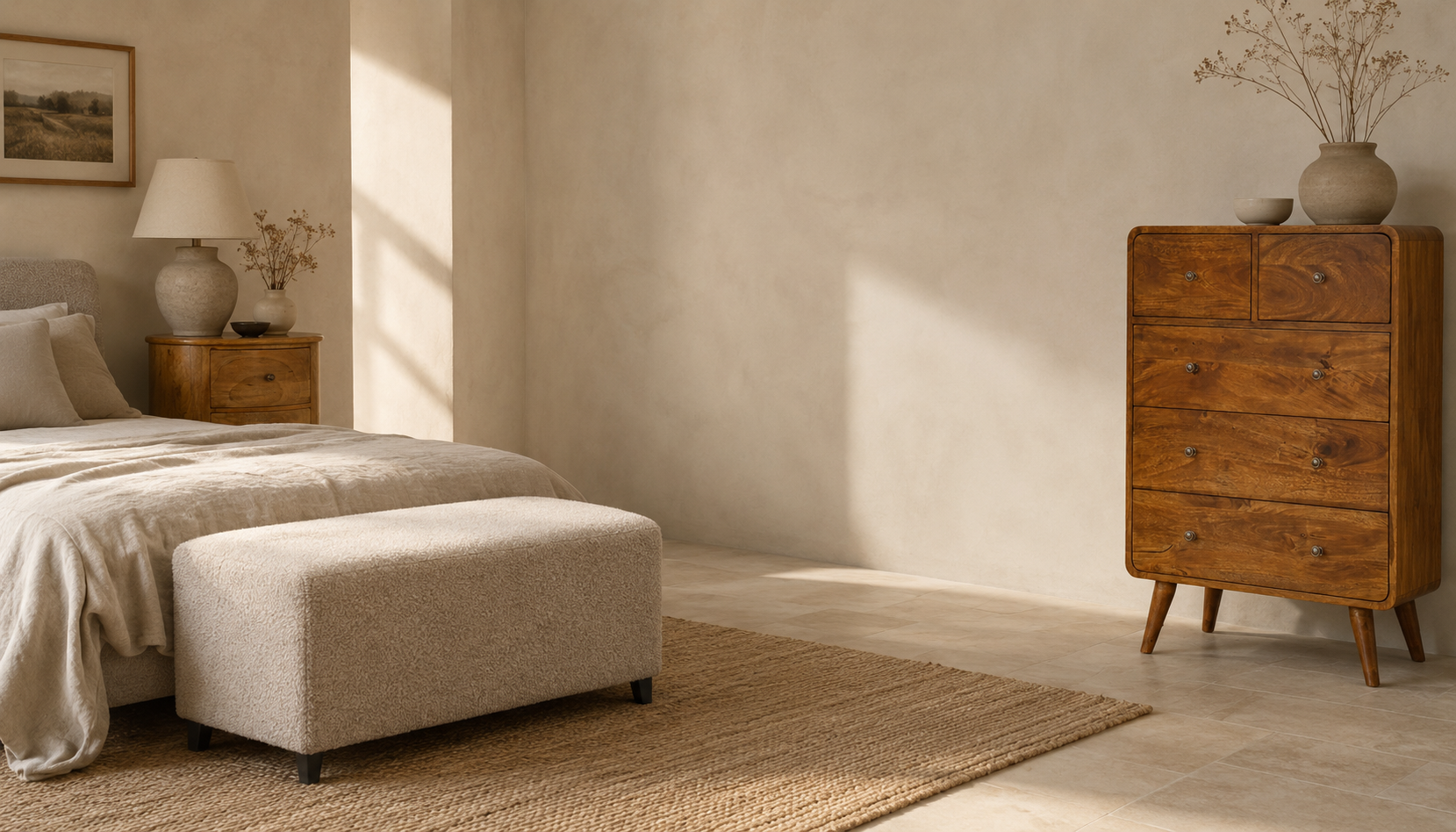
A bench at the end of the bed is a classic “designer trick” because it adds structure. It’s also practical for putting on shoes, laying out tomorrow’s outfit, or holding extra cushions at night.
Idea 5: Modern bed + vintage side piece
A clean-lined bed can ground a more characterful vintage chest of drawers. Keep the bedding palette calm so the mix feels intentional.
The goal isn’t perfection—it’s balance: one or two elements with character, supported by simpler pieces around them.
5) The three things that make mixed furniture look expensive: scale, spacing, and finish quality
If you’re trying to avoid that “student flat” feel, these are the details that quietly signal quality.
1) Scale (especially bedside height)
Your bedside table should sit roughly level with the top of your mattress, or just below. Too low looks accidental; too high can feel bulky and awkward.
2) Spacing and breathing room
Mismatched rooms need negative space. If the bedroom is tight, avoid overly wide bedside tables or chunky dressers. Give each piece a little air so it can be appreciated.
3) Finish quality and tactility
This is where solid wood really earns its keep. Furniture that feels substantial—stable joints, well-finished edges, doors and drawers that don’t feel flimsy—makes the whole room feel more considered, even when pieces don’t match.
Natural wood grain can also act like a unifier. A warm, characterful timber (like solid mango wood) brings depth that flat, printed “wood effect” finishes struggle to replicate. That visual richness is often what makes mixed pieces feel intentional rather than mismatched.
6) A simple buying plan if you’re adding one new piece at a time
If you already own some bedroom furniture and you’re adding to it, you’ll get the best result by upgrading in a smart order.
Step 1: Anchor with the bed
Choose the bed frame first. Think about the overall feel you want: calm and minimal (Japandi), warm and mid-century, rustic modern, or softly Scandinavian.
Step 2: Decide what you’re keeping—and why
Keep pieces that are either genuinely useful (storage that works), sentimental, or high quality. Everything else is negotiable.
Step 3: Choose your “supporting neutrals”
If the bed is a strong wood statement, supporting pieces can be quieter: a simple nightstand, a painted chest, neutral lamps, and textured bedding.
Step 4: Add one connector
This could be a bench, a rug, or a pair of lamps that share a finish. Connectors make mixed rooms feel designed.
Step 5: Edit, don’t add
If the room feels busy, remove one competing element before you buy something else. Often the fix is fewer, better pieces—not more.
Real home scenario: A couple in a Victorian terrace keeps their existing white chest of drawers, upgrades to a warm wood bed, then adds two compact nightstands later. The room feels fresh immediately, but it still looks like it evolved naturally over time.
Conclusion
So, can you mismatch bedroom furniture? Absolutely—and done well, it often looks more stylish, personal, and long-lasting than buying a full matching set. Anchor the space with a hero piece (usually the bed), keep wood tones to a simple plan, match scale and visual weight, and lean on texture and quality finishes to make everything feel intentional.
If you’re ready to build a bedroom that feels warm and considered, explore our handcrafted solid mango wood furniture collection from Grain and Loom—starting with the pieces you’ll live with every day.