Why Is Solid Wood Furniture So Expensive? What You’re Really Paying For (and How to Tell if It’s Worth It)
If you’ve been looking at dining tables and thinking, “I love solid wood, but why is solid wood furniture so expensive?”, you’re not being picky—you’re being sensible. Furniture prices can be all over the place, and it’s hard to tell what’s genuinely better built versus what’s just better marketed.
The good news: there are clear, practical reasons the cost of solid wood furniture is higher than veneered or MDF pieces—and equally clear signs that tell you whether a table is worth the investment for everyday UK life (busy weeknight dinners, kids’ crafts, working from home, hosting friends, the lot).
What “solid wood” actually means (and what it doesn’t)
One reason buyers feel suspicious about pricing is that “wood” gets used to describe lots of different constructions.
Solid wood means the main components (like the table top and legs) are made from real timber, not a manufactured core. That tends to cost more because the material itself is more expensive and more demanding to work with.
What often gets compared against solid wood:
- Veneer: a thin layer of real wood bonded to MDF, chipboard, or plywood. It can look beautiful and can be stable, but it’s not the same thing as a thick solid top that can be sanded and refinished.
- MDF/chipboard with a foil finish: lower-cost and uniform, but more vulnerable to swelling, chipping, and edge damage—especially around dining tables where spills happen.
A useful way to think about it: with solid wood, you’re paying for *structure*, not just surface. That’s a big part of why real wood furniture costs more—but it also explains why it can feel more substantial day to day.
Why is solid wood furniture so expensive? Start with the material itself
Timber isn’t priced like a man-made board. The cost reflects how it’s grown, dried, graded, transported, and prepared.
1) Usable timber is the end of a long process
A tree has to be harvested, cut, dried (often slowly), and milled. During that process, not every part becomes furniture-grade boards. Knots, splits, and checks can be beautiful *in the right place*, but they also require selection and planning.
2) Thickness matters
A thick solid top uses far more material than a veneered panel. More material means more weight, more machining time, and more care needed to keep everything straight and stable.
3) Natural variation requires judgement
Wood has grain direction, colour shifts, and figuring. Making a dining table look balanced (rather than random) takes careful board selection and layout. That human decision-making is part of what you’re paying for.
If you’re drawn to solid mango wood, for example, it’s valued for its warmth, characterful grain, and lived-in feel. Those natural variations are part of the charm—but they also mean the maker needs to work *with* the timber, not force it into uniformity.
Craftsmanship and construction: where the real value hides
Two tables can look similar online and feel completely different in real life. That’s often down to construction.
Joinery and build quality
Better-made solid wood furniture uses stronger connections between parts—especially where legs meet rails and where tops are supported. When these areas are well designed and well assembled, you get:
- Less wobble over time
- Better resistance to racking (that side-to-side movement when someone leans on the corner)
- A table that feels grounded and “grown-up”
Design that respects wood movement
Wood is a natural material and it moves slightly with seasons and humidity. Good construction allows for that movement so the top doesn’t split or distort. This is one of those behind-the-scenes details that adds cost but saves you problems later.
Finishing takes time
A quality finish isn’t only about sheen; it’s about protection and touch. A dining table has to cope with heat, condensation rings, wiping down, and the occasional spill. The prep and finishing steps (sanding, sealing, curing) are labour-intensive—and labour is a major part of why solid wood furniture costs more.
If you’ve ever owned a cheap table that looked fine for six months and then started to feel rough, patchy, or fragile, you’ve felt the difference finishing can make.
Longevity: the real cost is what you replace (and how often)
It’s tempting to judge furniture purely by the price tag, but the more helpful measure is cost over time.
A solid wood dining table is one of the hardest-working pieces in the home. It’s not only for eating:
- A couple might use it for laptop days, dinner, and weekend hosting.
- A young family might see it become the default homework station, craft table, and the place where everyone actually talks.
- In a smaller home or flat, it can be dining table + desk + dumping ground.
A table that’s built to last tends to stay looking good through all of that. And if it does pick up marks (because life happens), solid wood is often more forgiving: it can usually be maintained, refreshed, or carefully sanded and refinished over the years.
That long-term serviceability is a big part of the cost of solid wood furniture. You’re not just buying something that looks right on delivery day—you’re buying something you can live with, and keep living with, without it feeling temporary.
What to check before you buy: a simple “is it worth it?” checklist
If you’re trying to work out whether a higher price is justified, focus on a few practical checks that separate a well-made table from a merely expensive one.
1) Ask what’s solid wood and what isn’t
It’s normal for some internal elements to be different materials, but the key surfaces and structure should be clearly described. If the wording is vague, ask.
2) Look at the thickness and support of the top
A dining table top should feel substantial and be properly supported beneath. Thin tops can be fine in some designs, but they need the right underframe to stay stable.
3) Check the leg and rail construction
Sturdy joinery and good proportions matter more than decorative details. If a table has slender legs, it should be engineered so it doesn’t wobble.
4) Consider the finish for your lifestyle
Do you need something that handles frequent wiping down? Are you okay with a finish that develops a gentle patina? A good retailer should describe the finish in plain terms.
5) Think about scale and comfort
The most beautiful table in the world won’t feel “right” if it’s the wrong size. As a quick sense-check:
- Make sure there’s comfortable space to pull chairs out.
- Consider how many people you seat day-to-day versus when you host.
- Think about legroom—especially if you like armchairs at the ends.
These checks help you judge why real wood furniture costs more in a grounded way, rather than relying on brand positioning or glossy photos.
How a solid wood dining table changes the feel of a room (and how to style it)
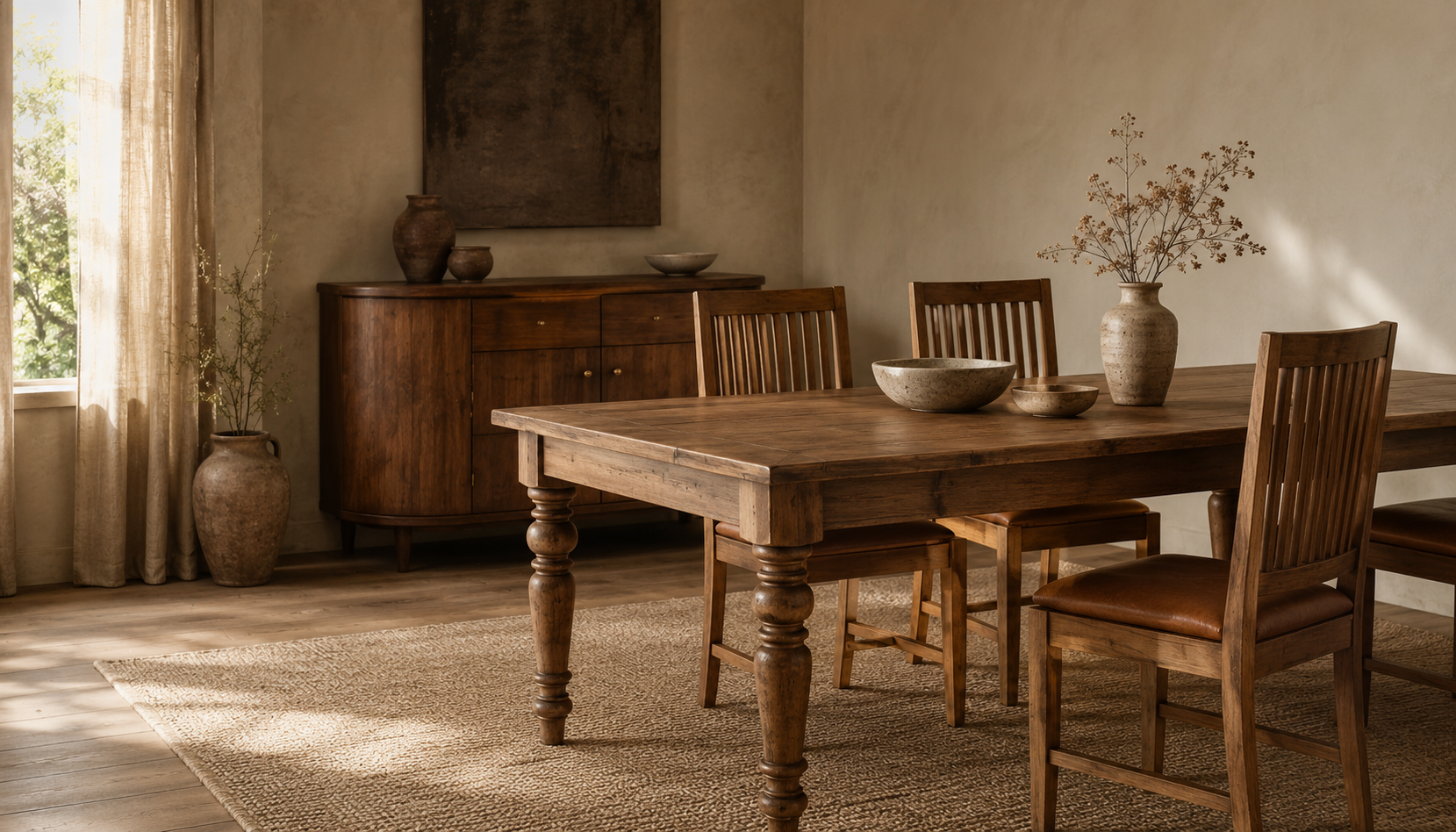
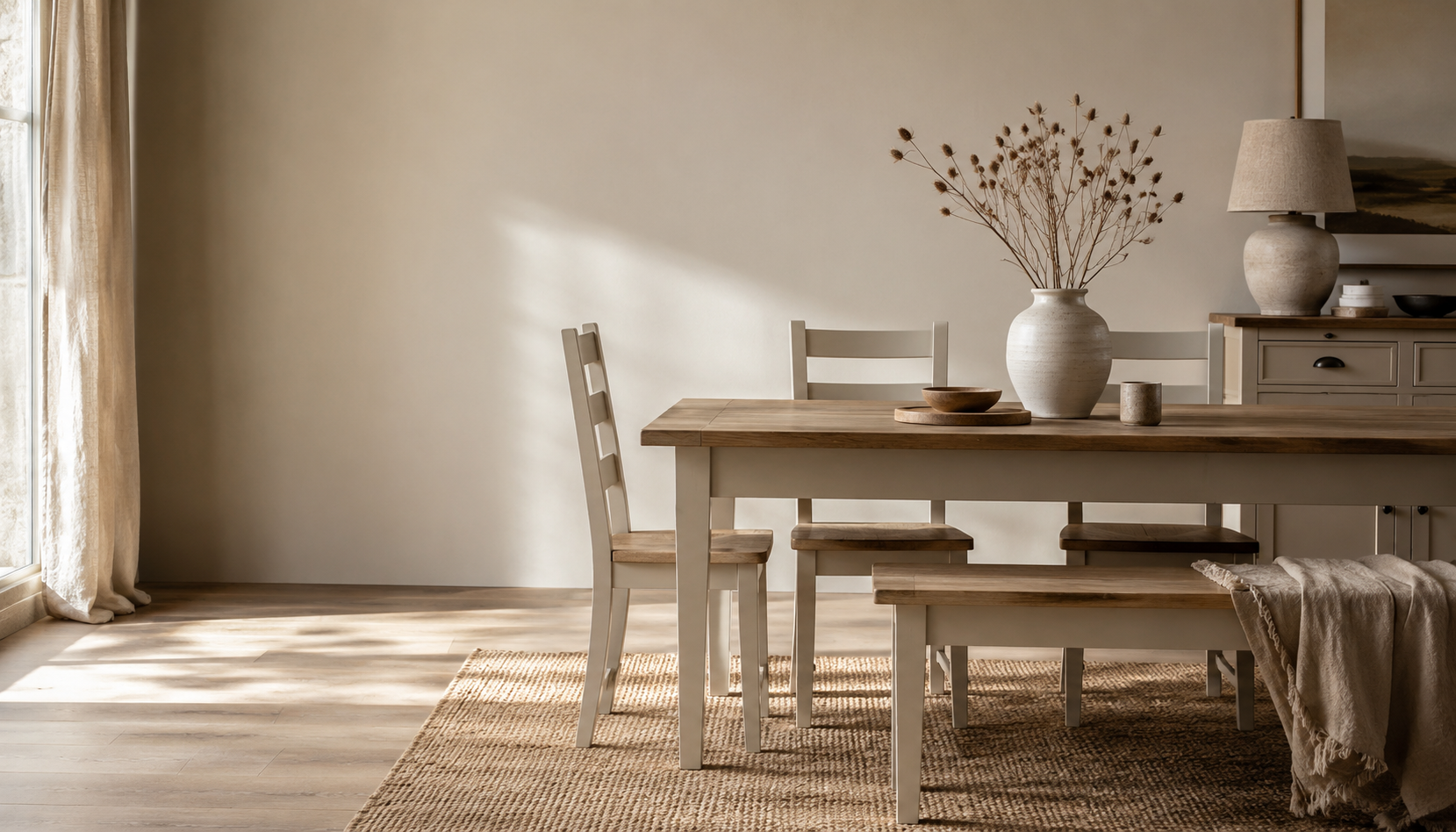
People often underestimate the emotional side of solid wood until they live with it. Timber brings visual warmth and a sense of permanence—especially in open-plan spaces where the dining area needs to feel anchored.
A few easy styling approaches that suit warm, characterful solid wood:
- Scandi/Japandi: keep it calm—pale linens, simple ceramics, and a single statement pendant. Let the grain do the talking.
- Mid-century modern: pair with curved chairs, a textured rug, and warmer accent colours (rust, olive, ochre). Solid wood complements those tones beautifully.
- Rustic modern: mix clean-lined lighting with tactile pieces (stoneware, woven placemats, a big bowl of fruit). The contrast keeps it grown-up rather than “country”.
- Organic modern: layer natural textures—bouclé, wool, rattan—and keep shapes soft. Solid mango wood can work particularly well here because it reads warm and inviting without feeling fussy.
Real-world tip: if your home has a lot of flat, cool surfaces (painted walls, plaster, large windows, laminate floors), a solid wood table often becomes the piece that makes the room feel more lived-in and balanced.
Conclusion
So, why is solid wood furniture so expensive? Mostly because you’re paying for better materials, more skilled labour, and construction that’s designed to last—and to be lived with properly. When you know what to check (what’s truly solid, how it’s built, how it’s finished, and whether it suits your daily life), the price stops feeling like a mystery and starts feeling like a considered choice.
If you’re ready to invest in a dining table that brings warmth, character, and longevity to your home, you can explore our handcrafted solid mango wood furniture collection and see the pieces designed for everyday living.