Can Bedroom Furniture Be Painted? A Practical Guide to Getting a Finish You’ll Actually Like
If your bedroom furniture looks dated, scratched, too dark, or just a bit “flat” in your space, painting can feel like the obvious fix. But the worry is real: can bedroom furniture be painted without it chipping, sticking, or ending up with that thick, plasticky finish that makes a room feel temporary?
The good news is yes—plenty of bedroom pieces paint beautifully. The key is knowing what you’re working with (solid wood, veneer, laminate, previously varnished), choosing the right products, and taking prep seriously. Done well, painting is one of the best-value upgrades you can make to a chest of drawers, bedside table, or dressing table—especially if the proportions are good and the piece is structurally sound.
Can bedroom furniture be painted? Yes—but check what it’s made from first
Before you buy a tin of paint, work out what the surface actually is. Your approach changes depending on the material, and this is where most DIY frustrations start.
Solid wood (including mango, oak, pine, etc.)
- Usually the most forgiving to paint.
- Takes sanding well and holds paint strongly.
- Expect natural movement: seasonal expansion and contraction can happen, so a durable topcoat matters.
Real wood veneer (a thin layer of wood over a core)
- Paints well if it’s in good condition.
- Sand very lightly—veneer is thin, and it’s easy to sand through at edges.
- A good primer is essential for even coverage.
Laminate / melamine / “foil” wrapped finishes
- These can be painted, but they’re the highest risk for peeling if prep is rushed.
- You’ll need a bonding primer designed for slick surfaces and a careful scuff-sand.
Previously waxed or oiled furniture
- Tricky: wax and oil can stop paint from bonding.
- You may need thorough cleaning, a degreaser, and a specialist primer (often shellac-based) to avoid “fish eyes” and patchiness.
Quick test: choose a hidden area (inside a drawer lip). If it scratches easily to a lighter base that looks like paper or plastic, it may be laminate. If you see real grain, it’s wood or veneer.
If the piece wobbles, has swollen chipboard, or drawers are failing, painting won’t fix the underlying problem. In that case, it’s often better to put time (and money) into something sturdier you’ll keep for years.
Decide whether painting is the right choice (or whether you’ll regret it)
Painting bedroom furniture is brilliant for the right piece—but not always the best answer. Ask yourself a few honest questions before you commit.
Painting is a great idea when:
- You like the shape and proportions, but hate the colour.
- The piece is solid and functional (drawers run well, frame is stable).
- The surface is marked or mismatched and you want a cleaner, calmer look.
- You want to make a vintage or inherited piece feel more “you”.
You may want to avoid painting when:
- The timber is beautiful and the marks are part of its character (a light sand and new finish might be better).
- It’s a flat-pack piece that’s already swelling at corners (paint won’t stop future wear).
- You need a quick fix and can’t allow for drying and curing time.
A useful rule of thumb: if you’re painting to hide poor construction, you’ll still feel the “cheapness” every time you use it. If you’re painting to update a good piece, you’ll likely love the result.
If you’re considering replacing instead, look for furniture made from solid wood where the warmth and grain bring something to the room even without styling. A well-made chest of drawers is one of those everyday items that quietly upgrades how your bedroom feels.
Prep that actually works: the difference between “looks fine” and “lasts for years”
Most paint failures come down to prep—either skipping it or doing it too lightly. The goal is simple: remove grime, create a key for the paint, and prime appropriately.
1) Remove hardware and label everything
Take off knobs/handles and store them in a bag. If you’re painting drawers, label their positions with low-tack tape so they go back where they fit best.
2) Clean properly (more than a quick wipe)
Bedrooms seem clean, but furniture collects polish, hand oils, and dust. Use a suitable degreaser or sugar soap solution, then rinse with clean water and let it dry fully.
3) Fill and fix
- Fill chips and dents with a good-quality wood filler.
- For deep scratches, fill and sand smooth.
- Tighten loose fittings; glue and clamp if joints have opened.
4) Sand—just enough, not to death
You don’t usually need to strip to bare wood.
- For varnished wood: a light-to-medium sand to remove gloss.
- For veneer: scuff sand gently (especially edges).
- For laminate: scuff sand lightly, then rely on bonding primer.
Wipe away dust with a vacuum and a damp cloth (or tack cloth). Dust is what makes paint feel gritty.
5) Prime like you mean it
Primer isn’t optional if you want durability.
- Use a stain-blocking primer if you’re painting over knots, tannins, or unknown old finishes.
- Use a bonding primer for laminate or slick surfaces.
- If you’re going from very dark to light, primer saves time and gives a cleaner final colour.
Let primer dry fully before you paint. Rushing here leads to dragging and tackiness later.
Choosing paint for bedroom furniture: what gives the best finish?
There’s no single “best” paint—there’s the best paint for how you live. Think about touch points (drawer fronts, top surfaces), and how much wear the piece takes.
Furniture paint / cabinet paint (water-based)
- A solid all-rounder for chests and bedside tables.
- Typically tougher than standard wall paint.
- Often self-levelling, so brush marks reduce as it dries.
Chalk-style paint
- Easy to use and very forgiving.
- Usually needs a wax or topcoat for protection.
- Great for softer, lived-in looks, but high-touch areas can mark if not sealed well.
Eggshell or satinwood (trim paint)
- Hard-wearing and widely available.
- Good for a more classic, smooth look.
- Works nicely in bedrooms where you want a quiet sheen rather than high gloss.
Avoid standard emulsion
Wall paint isn’t designed for constant handling. On drawer fronts it can scuff, go shiny in patches, and stain.
Colour and sheen tips for a grown-up result
- Soft whites and warm neutrals make rooms feel calmer and brighter (especially in north-facing bedrooms).
- Muted greens, clay tones, and inky blues work beautifully with warm woods, linen bedding, and natural textures.
- Lower sheen (matte/eggshell) hides imperfections but can mark more easily; satin wipes down better.
If you’re searching for painted bedroom furniture ideas, aim for contrast that feels intentional: a calm painted body with natural wood handles, or a painted piece paired with warm timber elsewhere so the room still feels grounded.
How to paint bedroom furniture so it doesn’t chip, stick, or feel “thick”
The finish is where DIY projects either look bespoke—or a bit blobby. These steps keep it clean.
Use thin coats
Two to three thin coats beat one heavy coat every time. Heavy paint is what causes drips, filled-in corners, and sticky drawers.
Brush vs roller vs spray
- A good synthetic brush works well for edges and detail.
- A small foam or microfibre roller can give a smoother finish on flat panels.
- Spraying can look incredible, but it’s a bigger setup and requires careful masking and ventilation.
Sand lightly between coats (optional but worth it)
Once a coat is dry, a very light sand with fine grit knocks back dust nibs and gives that smooth, “proper furniture” feel.
Don’t forget drawer runners and tight areas
Avoid painting the sides of drawers and inside runners heavily—this is where sticking happens. If you do paint them, keep coats very thin and allow extra cure time.
Curing matters more than drying
Paint can feel dry in hours but still be soft underneath for days (sometimes longer). Treat surfaces gently at first:
- Don’t stack heavy items on top straight away.
- Avoid putting jewellery boxes with rubber feet down too soon.
- Be careful with drawer fronts—fingernails are surprisingly good at denting fresh paint.
If you want a finish that stays looking smart in a busy home, patience here pays off more than any fancy product.
Finishing touches: sealing, styling, and making it look intentional
A great painted piece doesn’t just look “painted”—it looks like it belongs.
Do you need a topcoat?
It depends on the paint system you choose.
- Some furniture/cabinet paints are designed to be durable without a separate sealer.
- Chalk-style finishes usually need wax or a clear topcoat for protection.
If the top of your chest acts as a landing spot for a hairdryer, skincare, or a morning coffee, a protective finish is a sensible idea.
Update the hardware (or keep it simple)
Changing knobs and pulls can make a painted chest feel instantly more considered. Options that work well across mid-century modern, Scandi, Japandi and rustic modern spaces:
- Aged brass for warmth
- Black for contrast
- Wooden knobs for a softer, organic look
Style it like you live there
Real-world bedroom setups that make painted furniture feel pulled together:
- A painted chest with a warm table lamp, a framed print leaning casually, and a shallow tray for everyday bits.
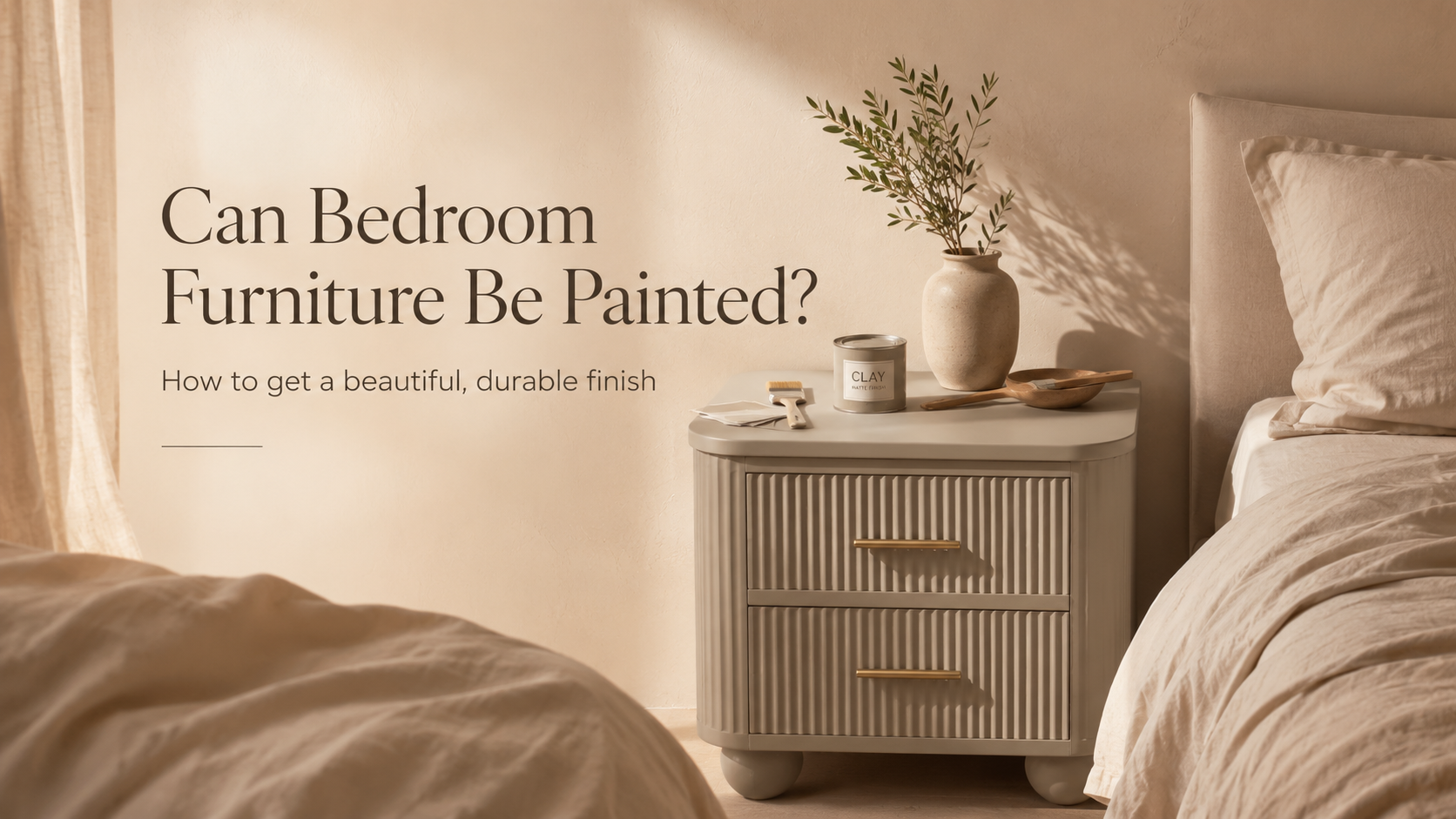
- A painted bedside table paired with textured bedding and a natural rug so the room doesn’t feel too “hard”.
- A dressing table in a muted shade with a simple mirror and one statement vase—less clutter, more calm.
If you find yourself painting because you want your room to feel warmer and more grounded, it’s worth considering whether adding (or switching to) a solid wood piece elsewhere might give you that feeling without hiding the grain. Solid mango wood, for example, brings a natural softness and character that plays beautifully with neutral walls and layered textiles.
Conclusion
So, can bedroom furniture be painted? Absolutely—and it can look genuinely high-end if you start with a solid piece, prep properly, choose the right paint, and give it time to cure. If your furniture is structurally sound but aesthetically tired, painting is a satisfying upgrade that can make your bedroom feel calmer and more intentional.
If you’re at the point where you’d rather invest in something you won’t feel the need to redo in a year or two, explore our handcrafted solid mango wood furniture collection—warm, durable pieces designed to live well and age beautifully.