Furniture care tips: keep solid wood looking beautiful for years
If you’ve ever watched a new table or chair pick up its first water ring, scuff, or mysterious sticky mark, you’ll know the sinking feeling: “Is it going to look worn out already?” Good furniture should settle into your home, not fall apart in it. These furniture care tips are designed for real life—busy kitchens, central heating, kids doing homework at the dining table, and that one sunny spot by the window—so your solid wood stays warm, characterful, and easy to live with for the long haul.
Start with the right mindset: patina vs damage
One of the biggest sources of frustration is not knowing what’s “normal” and what’s genuinely harming your furniture.
- Patina (the good kind): gentle softening of the finish, subtle sheen where hands rest, tiny marks that tell the story of the home. On well-made solid wood, this can add warmth rather than looking tatty.
- Damage (the avoidable kind): water marks that turn cloudy, heat scorch rings, deep scratches that break through the finish, wobbly joints from repeated stress, or fading and drying from strong sun and radiators.
A helpful rule: if a mark sits *on* the surface, it’s usually about cleaning and protection. If it’s *into* the surface (dented fibres, lifted grain, exposed wood), it needs a more careful approach.
Real-world example: dining chairs tend to show wear on the top rail (hands), front edge (belts and zips), and legs (vacuum bumps). That’s normal. The goal is to prevent the avoidable stuff—like sticky residue building up and turning dull or blackening at touch points.
Daily and weekly wooden furniture care tips that actually make a difference
Most “furniture problems” start as a simple build-up: dust, cooking film, hand oils, and everyday grime. The trick is keeping it gentle and consistent.
Daily (or as needed)
- Dust with a dry microfibre cloth (or a barely damp one). Dust is slightly abrasive; leaving it to build up can create fine swirls over time.
- Wipe spills straight away, especially around mugs, houseplants, and pet bowls.
Weekly
- Clean with warm water + a tiny drop of mild washing-up liquid on a soft cloth. Wring it well so it’s not wet.
- Follow with a dry cloth to remove any moisture.
Avoid
- All-purpose sprays designed for kitchens/bathrooms (they can be too harsh).
- Anything abrasive (cream cleaners, scouring pads).
- Silicone-based “miracle” polishes that leave a slippery film and attract dust.
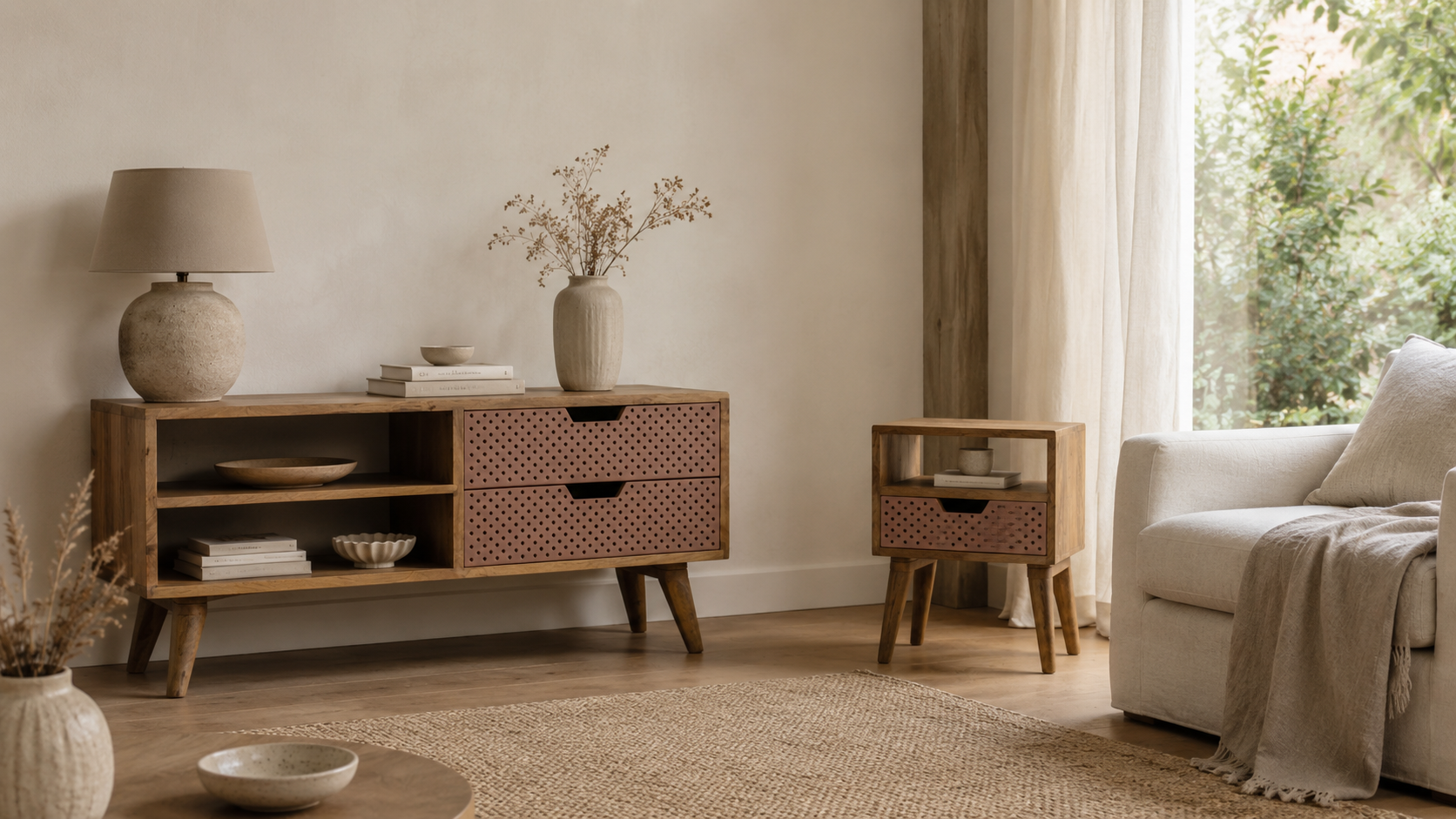
If your furniture has a handcrafted feel—like solid mango wood with visible grain—gentle cleaning helps the surface stay crisp and clear, rather than getting dulled by product residue.
How to protect furniture from the big three: water, heat and sunlight
If you’re wondering how to protect furniture without turning your home into a showroom, focus on simple habits and the right accessories.
1) Water and moisture
- Use coasters for hot drinks and cold glasses alike. Condensation can be just as mark-making as heat.
- Be mindful of potted plants: use a waterproof liner inside the pot and a tray underneath. Water that seeps slowly can leave stubborn marks.
2) Heat
- Use trivets and heat pads for hot serving dishes, slow cookers, and hair tools (yes, people do put straighteners down on sideboards).
- Keep furniture a little away from radiators. Constant dry heat can encourage wood to dry out and move over time.
3) Sunlight (UV fading)
- Rotate accessories (vases, lamps, baskets) so you don’t get “tan lines”.
- If a piece lives in a sunny bay window, consider a sheer blind or UV-filtering window film.
Real-world example: a pair of wooden chairs by the patio doors looks brilliant, but that spot gets strong afternoon sun. Even a small change—closing a sheer for the brightest hours—helps keep the colour more even over the years.
Furniture care tips for chairs: stop wobble, scuffs and stress marks
Chairs work harder than almost any other piece of furniture. They’re moved, tipped, leaned back on (despite your best efforts), and dragged over floors.
Prevent wobble early
- If a chair starts to rock, don’t ignore it. Continued movement can loosen joints further.
- Check whether the floor is uneven first (it often is). Felt pads can solve a surprising amount.
Protect legs and floors
- Add quality felt pads to chair feet. Replace when they flatten or collect grit.
- If you have textured tile or rough stone flooring, pads are essential—otherwise you’re effectively sanding the finish every time you pull the chair out.
Lift, don’t drag (when you can)
Dragging isn’t “bad behaviour”; it’s just life. But lifting occasionally—especially when repositioning a set of chairs—reduces stress on joints and keeps the finish cleaner at the feet.
Mind the cleaning zone
Dining chair seats and top rails gather hand oils and cooking film. A gentle weekly wipe keeps the finish clear and prevents that slightly sticky, dull look that can develop over time.
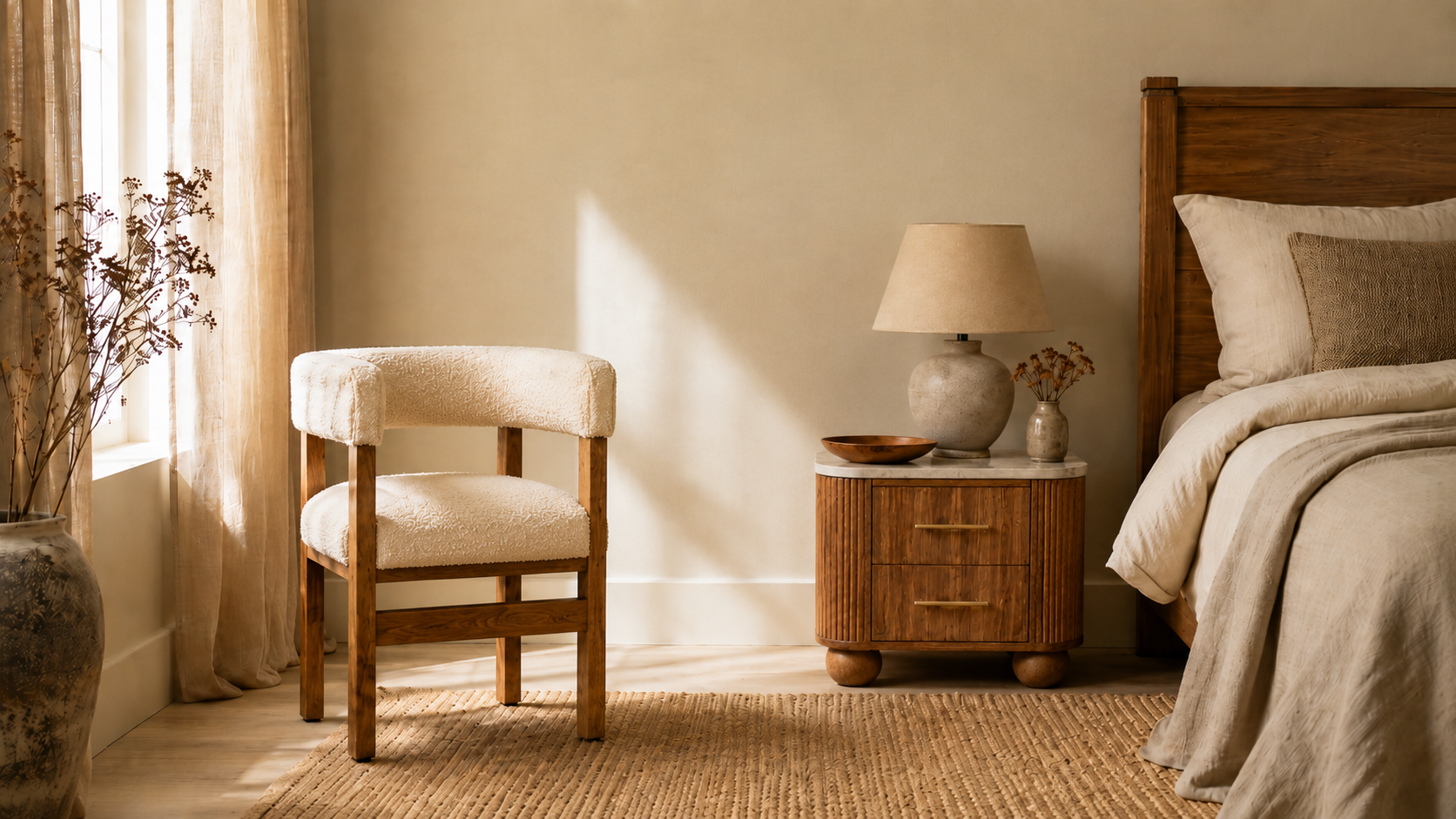
If you’re buying new chairs, look for stable proportions, solid joinery, and a finish that feels smooth and well-sealed—these details make day-to-day care much easier.
Before you buy: what to look for so your furniture is easier to maintain
Some furniture is simply more forgiving. If longevity is your priority, a few buying checks will save you years of annoyance.
Choose solid wood where it matters
Solid wood can be maintained and refreshed over time in a way that thin veneers and laminated surfaces often can’t. It also tends to feel warmer and more “grown-up” in a room.
Look closely at the finish
- A well-applied finish should feel consistent and smooth, without tackiness.
- Ask yourself: will you be able to wipe this down after spaghetti night without fuss?
Check the design for real life
- Sharp edges look sleek but show knocks more easily.
- Slightly rounded profiles can be more family-proof.
- Consider where hands naturally go (top rails, drawer fronts) and how easy it will be to clean those touch points.
Think about placement
That perfect spot might be right next to a radiator or in full sun. If the only possible location is a harsh environment, plan protection (rugs, blinds, a small gap from heat sources) from day one.
For homes that lean mid-century modern, Japandi, Scandinavian, or rustic modern, solid mango wood brings a calm warmth and visible grain that suits simpler styling—meaning you can keep surfaces uncluttered and easier to wipe down.
Stains, marks and scratches: what to do (and what not to do)
Even with good habits, marks happen. The goal is to respond calmly and avoid making things worse.
First: identify the mark
- Sticky residue / greasy film: usually from cooking vapour, hands, or cleaning-product build-up.
- White cloudy ring: often moisture trapped in the finish.
- Dark mark: can be moisture that’s penetrated deeper, or repeated contact in one area.
- Scratch: may be in the finish only, or through to the wood.
Safe first steps
1) Clean gently with warm water + a small amount of mild washing-up liquid.
2) Dry immediately.
3) If the mark remains, stop and check the care guidance you have for that specific finish.
What not to do
- Don’t use abrasive pads or “scrub until it goes” methods.
- Don’t reach for strong solvents or harsh sprays.
- Don’t over-wet the surface hoping it will “lift” a stain.
When to consider professional help
If you have a deep scratch, a persistent dark stain, or widespread dullness from years of build-up, a professional can often revive a solid wood piece far more effectively than DIY experimenting.
A small, honest note: the best results come from gentle care over time. Most disasters start with an aggressive product used in a panic.
Conclusion
The best furniture care tips are the ones you’ll actually keep up with: soft cloths, quick spill wipe-ups, protection from heat and standing water, and a little awareness of sunlight and radiators. Solid wood rewards that effort—it stays warm, tactile, and full of natural character rather than looking tired after a year or two. If you’re choosing pieces with longevity in mind (especially hardworking items like chairs), a good finish, sensible proportions, and easy-clean surfaces make day-to-day living simpler.
Explore our handcrafted solid mango wood furniture collection when you’re ready to invest in pieces designed to be lived with, not tiptoed around.