Who Makes Solid Wood Furniture? A Practical US Guide to Finding Makers You Can Trust
If you’ve been trying to work out who makes solid wood furniture that is actually worth living with, you’re not alone. The furniture market is full of “wood-look” finishes, thin veneers over MDF, manufactured wood, and pieces that look beautiful in photos but chip, wobble, or age badly once they arrive in a real home.
If you’re buying for the long term, especially for busy living rooms, open-plan spaces, and family homes, you need more than a nice shape or a styled product photo. You need honest materials, thoughtful construction, and a maker or brand that can clearly tell you what you are getting.
Solid wood furniture is an investment in warmth, durability, and timeless style. The challenge is knowing who actually makes solid wood furniture properly, and who is simply using the language of craftsmanship to sell something less substantial.
Why it is hard to tell who makes real solid wood furniture
A big part of the confusion comes from language. In US furniture listings, the word “wood” can mean several different things.
Solid wood means the main visible and structural parts are made from real timber all the way through. That does not always mean one single slab or plank. Many solid wood panels are made from multiple timber pieces joined together for strength and stability.
Veneer means a thin layer of real wood has been bonded to another core material, often MDF, particleboard, plywood, or manufactured wood. Veneer can be attractive and well-made, but it is not the same as solid wood. Once the surface is damaged, repair options are usually more limited.
MDF, particleboard, and manufactured wood are engineered boards. They can be practical in certain contexts, especially for budget furniture, but they are often why pieces feel less substantial over time. Corners can swell, fixings can loosen, and surface damage usually cannot be sanded or restored like solid wood.
Then there is the question of who actually makes the furniture. Some brands design their pieces in-house and work with partner workshops. Some are independent makers building small-batch furniture by hand. Others are large manufacturers producing solid wood ranges at scale. None of these models is automatically good or bad.
The key is transparency.
A trustworthy furniture maker or retailer should be clear about:
- what wood species is used
- which parts are solid wood
- whether any parts are veneer, MDF, or particleboard
- how the piece is constructed
- what finish is applied
- how the furniture should be cared for
If a listing cannot tell you what the frame, legs, panels, and structural parts are made from, that is usually your answer.
Who makes solid wood furniture? The main types of makers you will find
When people search for who makes solid wood furniture, they are usually trying to avoid being misled. They want to know who is making furniture that feels substantial, looks beautiful, and lasts beyond a few seasons.
In practice, you will usually come across a few main types of solid wood furniture makers.
1. Independent woodworkers and small workshops
Independent makers are the traditional handcrafted route. These are woodworkers, joiners, and small studios that often build furniture in smaller batches or to order.
The benefits can include:
- strong craftsmanship
- custom sizing
- custom finishes
- direct communication with the maker
- more flexibility around design details
The trade-off is that lead times may be longer, prices may be higher, and availability may be less predictable.
This route is ideal if you want a one-off piece, a custom dining table, or furniture made specifically for your room.
2. Design-led furniture brands working with specialist workshops
Many modern furniture brands sit in this category. They design a consistent collection, then work with experienced workshops or production partners to make the pieces.
This can be a strong middle ground. You get the benefit of considered design, quality control, and a more reliable shopping experience, while still buying furniture made with proper materials and skill.
This type of brand is often a good fit if you want solid wood furniture that feels handcrafted but still works beautifully in a contemporary home.
3. Heritage furniture manufacturers
Some larger or long-established furniture manufacturers make solid wood pieces using traditional methods and proven construction techniques. These brands may have deep experience, refined processes, and recognizable design styles.
The benefit is consistency and reputation. The trade-off is that designs can sometimes lean more traditional, and you may pay more for the name.
4. Mass-market retailers with mixed-material ranges
Large retailers sometimes sell solid wood furniture, but they often carry a mixture of solid wood, veneer, MDF, particleboard, and manufactured wood pieces.
This is not automatically bad. It simply means you need to read product specifications carefully. A piece may have solid wood legs but a veneered top. A cabinet may have a solid wood frame but engineered wood panels. A media unit may be described as “wood” without being solid wood throughout.
If you are specifically looking for investment-level solid wood furniture, do not rely on style words alone. Look for specific material information.
5. Online marketplaces and handmade platforms
Marketplaces can be a source of beautiful handmade wood furniture, but quality and transparency vary widely. Some sellers are true craftspeople. Others may use vague descriptions or imported flat-pack pieces with wood-look finishes.
If you shop through a marketplace, ask direct questions before buying and look carefully at reviews, photos, materials, and return policies.
What to look for in solid wood furniture makers
You do not need to be a furniture expert to spot quality. These practical signs will help you separate well-made furniture from pieces that are simply styled well.
1. Clear material descriptions
A trustworthy product page should explain what is solid wood and what is not. It should specify the wood species and identify the main materials used in the frame, panels, legs, top, shelves, and internal supports.
Vague wording like “wood,” “natural wood,” or “timber finish” without further explanation is a red flag.
2. Construction details
Look for signs that the maker understands how the piece is built. This might include references to joinery, sturdy fixings, panel construction, reinforced corners, or properly supported tops.
You do not need a technical woodworking lesson. You simply want enough detail to feel confident that the piece has been built for real use.
3. Weight and stability
Solid wood furniture tends to have a reassuring weight. A well-made coffee table, sideboard, TV unit, or dining table should feel grounded rather than flimsy.
If you are viewing in person, gently check for wobble. If you are shopping online, look for thicker legs, proper bracing, sensible proportions, and customer reviews that mention sturdiness.
4. Finished edges and corners
Good furniture feels considered where you touch it. Edges should not feel sharp, brittle, or unfinished. Corners should look intentional, not fragile.
This matters especially in busy living rooms, where coffee tables, media units, and sideboards are handled every day.
5. Natural grain variation
Real wood has movement, character, and tonal variation. You may see knots, grain lines, color changes, and unique markings. That is part of its appeal.
What you want is natural variation that feels intentional, not random patching or inconsistent staining.
6. A finish that suits everyday life
The finish affects how furniture handles spills, cleaning, sunlight, heat, and daily wear. Ask whether the piece is oiled, waxed, lacquered, sealed, or stained.
A good finish should protect the wood while still allowing the natural character to show. Be cautious of finishes that look overly glossy, plasticky, or completely uniform.
7. Repairability
One of the biggest benefits of solid wood is that it can often be repaired or refinished. Small dents, water rings, and everyday marks may be treatable in a way that wood-effect surfaces are not.
This is part of what makes solid wood furniture feel like a long-term choice rather than a temporary purchase.
8. Thoughtful proportions
This sounds simple, but it makes a huge difference. A well-made piece has balanced proportions: the legs suit the top, the overhang feels right, and the scale works for the room.
This is often what separates furniture that looks “grown-up” from furniture that feels like a short-term placeholder.
9. Honest photography
Zoom in on product images. You should be able to see grain, texture, edges, corners, and finish. If every photo is heavily styled from far away, it becomes harder to judge the quality.
For solid wood furniture, close-up photography is not a bonus. It is part of the buying process.
Questions to ask before buying solid wood furniture online
If you are buying without seeing the piece in person, asking the right questions will quickly reveal whether a brand is confident in its materials and build quality.
“Is it solid wood throughout, or are any parts veneer, MDF, or particleboard?”
Ask specifically about the top, sides, shelves, back panels, drawer fronts, legs, and internal supports.
A trustworthy retailer should be able to tell you exactly what is solid and what is not.
“What wood species is used?”
Different woods have different looks, weights, tones, and grain patterns. A good seller should be able to explain the choice in plain English.
For example, solid mango wood is often chosen for its warm tone, expressive grain, and versatile style.
“How is it constructed?”
You do not need a detailed joinery diagram. You just want reassurance that the piece is built to be stable, durable, and suitable for everyday use.
“What finish is used, and how should I care for it?”
This tells you how the furniture will handle spills, heat, dusting, and daily cleaning. A good brand will offer practical care guidance rather than vague promises.
“What natural variation should I expect?”
With real timber, no two pieces are exactly the same. A trustworthy brand will explain that grain, tone, and markings can vary. That honesty is a good sign.
“Can you share close-up photos?”
Ask for images of the grain, corners, edges, underside, or joinery if they are not already shown. These are the details that reveal quality.
If the answers feel evasive, generic, or overly sales-focused, be cautious.
How solid wood furniture lives in a real home
The reason people invest in solid wood furniture is not just how it looks on delivery day. It is how it holds up as life happens around it.
In a family living room
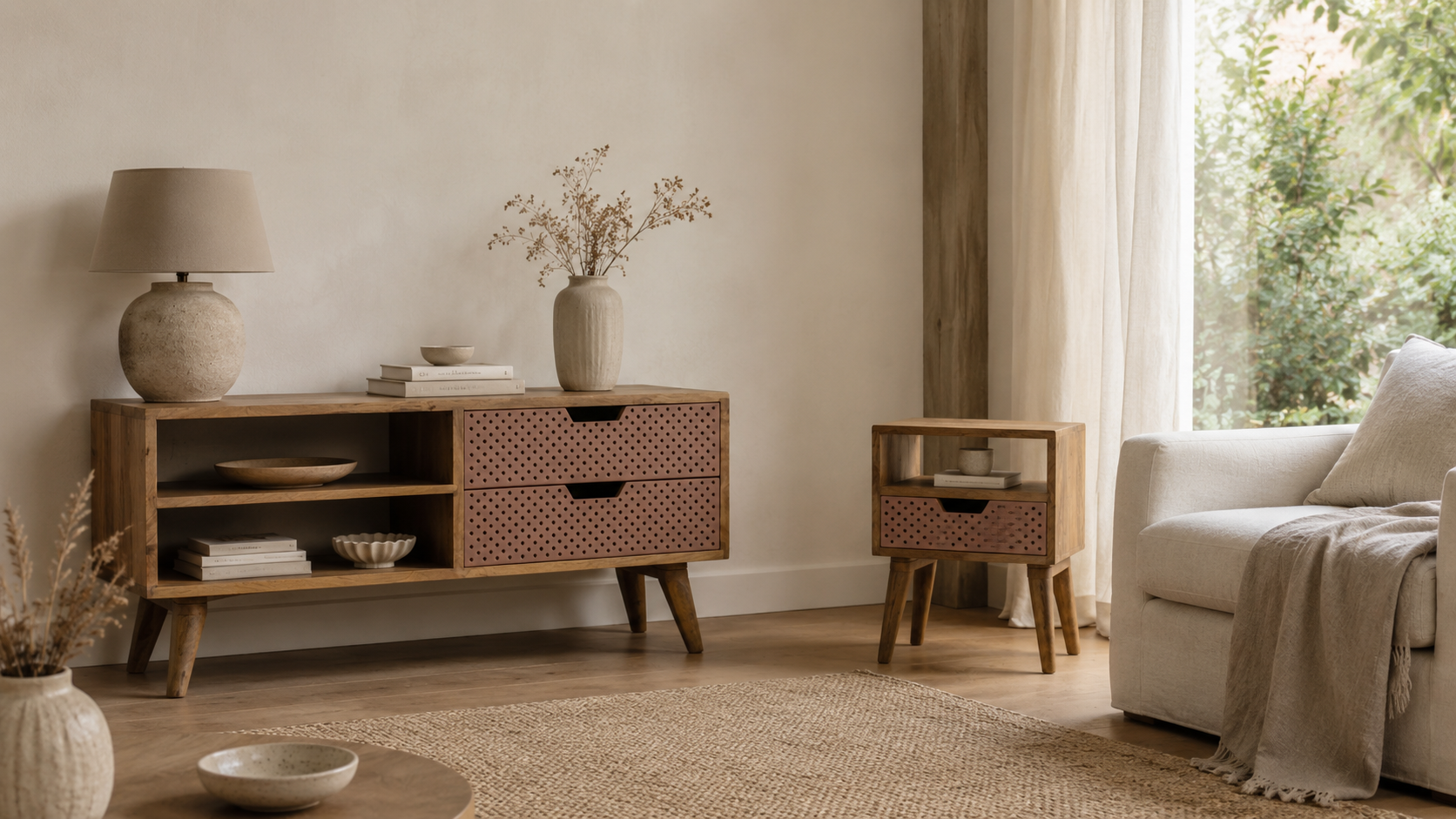
A solid wood coffee table, sideboard, or TV unit can handle the rhythm of everyday life: remote controls, books, toys, cups, trays, and the occasional bumped corner. Small marks often become part of the patina rather than making the piece feel ruined.
In an open-plan space
Natural timber helps soften the hard edges of open-plan layouts. It brings warmth and texture alongside painted cabinetry, stone counters, metal accents, glass, and neutral walls.
A solid wood sideboard or media unit can help an open-plan room feel more grounded and complete.
In a home you are gradually upgrading
If you are replacing temporary furniture piece by piece, solid wood is a smart place to start. A well-made TV unit, sideboard, or dining table can instantly make a room feel more permanent and intentional without a full renovation.
In a style that evolves
Solid wood is versatile. Mid-century silhouettes work with rich color. Japandi interiors stay calm and minimal. Rustic modern spaces feel warmer and more textured. Organic modern rooms gain depth from natural materials.
Good timber furniture does not date quickly because the material itself has character.
Pairing solid wood with sofas and upholstered furniture
Solid wood works especially well with upholstered seating because the materials balance each other. Fabric brings softness, comfort, and ease. Wood brings warmth, structure, and visual weight.
In a living room, a comfortable sofa paired with a solid wood coffee table, sideboard, or media unit can make the whole space feel more considered. The sofa sets the mood for comfort, while the wood pieces make the room feel grounded and finished.
If you are updating your living room, it can help to choose your main seating first, then build the rest of the room around complementary wood tones, textures, and proportions.
Why mango wood is popular in solid wood furniture
Solid mango wood has become a popular choice for modern homes because it offers a lovely balance of practicality, warmth, and character.
It is known for:
- expressive natural grain
- warm tonal variation
- a substantial feel
- versatility across interior styles
- a look that feels natural but not overly rustic
Mango wood works particularly well in:
- mid-century modern homes
- Scandinavian-inspired rooms
- Japandi spaces
- organic modern interiors
- rustic modern living rooms
- warm neutral schemes
If you like furniture that feels characterful without looking fussy, solid mango wood is a strong choice.
What to look for in solid mango wood furniture
When shopping for solid mango wood pieces, look for three things.
First, expect natural variation. Mango wood often has distinctive grain movement and tonal shifts. That is part of what makes each piece feel individual.
Second, check the finish. The finish should protect the wood without masking its character. If it looks overly glossy, flat, or heavily stained, you may be seeing more finish than timber.
Third, look for sensible construction. Solid wood naturally expands and contracts slightly with seasonal changes. Good makers understand this and build furniture in a way that supports long-term stability.
How Grain and Loom approaches solid wood quality
If you are trying to find solid wood furniture makers you can trust, clarity matters. Grain and Loom focuses on solid mango wood pieces designed to feel warm, timeless, and liveable, with furniture that works in real homes rather than just styled rooms.
For a living space, think in anchors. A sofa creates comfort and softness. A solid wood sideboard, TV unit, or coffee table brings structure, texture, and warmth. Together, they make a room feel settled and intentional.
If you are refreshing your living room, you can start with seating and then build around it with solid wood pieces that add depth and character.
- Explore sofas: https://www.grainandloom.com/collections/sofas
- Shop living room furniture: https://www.grainandloom.com/collections/living
For a more connected home, you can carry complementary wood tones into your dining area or bedroom.
- Browse dining furniture: https://www.grainandloom.com/collections/dining
- Discover bedroom furniture: https://www.grainandloom.com/collections/bedroom
Final thoughts
Working out who makes solid wood furniture you can genuinely rely on comes down to a few simple things: transparent materials, proper construction, a finish that suits real life, and a brand that can answer straightforward questions without hiding behind vague wording.
Once you know what to look for, it becomes much easier to spot the difference between furniture that is built to last and furniture that is built to sell quickly.
Look for clear material descriptions, honest photography, natural grain, thoughtful proportions, and practical care advice. Ask what is solid wood, what is not, how the piece is finished, and how it will live in your home.
If you are ready to invest in pieces with warmth, natural grain, and long-term liveability, explore the handcrafted solid mango wood furniture collection at Grain and Loom.