Why buy solid wood furniture? A practical guide to whether it’s worth it
If you’ve been eyeing up solid wood furniture but hesitating at the price tag, you’re not alone. The question behind most browsing is simple: why buy solid wood furniture when there are cheaper lookalikes everywhere?
Usually it comes down to a few real worries: Will it actually last longer? Is it harder to live with? Will it suit my home (and not feel too heavy or traditional)? And is solid wood furniture worth it if you’ve got kids, guests, or a small space that needs to work hard?
Here’s the grounded answer: solid wood isn’t automatically “better” in every situation—but when you choose well, it tends to offer a different kind of value. It ages with you, it’s more forgiving of real life, and it brings a warmth and character that flat, mass-made finishes struggle to imitate. This guide breaks down the benefits of solid wood furniture, what to look for before you buy, and how it plays out in an actual home—especially when it comes to dining tables.
Why buy solid wood furniture for long-term value (not just looks)?
A dining table isn’t a seasonal purchase. It’s where you eat, work, do homework, wrap gifts, host friends, and inevitably spill something. Over time, the true “cost” of a table isn’t just the purchase price—it’s how it holds up and how often you feel the need to replace it.
Solid wood tends to earn its keep because it’s built from a single, substantial material rather than a thin surface designed to look like wood. With many cheaper alternatives (often veneer, laminate, or foil finishes over engineered board), the weak point is the surface layer. Once it chips, peels, bubbles, or swells, there’s rarely a satisfying fix.
Solid wood, by contrast, can often be maintained and refreshed. Small marks become part of the story, and deeper wear can usually be improved with careful sanding and refinishing if you ever want a reset. That’s one of the most practical benefits of solid wood furniture: it’s designed to be lived with, not tiptoed around.
Real-world example: If your dining table doubles as a home office three days a week, a solid wood top is more likely to tolerate years of laptops, mugs, and the occasional dragged notebook without looking ‘done’ after one hard winter.
Durability in everyday homes: what solid wood does better
If your current furniture has taught you anything, it’s that day-to-day durability is about more than a “hardwearing” label. Here’s what solid wood often does better in real homes:
• Better resistance to surface failure: A solid wood top may scratch, but it won’t typically peel like a thin synthetic finish.
• More stable structure when well-made: A properly constructed solid wood table feels planted. It’s less likely to develop that annoying wobble that makes every meal feel slightly temporary.
• A more forgiving surface over time: Minor knocks and dings usually read as natural wear rather than catastrophic damage.
That said, it’s worth being honest: all wood is a natural material, and it reacts to its environment. Extremely dry rooms, big temperature swings, and direct heat can affect any timber. The difference is that solid wood is usually easier to maintain in the long run, and the wear tends to look more “earned” than “broken.”
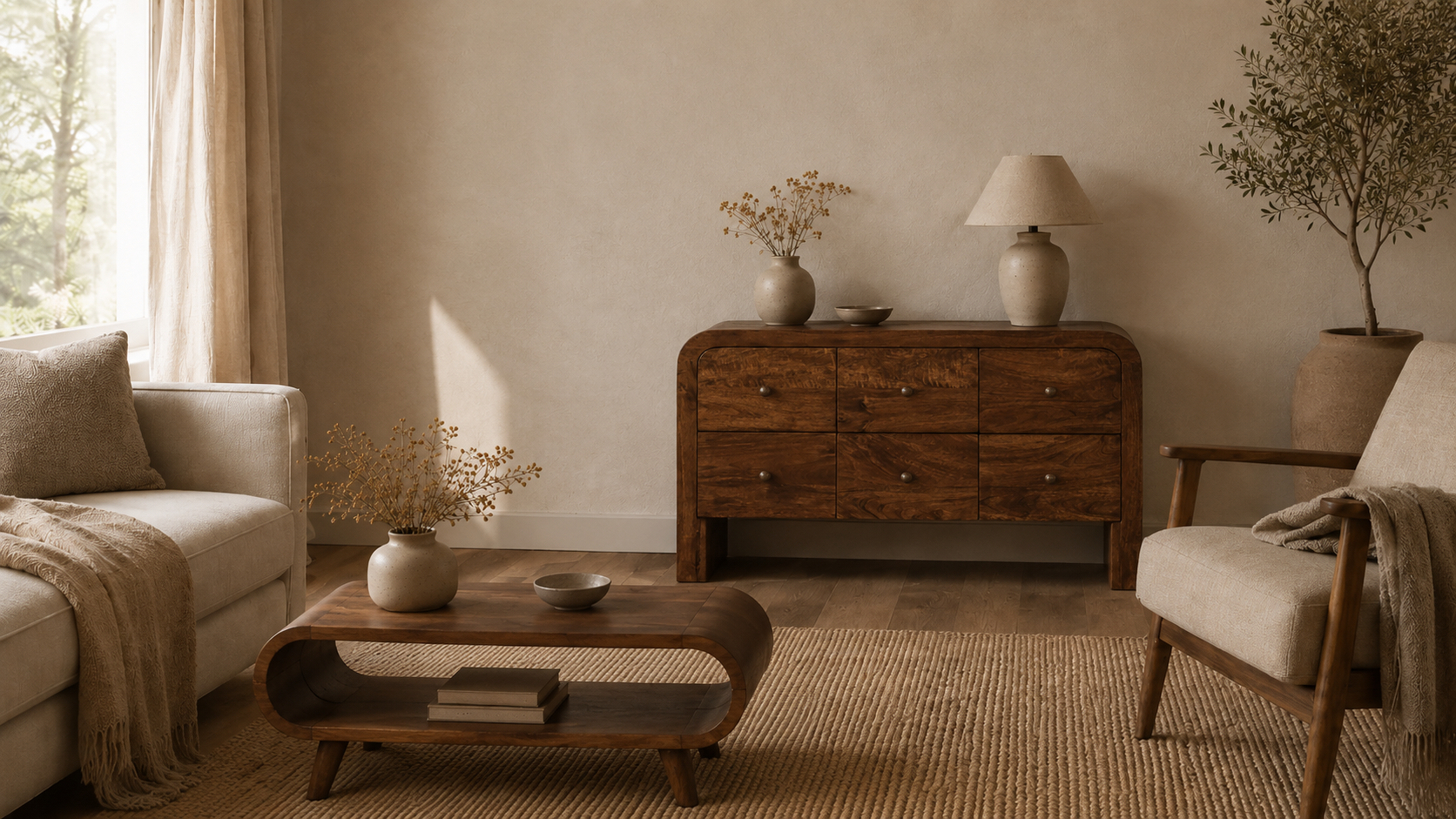
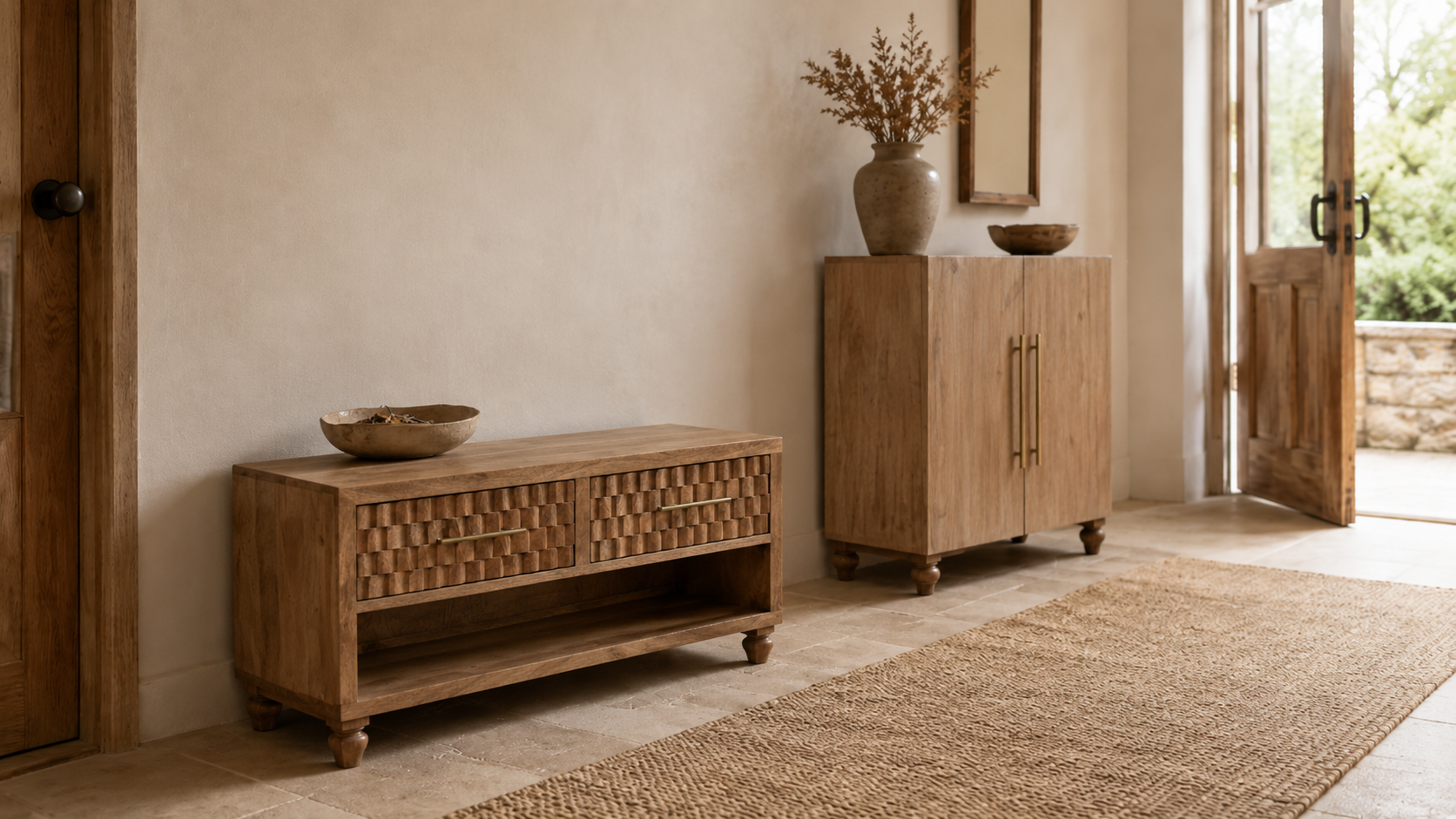
If you’re considering solid mango wood specifically, it’s popular for a reason: it has a dense feel, a warm tone, and distinctive grain that suits everything from mid-century modern to organic modern interiors. Like all natural wood, it will show variation—think tonal shifts and grain patterns—so your table feels characterful rather than printed.
The benefits of solid wood furniture for how a room feels
Plenty of people start their search thinking purely about practicality, then realise the biggest upgrade is atmosphere.
Solid wood has visual depth. The grain catches the light differently across the surface, and the tone tends to add warmth that makes a room feel more finished. This is especially noticeable in open-plan spaces, where a dining table often sits in the visual centre of the home.
If you love calm, “grown-up” interiors (Scandi, Japandi, mid-century modern, rustic modern), solid wood works because it brings natural texture without shouting. It can soften a room full of hard surfaces—painted walls, glass, a sleek kitchen—while still looking intentional.
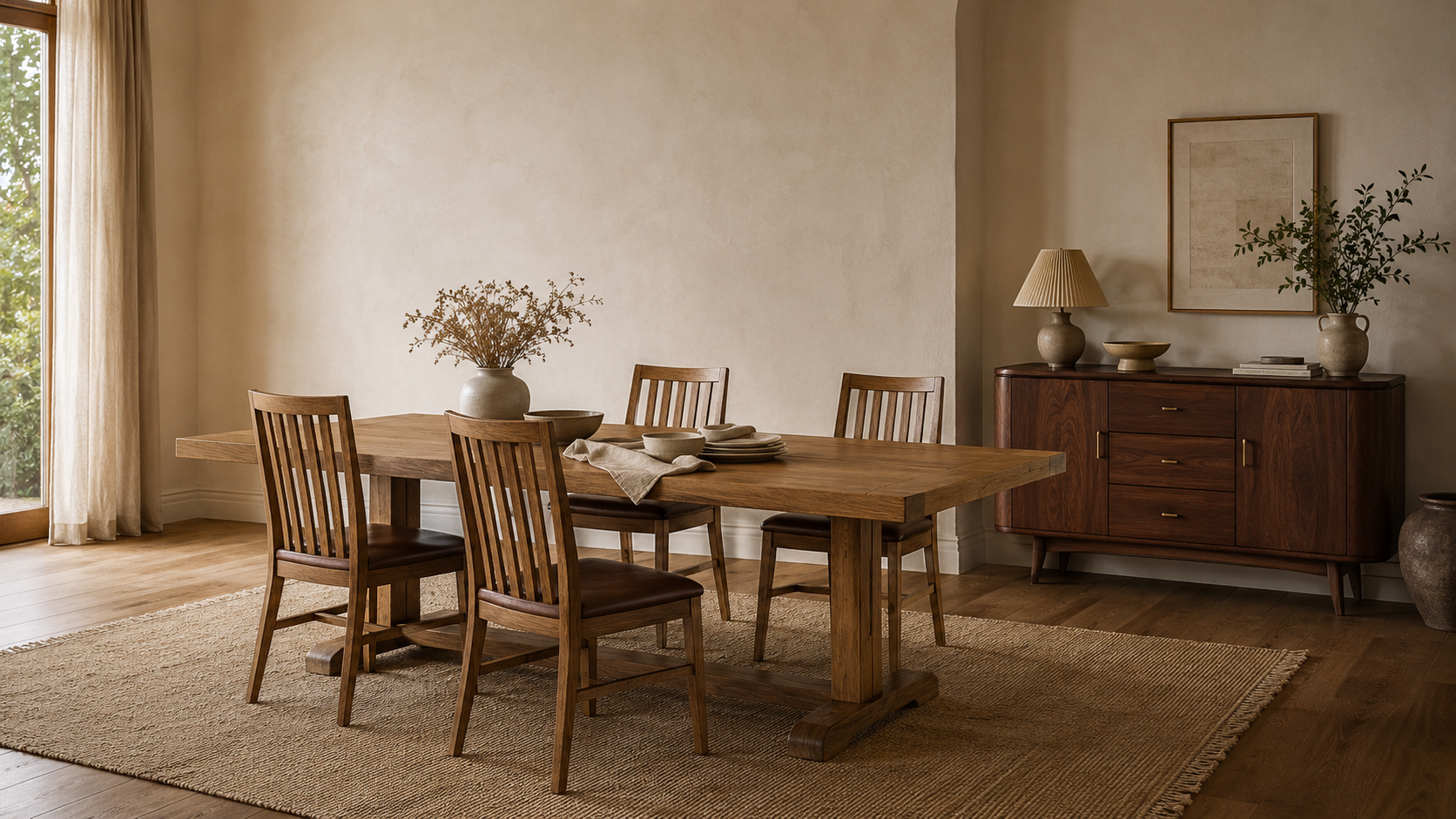
Styling tip: If you’re worried solid wood might feel heavy, balance it with lighter dining chairs, a simple pendant, and a neutral rug. Let the table be the anchor and keep the rest airy.
Real-world example: In a rented flat with white walls and standard flooring, adding a solid wood dining table can make the whole place feel less like a stopgap—even if you keep everything else fairly minimal.
Is solid wood furniture worth it? A quick way to judge quality before you buy
If you’re trying to decide whether solid wood furniture is worth it, focus less on the label and more on the build. Two solid wood tables can perform very differently depending on construction details.
Here’s what to check (especially for dining tables):
1) Joinery and stability
Look for sturdy joinery and a base that feels structurally confident. A good table shouldn’t rely on a few small fixings doing all the work. If you can, check for bracing and how the legs meet the frame.
2) Thickness and proportions
A table top with sensible thickness tends to feel more substantial and wears better visually over time. Proportions matter too—an elegant base with the right overhang makes a table feel considered rather than clunky.
3) The finish (and the feel of it)
A good finish should feel smooth, not plasticky. You want protection, but you still want the timber to look like timber. Ask yourself: does it look like a layer sitting on top, or does it enhance the wood?
4) Practical details for real life
• How many people does it seat comfortably?
• Will chairs tuck in neatly?
• Is there enough legroom at the corners?
• Does it suit how you actually use the table—everyday meals, working, hosting?
A helpful mindset: you’re not paying extra for “solid wood” as a concept—you’re paying for material quality, craftsmanship, and a table that won’t need replacing when life gets busy.
Maintenance without fuss: how to live with solid wood (especially dining tables)
Maintenance is one of the biggest blockers people have—and it’s often based on the idea that solid wood is precious or high-maintenance. In reality, solid wood suits normal households well as long as you follow a few simple habits.
Everyday care
• Wipe spills sooner rather than later (especially wine, coffee, and anything oily).
• Use mats for hot dishes and coasters for drinks if you can—mainly to avoid heat marks.
• Dust with a soft cloth to stop grit acting like sandpaper.
Seasonal common sense
Wood prefers a reasonably stable environment. If your table sits next to a radiator or in direct, strong sunlight, consider moving it slightly or using curtains/blinds at peak sun. This isn’t about perfection—just avoiding extremes.
Embracing patina
One of the underrated benefits of solid wood furniture is that it can develop a gentle patina. For many homes, that lived-in look is part of the charm. And if you ever want it looking fresher, solid wood is typically more “renewable” than thin-surfaced alternatives.
Real-world example: If you’ve got young kids, you might actually find solid wood more relaxing. You can accept the odd mark as normal, rather than worrying that one knock will take the finish beyond repair.
Choosing the right solid wood dining table for your space and style
A solid wood dining table should make life easier—not dominate the room. A few practical pointers help you choose a shape and size that works.
Size and clearance
As a rule of thumb, make sure there’s enough space to pull chairs out comfortably and walk around the table. If your dining area is tight, a narrower table can feel far more pleasant day to day than squeezing in maximum width.
Shape: rectangular vs round
• Rectangular tables are brilliant for family life, bench seating, and hosting.
• Round tables soften a boxy room, improve flow in smaller spaces, and make conversation easier.
Matching styles (without making it a ‘set’)
Solid wood plays well with mixed materials. Try pairing timber with:
• upholstered chairs for softness,
• black metal legs for a mid-century edge,
• pale textiles and simple ceramics for a Japandi feel.
If your home already has warm tones (oak floors, tan leather, brass), a warm wood table will look cohesive. If your palette is cooler (greys, whites, black accents), solid wood adds contrast and stops the space feeling flat.
And if you’re choosing solid mango wood, lean into its natural variation—layer it with quiet textures (linen, wool, stoneware) so the grain feels like a feature rather than visual noise.
Conclusion
If you’re weighing up why buy solid wood furniture, the most convincing answer is rarely a single feature—it’s the combination. Solid wood tends to look warmer, feel sturdier, and make everyday living a bit easier because it’s built to last and age naturally. For many homes, that’s exactly what makes it feel worth the extra spend.
If you’re ready to narrow down options, start with the piece that gets the most use: the dining table. Explore our handcrafted solid mango wood furniture collection, and take a look at Grain and Loom’s dining table styles to find proportions and finishes that suit how you actually live.