Living Room Furniture Sets: How to Create a Cohesive, Warm Space That Lasts
If you’ve ever furnished a living room piece by piece and still felt like something’s “off”, you’re not alone. A sofa that’s the wrong scale, tables that don’t relate, wood tones that clash, or a room that looks a bit temporary can make even a lovely home feel unsettled. Thoughtful living room furniture sets can solve that—creating a space that feels cohesive, warm and properly lived-in, without looking like a showroom.
Why your living room can feel mismatched (even with nice individual pieces)
Most living rooms don’t feel disjointed because the furniture is “wrong” in isolation—it's because the pieces aren’t speaking the same design language.
Common culprits:
- Scale doesn’t line up. A slim sofa paired with chunky side tables can feel accidental. Or a large sofa with tiny occasional tables makes everything look undersized.
- Finishes fight each other. Cool grey wood next to warm honey wood; high-gloss next to matte; black metal here, brass there—too many competing cues.
- Styles don’t share a thread. One piece leans industrial, another is farmhouse, another is ultra-minimal. A little contrast is great; a lack of connection is what makes it feel messy.
- Function was an afterthought. If you’re constantly shifting a table to put down a mug, or the route to the sofa is awkward, the room never feels calm.
The goal isn’t to buy everything matching. It’s to create a clear, repeatable rhythm—materials, proportions, and practical placement that makes the room feel intentional.
Living room furniture sets: what “cohesive” really means (and what to avoid)
The phrase *matching living room furniture* can bring to mind overly coordinated rooms where everything is the same shade and shape. In real homes, cohesion is softer than that.
A well-chosen set (or a set-like approach) usually shares:
- A consistent material story. For example, warm-toned solid wood tables anchoring the room, with upholstery and textiles adding softness.
- Related lines and silhouettes. Mid-century-inspired tapered legs, gentle curves, or clean Scandinavian profiles can tie pieces together even if they aren’t identical.
- A similar visual weight. “Visual weight” is how heavy or light a piece looks. If your sofa sits low and relaxed, very tall, ornate tables can feel out of place.
What to avoid:
- Over-matching. Identical furniture across the room can feel flat. Variety gives the space character.
- Buying a ‘package’ that ignores your layout. Some living room furniture packages look great online but don’t respect real-life radiators, bay windows, walkways, or toy storage.
Instead, think in a small set of decisions that repeat: one main wood tone, one metal accent (if any), and one general style direction. That’s enough to make the room feel pulled together.
Start with the sofa: comfort, proportions, and longevity
In most homes, the sofa is the anchor. If it’s wrong, everything else becomes a workaround.
1) Choose the right size for your room (not just the photo).
- In a typical UK living room, you want clear walkways and a layout that doesn’t force people to squeeze past knees.
- As a rule of thumb, leave enough space to move comfortably between the sofa and coffee table, and make sure doors and drawers can open without obstruction.
2) Think about how you actually sit.
- If you sprawl, look for generous seat depth.
- If you prefer upright support (or you’re working from the sofa), consider firmer cushions and supportive back height.
3) Plan for real life.
- A couple who hosts friends may prioritise a configuration that encourages conversation—sofa facing chairs, or a sofa with end tables for drinks.
- A young family might value layouts that keep surfaces safely within reach but not in the main ‘runway’ of play.
Once the sofa feels right, the rest of the living room furniture set can be built around it—tables at the correct heights, storage where you naturally need it, and materials that bring warmth.
If you’re exploring options, you can browse seating ideas here: https://www.grainandloom.com/collections/sofas
How to build a living room furniture set that feels warm and timeless
Warmth doesn’t come from colour alone. It’s the combination of natural texture, balanced proportions, and pieces that look better the more you live with them.
A reliable formula:
- One anchor upholstery tone (often a neutral) + one or two accent colours in cushions or art.
- A consistent wood tone across key surfaces (coffee table, end tables, media unit), so the room reads as one story.
- A mix of textures: wood grain, woven textiles, matte ceramics, soft rugs.
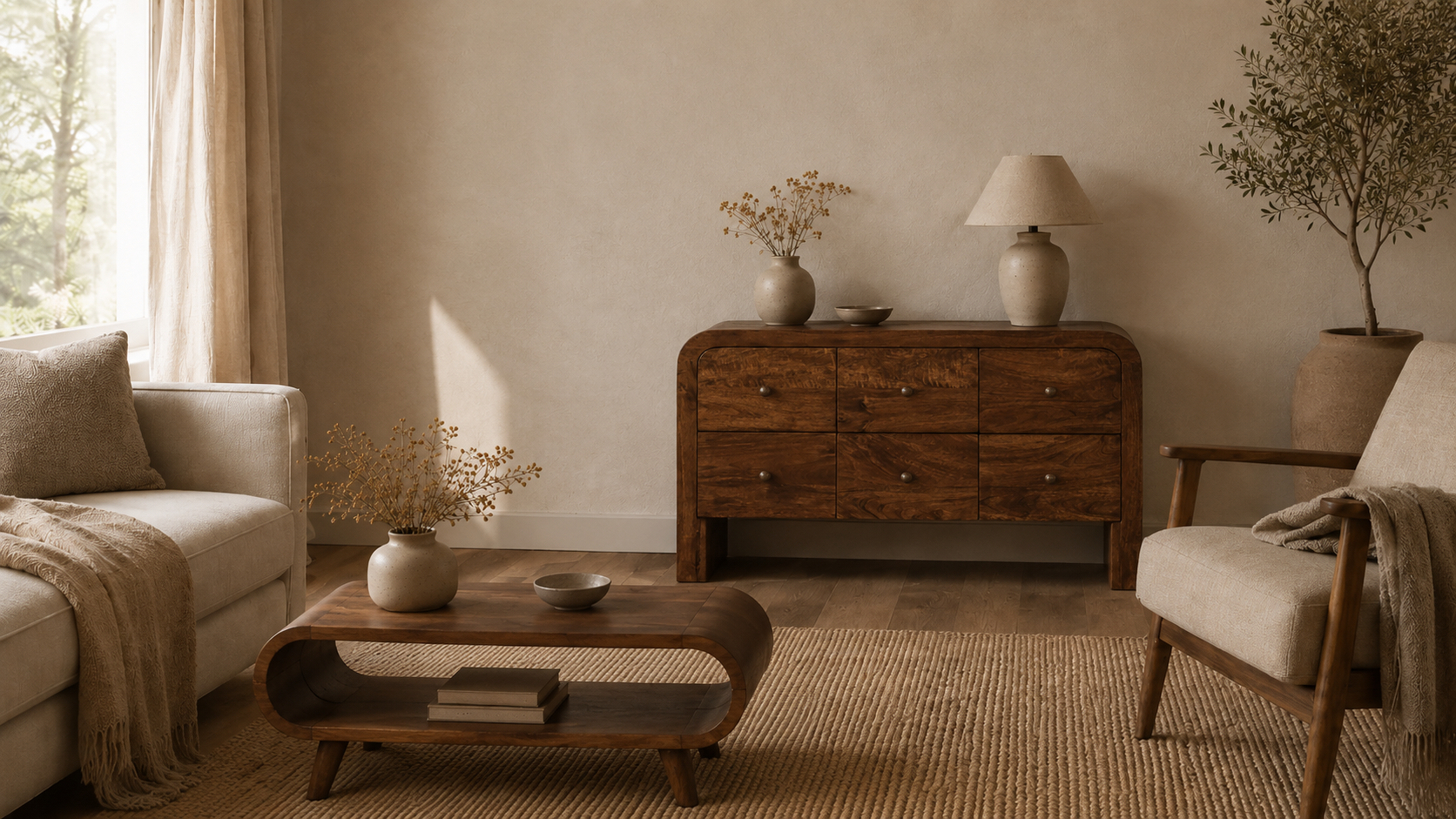
This is where solid wood can quietly do a lot of heavy lifting. Solid mango wood, for example, naturally brings in grain and tonal variation that keeps a neutral room from feeling flat. It also suits a wide range of styles—mid-century modern, Scandinavian, Japandi, rustic modern—because it can read clean and contemporary or more characterful depending on the surrounding choices.
Real-world example:
- A light, calm living room with off-white walls: pair a textured neutral sofa with a warm-toned wooden coffee table and end tables. Add black-framed artwork or a slim black floor lamp to echo a subtle accent without overpowering the wood.
Another example:
- A period terrace with darker floors: keep the sofa in a warm neutral and choose wood pieces that add warmth rather than competing with the floor. A rug can create separation so the furniture doesn’t visually “sink” into the room.
If you’d like to see living room pieces that naturally work together, start here: https://www.grainandloom.com/collections/living
Coffee tables and end tables: the details that make a room feel ‘finished’
Tables are where everyday life happens—tea, laptops, books, remote controls—so they need to be both attractive and practical.
Coffee table checklist:
- Height: aim for close to the sofa seat height (or slightly lower) so it feels easy to use.
- Size: it should relate to the sofa’s length—too small looks lost; too big blocks movement.
- Shape:
- Rectangular suits long sofas and helps define a space.
- Round/oval is great for tighter rooms or homes with children, where softer edges and easier circulation matter.
End table checklist:
- One on each side isn’t mandatory. In smaller rooms, one end table plus a floor lamp can be more comfortable.
- Think about reach. If you’re always leaning forward to place a mug down, it’s probably too low or too far away.
A coordinated approach here is often what people mean when they search for living room furniture packages: coffee and end tables that share proportions, tone, and material cues, so the room feels considered without being overly matched.
Explore tables here:
- Coffee tables: https://www.grainandloom.com/collections/coffee-tables
- End tables: https://www.grainandloom.com/collections/end-tables
Mixing ‘matching living room furniture’ without making it look staged
The most inviting rooms don’t look like everything was bought on the same day. The trick is to create consistency through a few repeating elements.
Try the 70/30 approach:
- 70% consistent (same general wood tone, similar leg style, shared design era)
- 30% contrast (a different shape, a different texture, or one standout piece)
Easy ways to add contrast while staying cohesive:
- Pair a clean-lined sofa with a slightly more characterful wood grain table.
- Mix one round table with a rectangular media unit to break up straight lines.
- Keep metal finishes consistent (e.g., mostly black) so you can vary shapes without introducing visual noise.
Common mistake: mixing too many ‘hero’ pieces.
If your coffee table has a bold profile, keep the end tables quieter. If the sofa has a strong silhouette, choose tables with simpler lines. That gives the eye somewhere to rest, and it’s what makes a room feel grown-up.
And remember: cohesion is also created by what surrounds the furniture. A rug that’s large enough, curtains that hang well, and a small cluster of warm lighting will make your set feel intentional even if you’ve built it over time.
What to check before you buy: materials, build quality, and care
If you’re tired of furniture that chips, wobbles, or feels short-term, it’s worth slowing down and checking a few practical details.
1) Materials and construction
- Solid wood vs veneers: Veneers can be fine in some contexts, but solid wood tends to age more gracefully and can feel more substantial day to day.
- Joints and stability: Look for pieces that feel steady and well-made—no rocking, no flimsy fixings.
2) Surface durability (especially for family life)
Living rooms take a beating: mugs, keys, heat from laptops, little spills. Consider whether the finish is practical for your household and how you prefer to maintain it.
3) Natural variation is normal
With real wood, grain and tone will vary. That variation is part of what adds warmth and character, and it’s a good reason sets made from the same type of wood can still feel interesting rather than identical.
4) Measure like you mean it
- Measure the room, but also measure *routes in*: doorways, stair turns, and hallways.
- Mark out the footprint of the sofa and tables with masking tape. It’s a small step that prevents expensive mistakes.
If you’re building a long-term living room furniture set, these checks matter more than chasing trends. The right pieces will feel better in daily use—and will keep looking good as your home evolves.
Conclusion
The best living room furniture sets don’t just look coordinated on day one—they make your home feel calmer, warmer, and easier to live in for years. Start with a sofa that truly suits your space and routine, then build outward with well-proportioned tables and a consistent material story. If you’d like pieces that bring natural warmth and character through solid mango wood, explore our handcrafted solid mango wood furniture collection at Grain and Loom.