Solid Wood Furniture for Living Room: How to Choose Pieces That Look Beautiful and Actually Last
If your living room still feels a bit “temporary”, you’re not imagining it. Wobbly legs, chipped corners and that flat-pack look can make even a nicely decorated space feel unfinished. The good news: choosing solid wood furniture for living room use can change the whole tone of the room—warmer, calmer, more grown-up—without you having to become a furniture expert. The trick is knowing what actually makes a piece last (and what’s just clever styling in the photos).
Why your living room furniture keeps chipping, wobbling or marking
A lot of living room furniture is built to look good quickly, not to live with well. And living rooms are hard-working spaces: hot mugs, feet on the coffee table, kids’ toys, moving day shuffles, the occasional bumped hoover.
Common reasons furniture feels “done” after a year or two:
- Thin veneers over soft boards: A veneer can be beautiful, but once it chips at an edge, there’s no easy fix. And softer composite cores can dent or swell if moisture gets in.
- Lightweight construction: Low weight often means less material, smaller fixings and fewer internal supports—so pieces loosen over time.
- Weak joints: If most of the stability comes from cam locks or a handful of screws into board, the piece may start to rack (twist) as it’s used.
- Finishes that aren’t made for real life: Some finishes look great in a studio shot but show every ring mark, scuff or fingerprint once you’re actually living around them.
This is why solid wood living room furniture tends to feel different from day one: the weight, the stability, and the way it ages. Properly made pieces don’t just survive busy evenings—they often look better after a few years of use, because natural grain and patina add depth rather than exposing wear.
Solid wood furniture for living room spaces: what “well-made” actually looks like
“Solid wood” can mean very different things in practice, so it helps to know what to look for beyond the headline.
1) Joinery and structure
Look underneath and inside, not just at the front. Signs of a sturdier build include:
- Frame-like construction (especially for TV units and sideboards) rather than a single thin box.
- Strong corner joints and internal bracing that keeps the piece square.
- Drawer quality that feels smooth and solid, with fronts that sit neatly aligned.
2) Thickness where it matters
For coffee tables and media units, thickness isn’t about bulk—it’s about longevity. A top with a bit of substance is less likely to feel flimsy, and it handles day-to-day knocks better.
3) A finish that suits your household
Ask yourself how you use the room. If you’re a “tea and toast on the sofa” household, you’ll want a finish that’s forgiving around heat, drips and quick wipe-downs. A good finish should feel like it supports real life, not restricts it.
4) Natural timber character (the good kind)
With real wood you’ll see grain variation and tonal shifts. That isn’t a flaw—it's part of the warmth you’re probably craving. The key is that the piece still feels carefully made and well-proportioned, rather than rustic in a rough way.
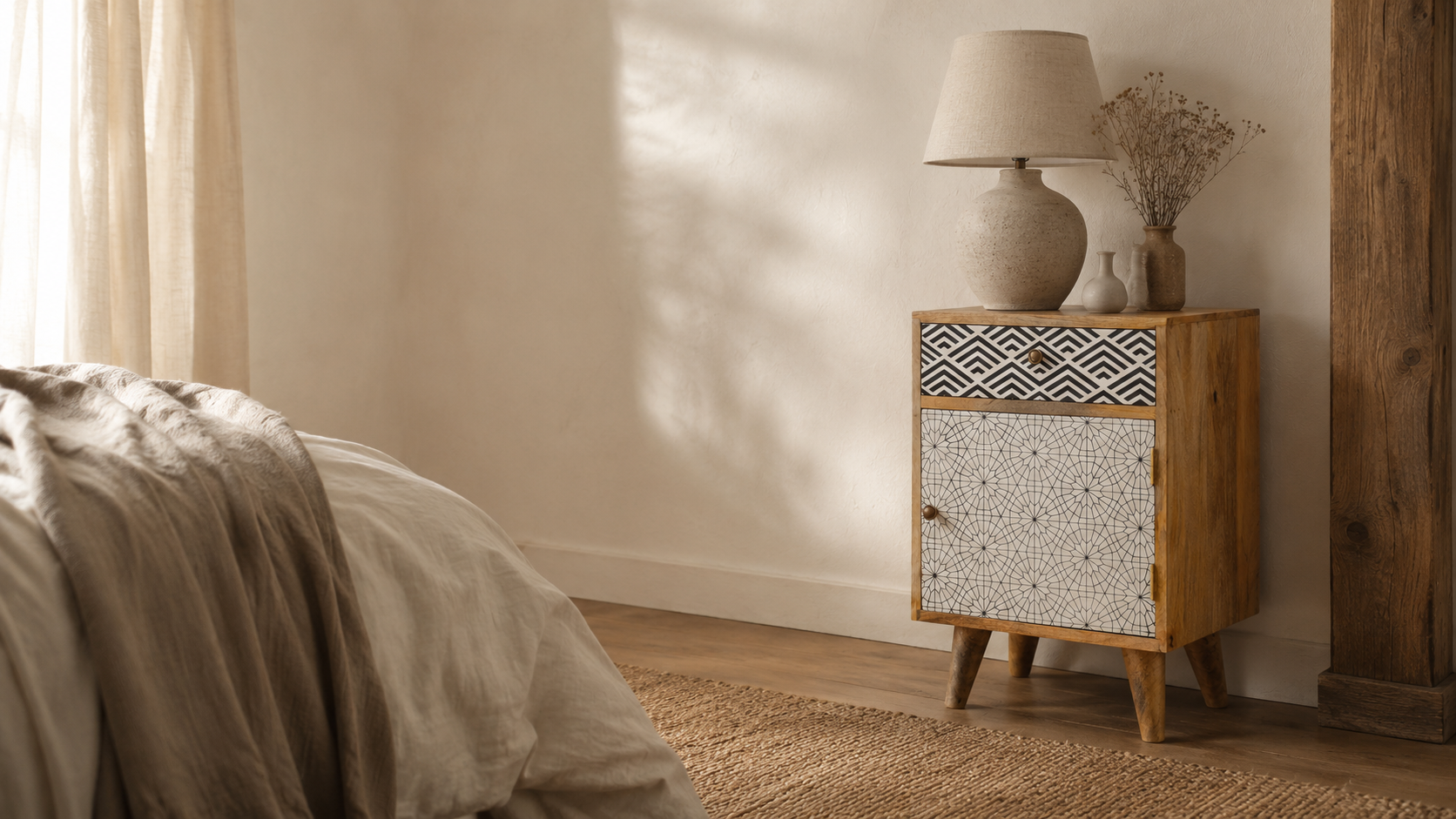
Solid mango wood is a great example of a timber that brings instant warmth. It typically has visible grain and a richer, more organic look—ideal if your current living room feels a bit cold or flat.
How to choose the right key pieces (and avoid the ‘flat-pack’ look)
A living room doesn’t need dozens of items—it needs a few pieces that anchor the space. Focus on the “big three”: coffee table, TV unit/media console, and one larger storage piece (sideboard, bookcase, or console).
Coffee table: choose weight and proportion
Real wood coffee tables and TV units earn their keep when they’re the right scale.
- If your sofa is deep and low, a slightly larger, lower coffee table will look intentional.
- If your room is narrow, consider a more open design (space under the top, slimmer legs) so it doesn’t feel like a block in the walkway.
- For family homes, rounded corners or softer edges can feel more forgiving without looking childish.
Real-world use case: a coffee table that can handle board games, a laptop, and a tray of drinks on Friday night—without wobbling every time someone leans in.
TV unit: it’s not just about the TV
A good media unit should make the whole wall feel calmer.
- Look for cable management and practical internal storage so the “stuff” disappears.
- Check the height: too high can feel visually heavy; too low can make the TV wall feel unfinished.
- Make sure there’s enough depth for modern devices and plugs.
Real-world use case: you want to hide the router, the game controllers, and the stack of remotes—so the room looks like an adult space again.
Storage piece: the shortcut to ‘grown-up’
If your living room feels cluttered, one well-sized storage piece can transform it more than any cushion refresh. Solid wood storage tends to look more permanent and considered, which is exactly the point.
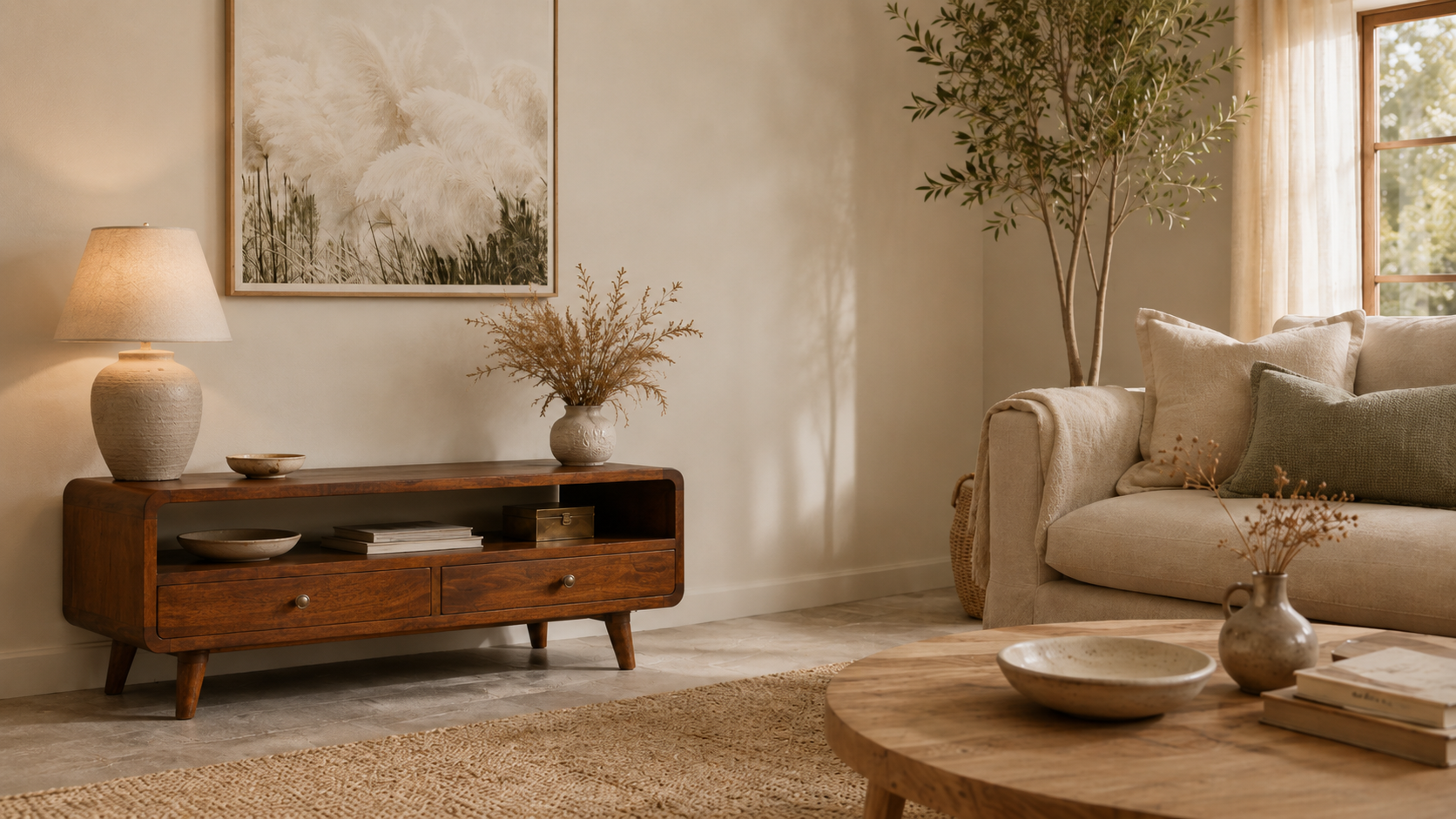
Styling tip: treat the top like a small “moment”—a lamp, a ceramic bowl, and one framed print. The wood grain does the rest.
Making solid wood work with your interior style (without turning the room into a cabin)
The fear with wood is often that it will dominate. In reality, solid wood is one of the easiest ways to add warmth while keeping a modern, clean feel—especially with simpler silhouettes.
Mid-century modern
- Choose pieces with tapered legs, slim profiles and clean lines.
- Pair with warm neutrals, olive, or inky blues.
- Add brass or black accents to keep it crisp.
Scandinavian
- Balance wood with lighter textiles: oatmeal throws, off-white rugs, paper shades.
- Keep shapes simple and let the grain be the detail.
Japandi / organic modern
- Look for calm, low pieces and uncluttered surfaces.
- Mix timber with stoneware, linen and matte black.
- Leave breathing room around furniture—negative space is part of the look.
Rustic modern
- Let the timber bring texture, then keep everything else pared back.
- Think structured upholstery, simple lighting, and fewer (better) accessories.
If you’re using solid mango wood, you’ll often find the tone sits beautifully with warm whites and soft greys, and it adds that “collected” feel without needing lots of extra décor.
Don’t forget the sofa: the material and silhouette that makes wood feel intentional
Even though the headline pieces might be timber, your sofa is the visual and practical anchor. When the sofa and wood are working together, the room feels designed rather than assembled.
How to pair a sofa with solid wood
- If your wood has a warmer tone, a sofa in cream, stone, taupe, or soft grey will feel calm and elevated.
- If you love contrast, go for a deep charcoal or textured weave and keep the wood lines clean.
- Consider the “leg language”: a sofa with visible legs can feel lighter and helps wooden pieces look less heavy.
Real-world layout: in an open-plan living space, a well-chosen sofa plus a solid wood coffee table and TV unit can define the zone instantly—especially if you add a rug that’s slightly larger than you think you need.
If you’re upgrading your living room, it’s worth choosing the sofa and wood pieces with the same intention. It’s the quickest route to that “grown-up” feeling—comfortable, not showy, and built for actual life.
Long-term value: what to check so you don’t have to replace it in two years
The most expensive furniture is the furniture you buy twice. If durability is your hidden concern (and it usually is), use this simple checklist before you commit.
Practical buying checklist
- Stability: does it rock if you press a corner? If possible, test in person or look for clear construction details online.
- Edges and corners: are they likely to chip? Solid timber edges generally age better than thin-lipped alternatives.
- Maintenance reality: will you actually use coasters every day? Choose accordingly.
- Room fit: measure properly—especially depth for TV units and clearance for drawers/doors.
- How it will age: real wood can pick up small marks, but it’s often the kind of wear that blends in, rather than peeling or bubbling.
A well-made piece should feel reassuring: it doesn’t need constant careful handling, and it doesn’t look worse every time you use it. That’s the point of investing in real materials and solid construction.
If sustainability matters to you, buying fewer, better pieces is a meaningful step. Furniture that lasts longer is furniture that doesn’t need replacing—and solid wood is naturally well-suited to that long view.
Conclusion
If your goal is a living room that feels warmer, calmer and genuinely higher quality, solid wood furniture for living room spaces is one of the most effective upgrades you can make. Focus on sturdy construction, sensible proportions, practical finishes and a look that suits your day-to-day life. Done well, solid wood living room furniture doesn’t just photograph nicely—it holds up to busy evenings, family routines and the slow wear of real life while staying beautiful.
Explore our handcrafted solid mango wood furniture collection when you’re ready to choose pieces that feel considered and built to last.