What Is the Best Solid Wood for Furniture? A Practical Guide to Choosing for Real Life
If you’re trying to buy “proper” furniture that won’t wobble, scratch at the first sign of real life, or start looking tired after a couple of years, the wood choice matters more than most people realise. The tricky bit is that there isn’t one perfect answer to what is the best solid wood for furniture — it depends on how you live, the look you love, and how much maintenance you’re happy to do.
Below is a straight-talking guide to the most common solid woods you’ll see in the UK market, what they’re actually like day to day (especially for dining tables), and how to choose a wood that feels warm, grown-up, and worth the investment.
What actually makes a wood “best” for furniture?
A lot of buying guides focus on names (oak! walnut! teak!) without explaining what you’re really paying for. When you’re comparing durable wood types for furniture, these are the factors that matter in a normal home:
1) Hardness (dent and scratch resistance)
Harder woods tend to resist everyday dents better — think rings, keys, toys, laptop edges. But hardness isn’t everything: even a hard wood will show marks if the finish is very matte and you never use coasters.
2) Stability (movement with humidity and heat)
All solid wood moves a little as seasons change. The best hardwood for furniture is often the one that stays relatively stable and is well-made with sensible construction (allowing the top to expand/contract). This matters a lot for dining tables placed near radiators, big windows, or underfloor heating.
3) Grain and colour (how it makes the room feel)
Some woods have bold grain and warm variation; others are calmer and more uniform. If you’re building a home that feels relaxed and lived-in rather than showroom-perfect, a bit of natural character can be your friend.
4) Maintenance reality
Do you want a table you can wipe down and forget about, or are you happy to oil it occasionally and baby it a bit? Be honest here—your future self will thank you.
5) Value over time
“Best” isn’t always “most expensive”. It’s the wood (and build quality) that gives you a table you’ll still love after years of Sunday roasts, homework sessions, and last-minute dinner parties.
What is the best solid wood for furniture if you want a low-stress dining table?
For most homes, the sweet spot is a hardwood that balances durability, stability, and a forgiving look.
If you’re buying a dining table that will be used daily—think hot mugs, school bags, meal prep, a laptop during the day—look for:
- A hardwood rather than a softwood (softwoods dent more easily).
- A practical finish that can handle wiping and the occasional spill.
- A grain pattern that disguises life. Very uniform, pale woods can show every mark; busier grain can be more forgiving.
That’s why woods like oak, mango, ash, acacia, and teak tend to be popular for dining tables. They’re generally tough enough for real use, and they age in a way that still feels attractive—especially in homes with a warm, modern feel.
If you love a calmer, lighter look (Scandi or Japandi), you might lean towards ash, beech, or oak. If you want richer warmth and character (mid-century modern, rustic modern, organic modern), mango, walnut, or darker-stained oak can feel especially grounded.
A helpful mindset: aim for a table that will look better with stories, not worse with wear.
Oak, walnut, mango, teak: how the most common woods compare
Here’s a practical, not-too-technical look at the woods people most often compare.
Oak
- Why people love it: classic, durable, familiar. Works across styles.
- Day-to-day: handles busy homes well. Grain is visible and ages nicely.
- Best for: someone who wants a “forever” look and doesn’t mind paying for it.
Walnut
- Why people love it: rich, darker tone and a very premium feel—great for mid-century modern.
- Day-to-day: can show dents a bit more than you’d expect for the price, and the darker surface can highlight dust and light scratches.
- Best for: style-led spaces where the dining table isn’t being used like a workbench every day.
Teak
- Why people love it: naturally oily, stable, historically used for hard-wearing furniture.
- Day-to-day: robust, though often at a higher price point. Colour can deepen beautifully.
- Best for: long-term durability and a slightly more “heritage” feel.
Solid mango wood
- Why people love it: warm tone, expressive grain, and a great balance of sturdiness and value—especially when crafted well.
- Day-to-day: a strong choice for family life because the natural variation and grain tend to be forgiving. It feels characterful rather than flat.
- Best for: homes that want warmth and personality with practical durability, especially in modern-rustic, mid-century, Japandi, or organic modern interiors.
Acacia
- Why people love it: striking grain and strong presence; often feels robust.
- Day-to-day: can be very hard-wearing. Grain is bold, which you’ll either love or find busy.
- Best for: statement tables where you want the wood to be a feature.
No matter the species, construction and finish make a huge difference. A well-made table in a sensible hardwood will outlast a poorly made one in a more expensive wood.
Don’t overlook this: build quality and finish matter as much as the wood
Two dining tables can both be “solid oak” and perform completely differently.
Look for signs of good construction
- A tabletop that feels substantial (not thin and drum-like).
- Strong joints and a stable base—especially if you’re buying an extendable or larger table.
- Sensible design that allows natural movement of the wood with seasons.
Ask about the finish (and choose based on your life)
- Matt, natural finishes look beautiful and contemporary, but may show marks sooner.
- More protective finishes can be easier to live with, especially with children or frequent hosting.
Real-life example:
If your dining table doubles as a home office, you’ll want a surface that won’t feel precious. A slightly more robust finish can mean you’re not constantly reaching for a desk mat or worrying about a damp mug.
And if your table sits near a radiator or in a sunny bay window, stability and good construction become even more important. Solid wood is a living material — the best pieces are designed with that in mind.
Best hardwood for furniture by room: quick, useful guidelines
Different rooms ask different things of wood.
Dining room / kitchen-diner (heavy daily use)
Prioritise: durability, stability, easy care.
Good options: oak, mango, acacia, teak.
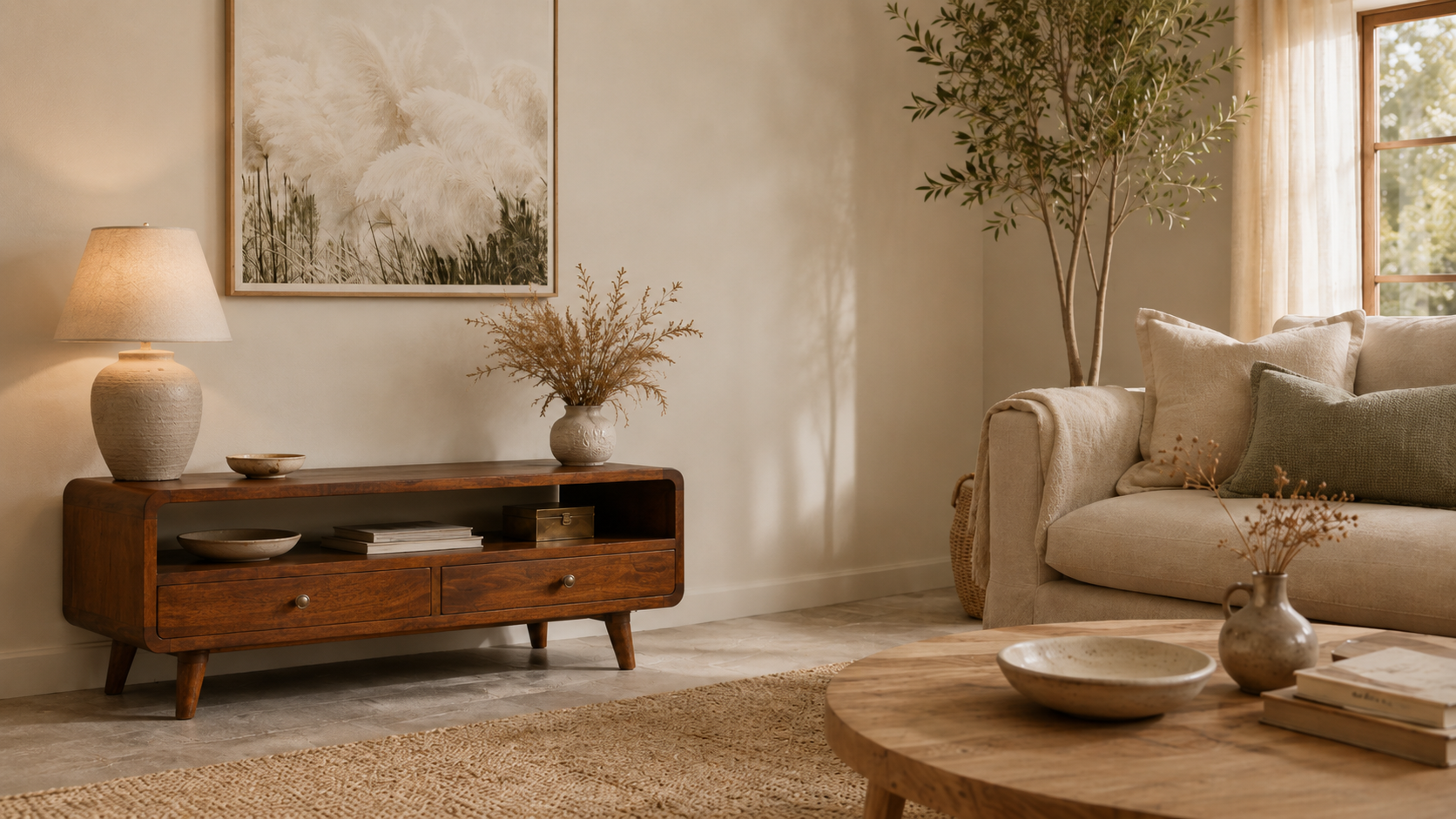
Living room (coffee tables, TV units, sideboards)
Prioritise: warmth, proportion, storage practicality.
Good options: mango, oak, walnut (especially if it’s more occasional use).
Bedroom (bed frames, bedside tables, dressers)
Prioritise: calm grain, longevity, a “settled” feel.
Good options: oak, mango, ash, walnut depending on your palette.
Real-life example:
If you have a young family, a dining table will take the brunt of everyday knocks, while a bedroom piece can be chosen more for mood and texture. That’s why many people invest in a particularly durable dining table, then coordinate other rooms with complementary tones and grain.
How to choose the right wood for your style (so it doesn’t fight the room)
The best wood is the one that looks right in your home as well as wearing well.
Mid-century modern
Look for: warm tones, elegant grain, refined silhouettes.
Great fits: walnut for richness; mango for warmth and character.
Scandinavian / light modern
Look for: calmer grain, lighter finishes, airy proportions.
Great fits: oak, ash, beech.
Japandi
Look for: quiet confidence—simple shapes, natural texture, warm neutrals.
Great fits: oak or mango depending on whether you want lighter calm or deeper warmth.
Rustic modern / organic modern
Look for: texture, visible grain, a grounded feel.
Great fits: mango, acacia, oak.
A quick tip: bring home wood samples if you can, or at least compare photos in natural daylight. Wood undertones can swing warmer or cooler than you expect, and that’s often what makes a piece feel perfectly “at home” (or slightly off).
Buying checks: a simple shortlist before you commit
If you’re trying to avoid disappointment, run through this list before you buy:
- Is it genuinely solid wood where it matters? (Especially the tabletop for dining tables.)
- What finish is on the surface—and is it suited to your household?
- How will it be used day to day? Homework table, hosting, crafts, working from home?
- Is the base stable? A beautiful top won’t help if the table wobbles.
- Will the tone work with your flooring and kitchen units? Warm woods can soften a modern kitchen; lighter woods can brighten darker spaces.
- Are you comfortable with natural variation? Solid wood will have grain and tonal shifts; that’s part of the appeal.
If you’re comparing durable wood types for furniture and feeling stuck, it can help to start with one decision: Do you want the wood to be a quiet backdrop (oak/ash), or a warm feature with visible character (mango/acacia/walnut)? Then choose the most practical finish and build quality you can within your budget.
Conclusion
So, what is the best solid wood for furniture? For most people, it’s the wood that matches your real life: hard-wearing enough for daily use, stable in your space, and beautiful in a way that still feels right years from now. Oak, teak, acacia, walnut and solid mango wood can all be excellent choices—especially when the craftsmanship and finish are thoughtfully done.
If you’re drawn to warm, characterful grain and a dining table that feels grown-up, grounded, and made to be used, explore our handcrafted solid mango wood furniture collection. Start with our dining tables, then build a cohesive look across living and bedroom pieces over time.