

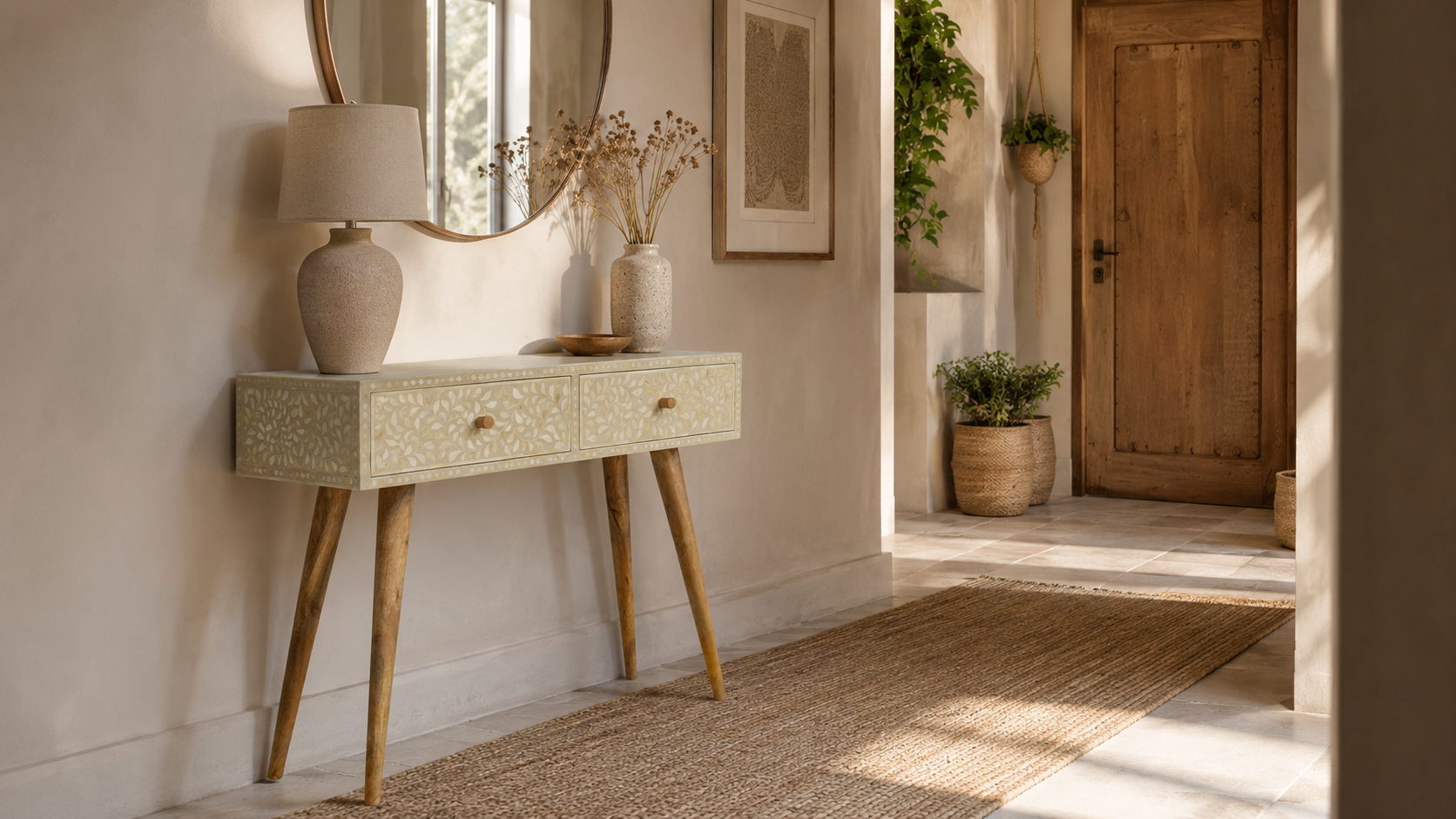
How to Find Solid Wood Furniture for Cheap (Without Ending Up With Veneer)
If you’re searching for solid wood furniture for cheap, you’re probably juggling two very real feelings: you want that warm, grown-up look (and the durability that comes with it), but you don’t want to overpay—or accidentally bring home something that’s mostly MDF with a thin wood skin.
The tricky part is that “wood” is used loosely in furniture descriptions. A piece can look convincingly timber-toned online, then arrive feeling light, hollow, and a bit temporary. The good news: you can absolutely find affordable, real-wood pieces if you know what to look for, where to be flexible, and which details are worth paying attention to—especially if you’re shopping for something hard-working like a dining table.
Why “cheap” wood furniture often disappoints (and what it’s usually made from)
A lot of frustration comes from a mismatch between expectations and materials. Many lower-priced pieces are built from engineered boards—often MDF or particleboard—then finished with a veneer or foil wrap designed to mimic grain.
That isn’t automatically “bad” (some engineered products have a place), but it helps to understand the trade-offs:
- Veneer over MDF/particleboard: can look great at first, but edges and corners are vulnerable. Once a veneer chips or lifts, it’s difficult to repair invisibly.
- Foil/laminate “wood effect”: practical for some homes, but it can feel flat, and heat/water can cause bubbling or peeling over time.
- Mixed-material construction: sometimes only the visible parts are wood, while the structure (frames, drawer bases, undersides) is engineered board.
If you’ve lived with furniture that wobbles, sags, or marks easily, it’s often not because you were careless—it’s because the underlying structure wasn’t built to take years of real life.
Solid wood tends to cost more upfront because it’s heavier, more durable, and more labour-intensive to build well. The goal isn’t to chase the lowest number—it’s to get the best value for what you spend.
What counts as “solid wood”—and how to spot it online
Retailers use terms like “real wood”, “wood”, “solid”, and “hardwood” in ways that can be confusing. If you’re price-sensitive, learning the language pays off.
Here’s what to look for when you’re trying to confirm you’re getting cheap real wood furniture rather than a veneer-heavy alternative:
- Look for “solid wood” on the main components: For a dining table, that usually means the tabletop and legs. If the description says “solid wood frame” but doesn’t mention the top, read carefully.
- Check the materials list, not just the headline: The detail section often reveals if it’s “MDF with oak veneer” or “solid mango wood”.
- Ask where the veneer is used: Some solid wood pieces may use veneer on hidden areas for stability or cost control. That can be perfectly reasonable—what matters is what takes the wear.
- Study the edge profile: A veneered top sometimes has a noticeable seam or banding along the edge. Solid wood edges tend to look more continuous.
- Weight and feel (when you can): Solid wood generally feels more substantial. If you’re shopping online, look for any mention of the build being “heavy” or “substantial”, and check reviews for comments on sturdiness.
A quick, practical rule: for everyday pieces you touch constantly (tabletops, chair frames, drawer fronts), prioritise solid wood where you can. It’s where you’ll notice the difference most.
Solid wood furniture for cheap: where to spend and where to save
If your budget is tight, the smartest approach is to spend intentionally, not evenly.
Spend on:
- Dining table top: This is the surface that takes the most abuse—hot mugs, homework, elbows, spills, moving plates, the lot. A solid wood top can be sanded and refreshed if life happens.
- Legs and joinery: A table that stays stable depends on how it’s constructed. Strong joinery and well-fitted legs reduce wobble and extend lifespan.
Save on:
- Size and complexity: A simpler silhouette is often better value than intricate shapes. Clean lines suit mid-century modern, Scandinavian, Japandi, rustic modern, and organic modern spaces anyway.
- Finishes that are forgiving: Natural, matte, or softly textured finishes tend to age more gracefully than high-gloss surfaces that show every mark.
- Chairs (initially): If you’re building your dining set gradually, it’s often sensible to secure the right table first, then add chairs over time. Mixing chairs can look intentional and design-led.
This is how many people land on affordable solid wood furniture that still feels grown-up: they buy fewer pieces, but choose ones that can genuinely live with them for years.
Why mango wood can be a budget-friendly solid wood choice (without feeling “budget”)
Not all solid woods sit at the same price point. Some species are simply more expensive to source and work with, and that affects what “affordable” looks like.
Solid mango wood is often a smart middle ground for design-conscious homes because it can offer:
- A warm tone and visible grain: It brings natural character without needing lots of decorative detail.
- A substantial feel: Solid wood furniture tends to feel steadier and more permanent in a room.
- Practical, everyday durability: It’s well-suited to hardworking pieces like dining tables—especially when cared for as you would any quality timber surface.
It also works beautifully across popular interior styles:
- In a Scandi space, mango wood adds warmth against pale walls and light textiles.
- In a mid-century modern room, it pairs naturally with tapered legs, curved forms, and vintage-inspired lighting.
- In Japandi interiors, the grain and organic feel balance clean lines and calm, uncluttered spaces.
If you’ve been put off by the cost of certain hardwoods, mango wood can be one of the ways people get a solid-wood piece that still feels considered, not disposable.
A quick dining table checklist: the details that matter most
A dining table is usually the best “first” solid wood investment because it anchors the room and gets used daily. Here’s what to check before you click buy.
1) Thickness and proportion
A top that’s too thin can look a bit temporary and may feel less sturdy. You’re aiming for proportions that look balanced with the leg design and the size of the room.
2) Stability and wobble resistance
Look for design cues that suggest strength: well-positioned legs, solid bracing, and a shape that feels stable at the corners.
3) Finish you can live with
Some finishes lean more “wipe-clean”; others lean more natural and characterful. Neither is wrong—just match it to your household. If you have young kids, you might prefer a finish that’s forgiving with everyday wiping.
4) Size for real life
Think beyond “how many seats” and picture the scene:
- Weeknight dinner with placemats and serving bowls
- Laptop and coffee at one end while someone else eats
- A jigsaw puzzle that stays out for a few days
Measure your room properly and keep enough clearance for chairs to slide back comfortably.
5) How it’ll age
Solid wood tends to develop a lived-in patina over time. If you like the idea of furniture that looks better after a few years (rather than worse), that’s a strong point in its favour.
Real-home ideas: making a solid wood dining table work harder in your space
If you’re trying to justify spending a little more for solid wood, it helps to think about how many roles your dining table plays.
- Small flat or rental dining zone: A compact solid wood table can replace a flimsy extendable piece that wobbles every time someone leans on it. Style it with two matching chairs and two mixed, lighter chairs to keep the space airy.
- Open-plan kitchen/diner: A warm wood table softens modern kitchens (especially white, grey, or black cabinetry). Add texture with a woven runner and keep the centre clear so the grain becomes part of the room’s “decor”.
- Family home: A solid wood top makes everyday mess feel less stressful. Use placemats day-to-day, then let the table shine bare when guests come over.
- Grown-up hosting setup: Pair a characterful wood table with simple upholstered or wooden chairs. The table provides the warmth; the chairs bring comfort for long dinners.
The best dining spaces don’t feel overly “done”. A solid wood table helps because it naturally adds depth, tone, and texture without needing lots of extra styling.
Conclusion
Wanting solid wood furniture for cheap doesn’t mean settling for flimsy construction or vague “wood effect” descriptions. It means being strategic: prioritise the parts you use and touch most, learn the language around veneers and engineered boards, and choose a solid wood that offers natural warmth and long-term value.
If you’re ready to start with a hard-working centrepiece, a well-made solid wood dining table is one of the most satisfying upgrades you can make—both practically and visually.
Explore our handcrafted solid mango wood furniture collection.


,%20but%20you%20don%E2%80%99t%20wan...)