How to Choose Solid Wood Furniture: A Calm, Practical Buying Guide
If you’ve ever bought a “wood” piece that later chipped at the edges, bowed under weight, or revealed a suspiciously uniform surface, you know the frustration: it can be hard to tell what you’re really paying for. Marketing terms often blur the line between genuine wood, wood veneer, and engineered boards, so concerns about durability and long-term value are completely valid.
This guide on how to choose solid wood furniture breaks down what to look for, what to question, and how to invest in pieces that feel warm, substantial, and made to live with for years.
Why “solid wood” can be confusing, and why it matters
Not all wood furniture is the same. Many pieces are built with a mix of materials, and that is not automatically a bad thing, but you deserve to know exactly what you are buying.
Here are the common categories you will see:
-
Solid wood: Made from real timber, typically in panels and components joined together. It can often be refinished, tends to age gracefully, and usually feels heavier and more substantial.
-
Veneered furniture: A thin layer of real wood bonded over an engineered core, often MDF or particleboard. Veneer can look beautiful, but it is more vulnerable at edges and corners, and deep scratches can be harder to repair invisibly.
-
MDF, particleboard, or chipboard: Engineered boards made from fibers or particles with resins. These can be stable in controlled conditions, but they are more likely to swell if water gets in and can struggle with repeated moves, knocks, or heavy daily use.
Why it matters in a real home: a nightstand that takes a daily cup of coffee, an entryway console that catches keys and bags, or a family sideboard that holds heavy plates and board games will quickly reveal whether the construction is built for everyday life or just for looks.
How to choose solid wood furniture: the quickest ways to spot the real thing
If you are viewing furniture in person, a few simple checks can tell you a lot. If you are shopping online, you can use the same principles by looking closely at photos and asking the right questions.
1) Look for grain that makes sense
Real wood has natural variation: shifts in tone, subtle movement in the grain, and organic character. What you want to avoid is a surface that looks too perfect or repeats in a way that feels printed.
-
Good sign: Grain continues naturally across a surface, with gentle variation.
-
Question mark: Identical grain patterns repeating across drawers or doors.
2) Check the edges and undersides
Veneer and laminate often reveal themselves at the edges. Look closely at corners, the underside of tops, and the back of pieces.
-
Good sign: The material looks consistent at the edge, rather than like a thin skin over a different core.
-
Question mark: A very thin “cap” on the top with a different-looking material underneath.
3) Notice the weight and feel
Solid wood furniture typically feels more substantial. Weight is not the only indicator, as some engineered pieces are weighted, but if something feels unusually light for its size, it is worth asking what the core material is.
4) Pay attention to the language
This is where many shoppers get caught out. Phrases like wood effect, wood finish, or engineered wood are not the same as solid wood. If a description says solid wood frame but does not specify the rest of the piece, it may be made from a mix of materials.
For online shopping, look for a clear materials breakdown, including the top, frame, drawer bases, back panels, and internal components, rather than one broad claim.
Joinery and construction: what quality looks like up close
Construction is where long-term value lives. A good-looking piece can still be poorly built, while thoughtful joinery usually signals care and quality.
Drawer construction
-
Stronger options: Proper joinery, drawers that run smoothly, and drawers that sit square.
-
Things to watch: Drawers that twist when pulled or thin bases that bow under light weight.
Back panels and bases
Even on solid wood furniture, some makers use different materials for hidden parts. The key is whether it is done thoughtfully and securely.
-
Good sign: Panels are neatly fitted, well secured, and the piece feels rigid with no wobble.
-
Question mark: Loose, flimsy backs that compromise stability, especially on tall storage pieces.
Doors and hinges
Open and close the doors. They should feel aligned and controlled, not springy, stiff, or reluctant. Misaligned doors can be a simple adjustment, but they can also be a sign that the main structure is not square.
Finish quality
Run your hand along the surface. A well-finished piece should feel smooth but not plastic-like. You want a finish that protects against everyday use while still allowing the natural warmth of the wood to come through.
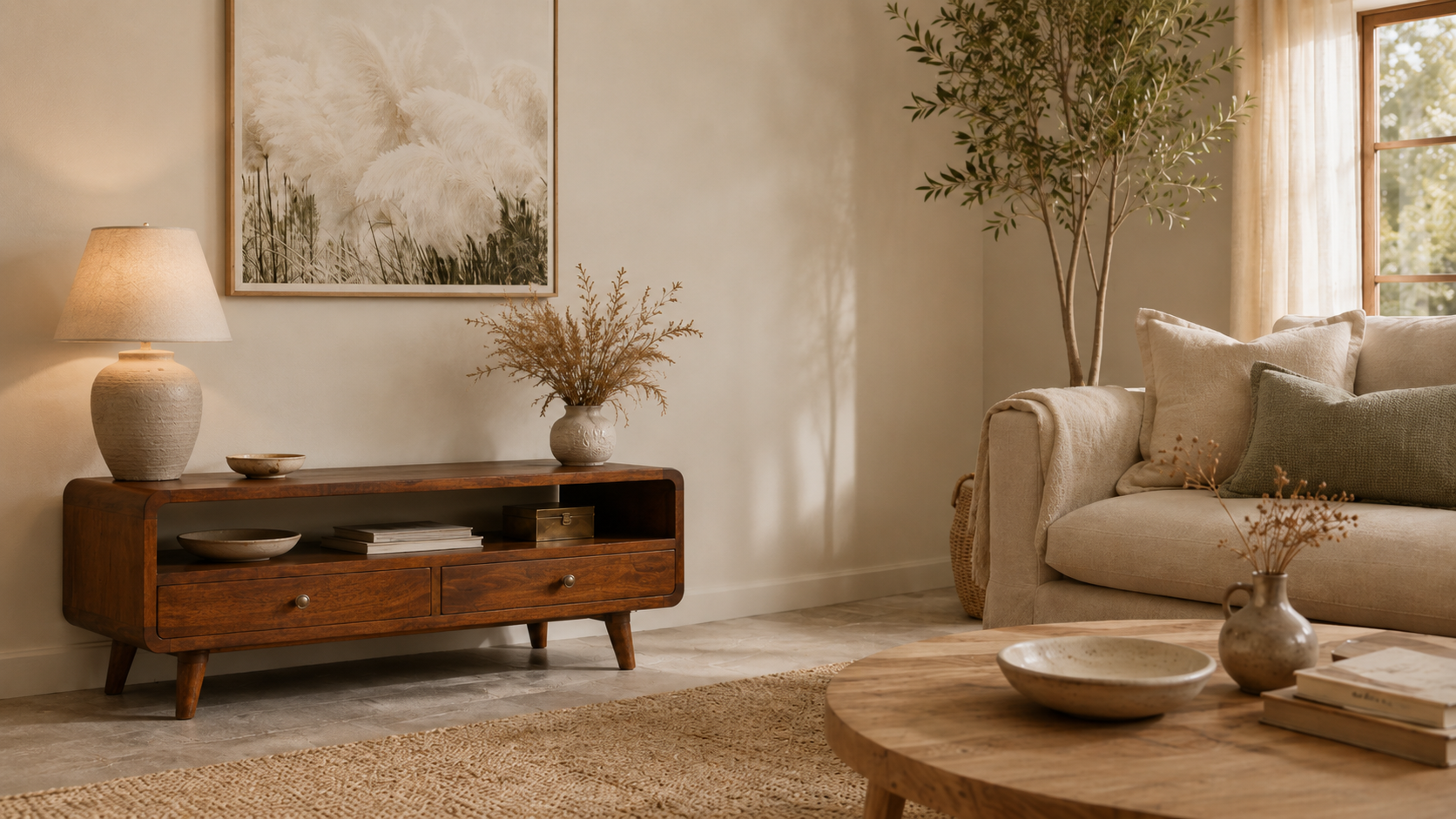
In a living room, these details matter most on hard-working items like a media console, sideboard, or storage cabinet — pieces that get opened, leaned on, and used daily.
Understanding natural movement
One honest truth: solid wood is a natural material, and it responds to its environment. Seasonal changes in temperature and humidity can cause timber to expand and contract slightly.
Quality solid wood furniture is designed with that in mind.
-
Better-built pieces allow for movement in how panels are fixed and how joints are constructed.
-
Poorly built pieces may fight the wood’s natural movement, which can lead to cracks, sticking drawers, or visible gaps over time.
This is not something to fear. It is part of what makes real wood feel alive and characterful. It is also why solid wood often ages more gracefully than flat, uniform engineered surfaces.
If you are placing furniture near a heater, vent, fireplace, or in direct sunlight, ask about care and positioning. Small choices, such as leaving a little breathing room from heat sources, can help solid wood stay looking its best.
A solid wood furniture buying guide for real homes
The best buying decisions come from imagining the piece in use, not just in a styled photo.
Bedroom: calmer storage that stays solid
A chest of drawers gets used every day, often when you are half-awake. You want drawers that glide smoothly, handles that feel comfortable, and enough depth for folded sweaters, linens, and everyday essentials without cramming.
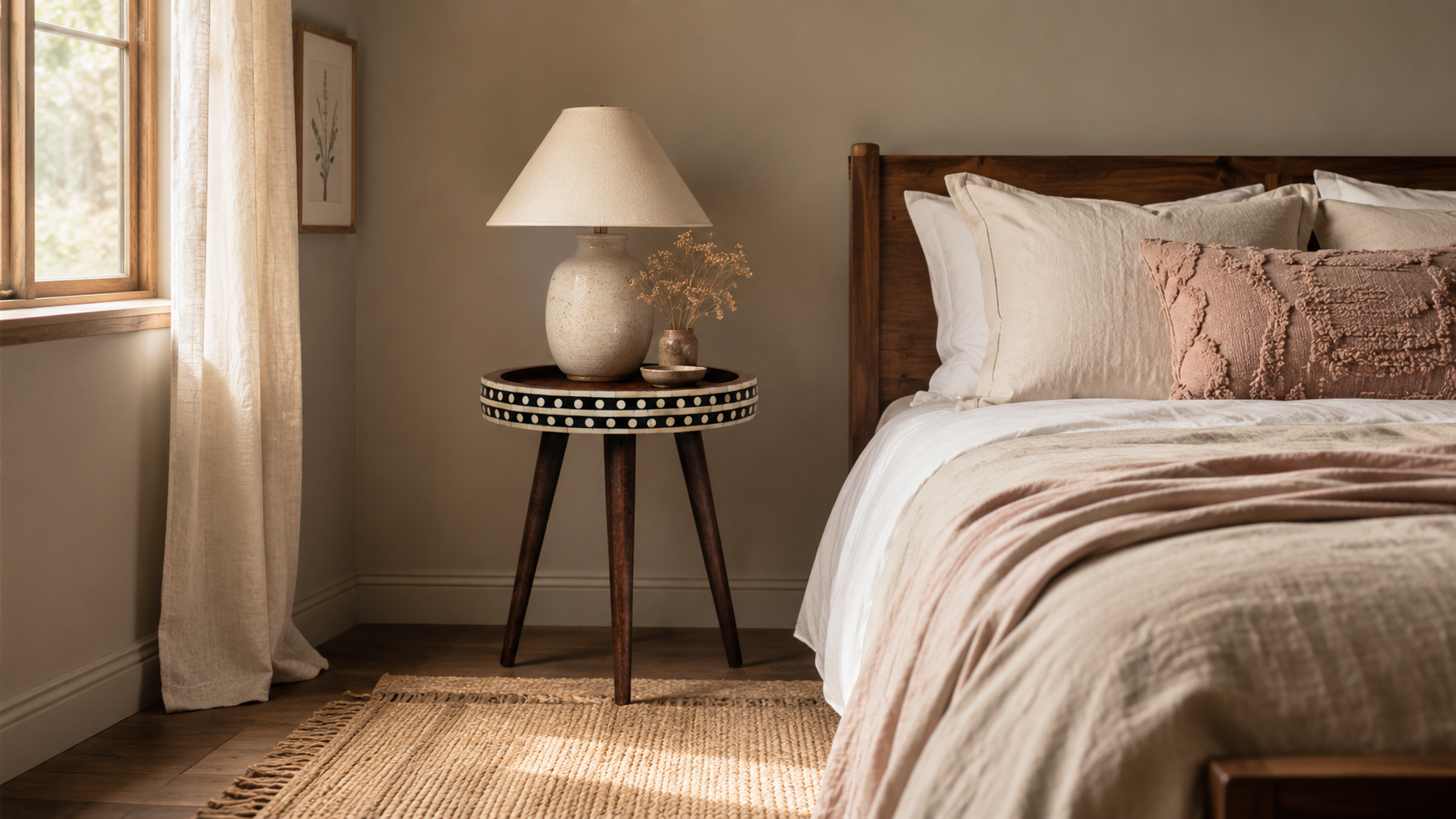
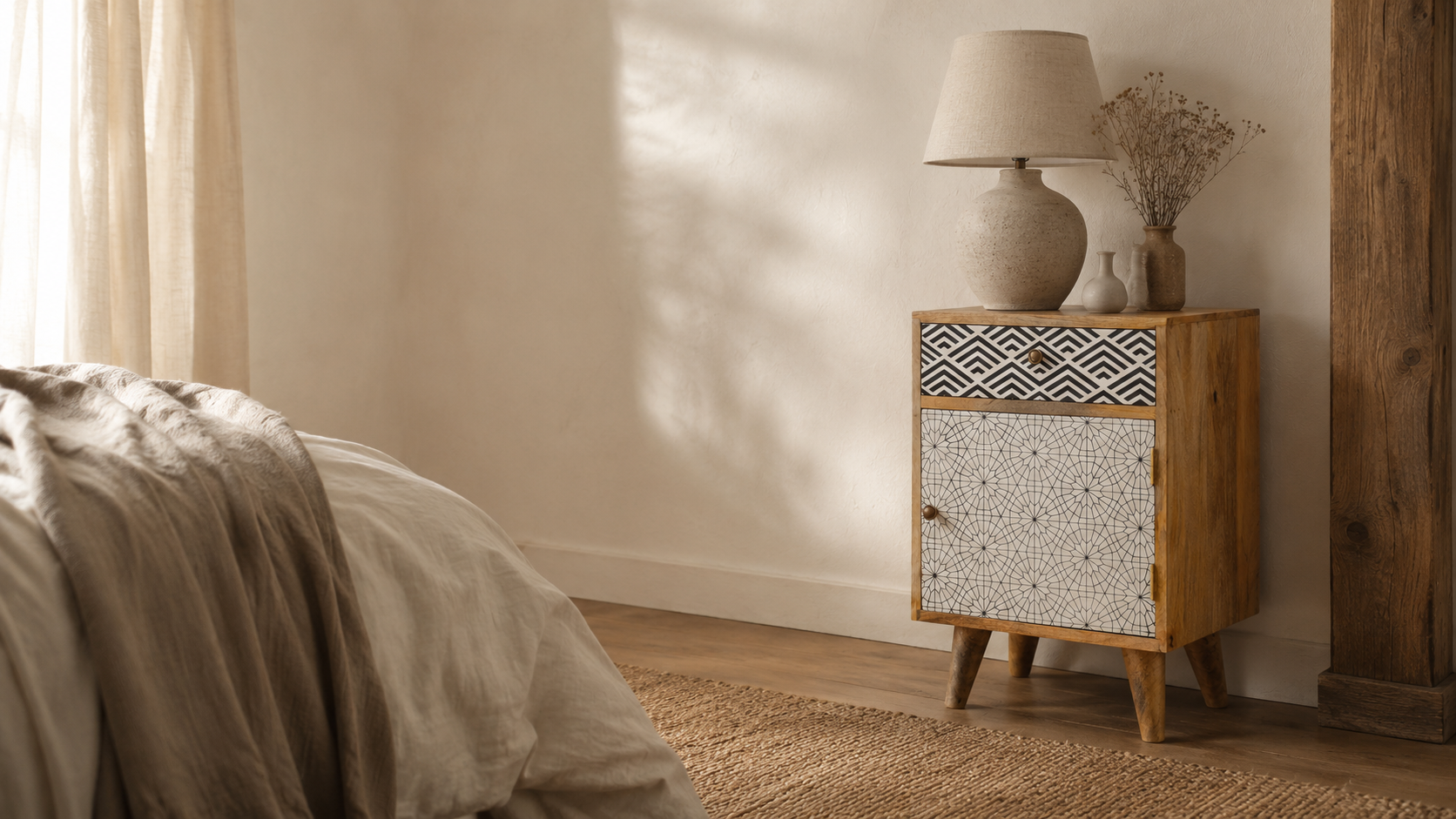
Solid wood works beautifully in bedrooms because it adds warmth, texture, and visual calm. Solid mango wood, in particular, brings gentle variation and a lived-in richness that suits relaxed, grown-up spaces.
Living room: surfaces that can handle daily life
Coffee tables and sideboards see mugs, books, toys, remote controls, and the occasional spill. Look for a finish you can live with, corners that feel well made, and a stable stance with no rocking.
A sideboard is often the hardest-working piece in the room. It stores glassware, paperwork, candles, games, and everything in between. Solid wood makes that weight feel properly supported.
Entryway and storage: strength where it counts
In tighter spaces, stability matters even more. A tall cabinet, console table, or shelving unit should feel rigid and balanced. Ask what the back and base are made from, and how the piece is constructed.
If you are choosing solid wood furniture for a family home, focus on pieces you touch daily: nightstands, dressers, entryway storage, dining storage, and living room staples. That is where longevity is most noticeable.
Questions worth asking before you buy online
If you cannot inspect a piece in person, a few targeted questions will quickly reveal how transparent a brand is.
-
What exactly is solid wood, and what is not? Ask for a breakdown of the top, sides, drawer fronts, internal panels, and back.
-
How are the drawers made and supported? You are looking for confidence and specific details.
-
What finish is used, and how should it be cared for? Practical care advice is a good sign.
-
Do you have close-up photos of the grain, joints, and inside of drawers? The details tell the story.
If you receive vague answers like “high-quality materials” without specifics, treat it as a cue to keep looking. A well-made piece can stand up to scrutiny.
This is also where style matters. If you are drawn to mid-century modern, Scandinavian, Japandi, rustic modern, or organic modern interiors, solid wood brings the grounding warmth those looks rely on without feeling overly trend-led.
Conclusion
Learning how to choose solid wood furniture comes down to a few simple checks: clearly described materials, honest-looking grain and edges, well-built joinery and drawers, and construction designed for the way wood naturally lives in a home.
Done well, solid wood rewards you with warmth, character, and long-term value — pieces that feel settled and substantial rather than temporary.
If you would like to browse furniture made with that in mind, explore our handcrafted solid mango wood furniture collection at Grain and Loom.