Solid Wood Furniture for Bedroom: How to Choose Pieces That Feel Calm, Grown‑Up and Built to Last
If your bedroom is meant to be a calm, warm place to switch off, flimsy furniture can undo the whole feeling. A wobbly bed frame, drawers that stick, surfaces that chip, or a wardrobe that looks tired after a year can make the room feel temporary rather than restorative. Choosing solid wood furniture for bedroom spaces is one of the simplest ways to create a more grown-up look—without sacrificing practicality or storage. The key is knowing what actually makes furniture last (and what’s just good marketing), so you can invest once and enjoy it for years.
Why bedrooms show wear faster than you expect
Bedrooms can look “fine” at first, then quickly start to feel scruffy—often because of the everyday friction points.
- Beds take constant stress. Movement, re-making, sitting on the edge to put on socks, kids climbing in on weekend mornings—it all tests the joints and frame.
- Drawers get opened hundreds of times. If runners and joints aren’t well-made, you’ll feel it (and hear it) quickly.
- Nightstands live a hard life. Water rings, skincare spills, charging cables dragged across the top—soft finishes and thin veneers tend to show marks.
- Wardrobes are all leverage. Hinges, doors and long panels are where cheaper builds can warp, rack, or fall out of alignment.
That’s why “looks good online” isn’t enough. For a bedroom that feels settled and serene, you want pieces that stay solid, operate smoothly, and keep their proportions over time.
Solid wood furniture for bedroom: what ‘solid’ should actually mean
The phrase “solid wood” gets used loosely, so it’s worth understanding the basics before you buy.
- Solid wood means the main structural parts are made from timber (not a hollow core or chipboard). With solid wood bedroom furniture, you’re usually getting better strength, weight, and long-term repairability.
- Veneer is a thin layer of real wood over another material. Veneer can be perfectly fine when done well, but it’s more vulnerable to chips at edges and corners.
- Engineered boards (like MDF or particleboard) are common in flat-pack furniture. They can look neat at first, but they’re more likely to swell if moisture gets in, and fixings can loosen over repeated use.
A practical rule of thumb: if you want your bedroom to feel genuinely sturdy and “adult”, prioritise solid timber in the parts that take stress—bed frames, legs, drawer sides, and cabinet frames.
At Grain and Loom, many pieces are made from solid mango wood, chosen for its warmth, characterful grain, and everyday practicality—ideal qualities for bedrooms where you want calm but not clinical.
A quick buying checklist: the details that decide whether it lasts
You don’t need to be a furniture maker to spot quality. Focus on a few tell-tale signs.
1) Joinery and stability
- Look for frames that feel rigid, not twisty.
- On beds, check how the side rails connect to the headboard/footboard. A good connection should feel secure and well-supported.
2) Drawer function
- Drawers should pull smoothly and sit straight.
- Check the base: a well-supported drawer bottom is more likely to cope with heavier jumpers and jeans.
3) Proportions and weight
- Lighter isn’t always worse, but extremely lightweight bedroom furniture can indicate thinner components.
- Solid timber pieces often have a reassuring weight and balance—especially on legs and corners.
4) Finish that suits real life
- For bedside tables and chests, choose a finish that won’t punish you for using the room normally.
- If you love the look of natural grain, expect gentle variation—this is part of the appeal of real wood beds and wardrobes.
5) Practical storage planning
- Decide what you need to store before you fall for the look.
- A common mistake is buying two tiny bedside tables, then realising there’s nowhere for books, chargers, and the bits you want out of sight.
These checks help you avoid the familiar cycle: buy, regret, replace.
Choosing a solid wood bed: comfort is partly construction
Your mattress matters, but your bed frame does more than you think. A stable, well-built bed can make the whole room feel quieter—visually and literally.
What to look for in a bed frame
- A supportive base. Slats or platform support should feel substantial and evenly spaced.
- A headboard with presence. In design terms, the headboard anchors the room. A solid wood headboard adds warmth and a sense of permanence.
- Clearance and clean lines. If you like Scandinavian, Japandi, or mid-century modern rooms, look for legs and proportions that feel light enough to breathe, but still sturdy.
Real-home example
In a typical UK semi with an average-sized main bedroom, a solid wood bed with a simple, well-proportioned headboard can make the space feel more intentional. Pair it with warm neutrals, linen bedding, and one textured throw, and you’ll get that calm, grown-up look without making the room feel heavy.
If you’re starting from scratch, it’s often smart to choose the bed first, then build storage around its tone and shape.
Storage that keeps a bedroom feeling calm (not cluttered)
A calmer bedroom usually isn’t about having less stuff—it’s about having better places to put it.
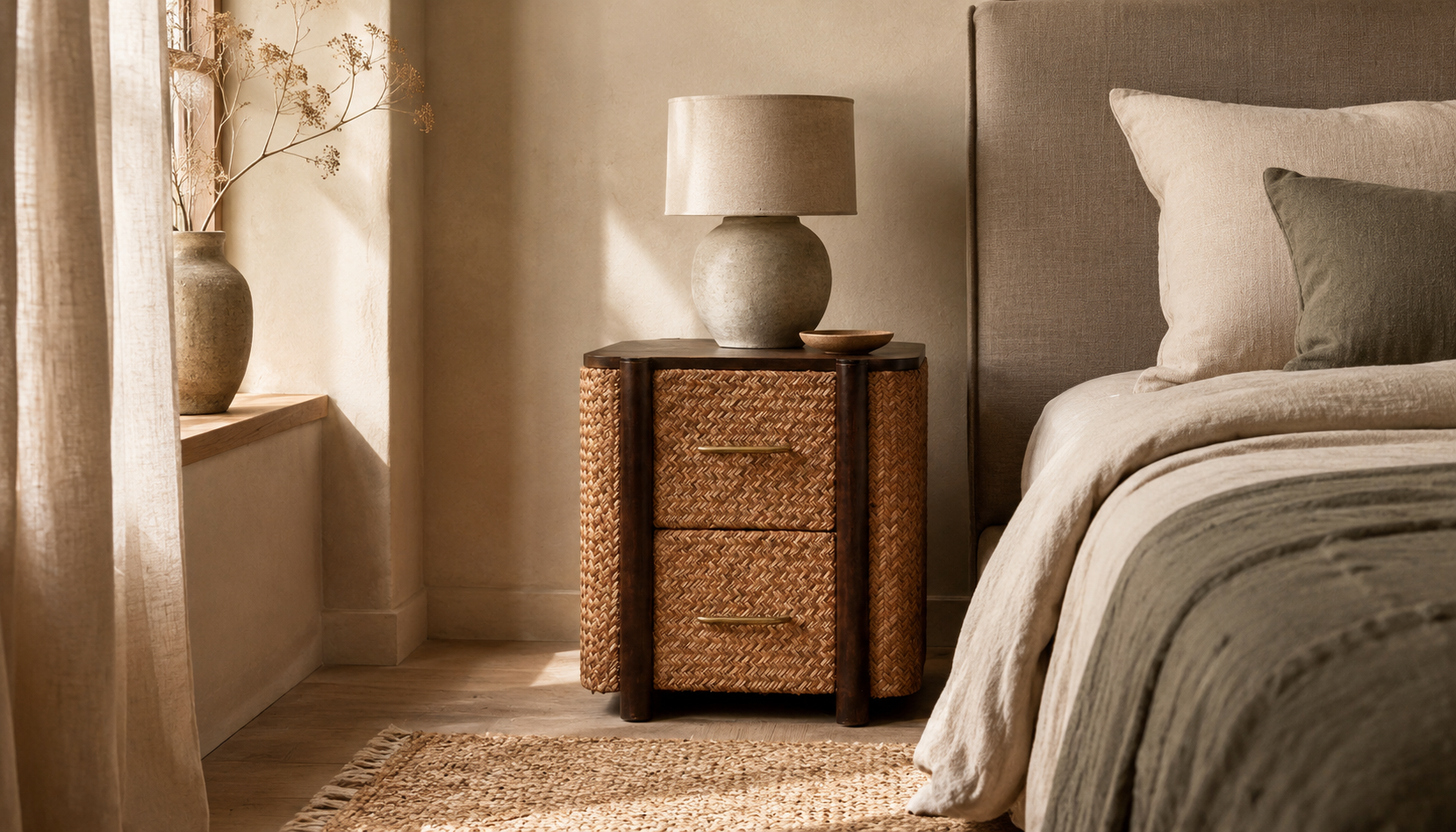
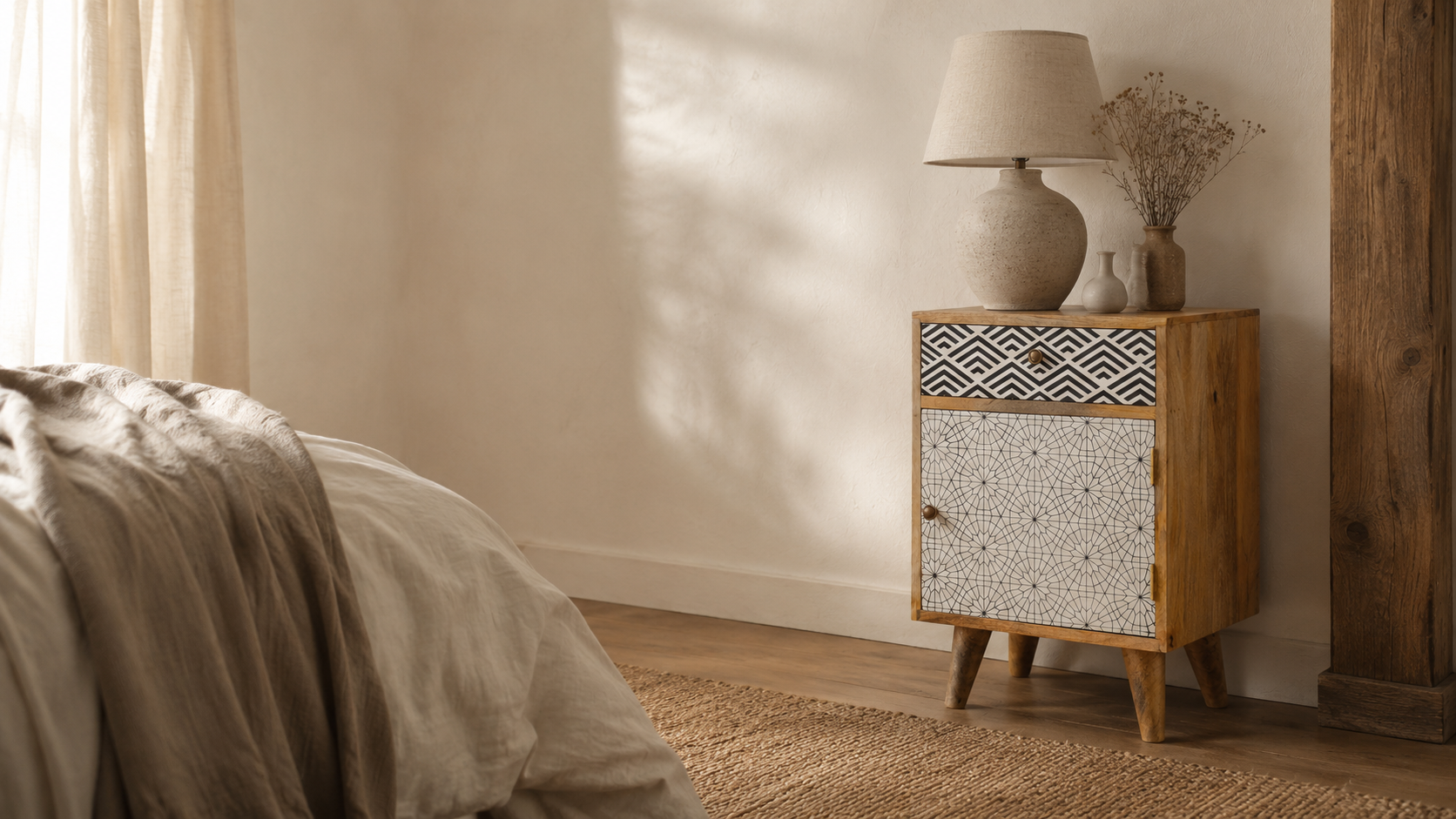
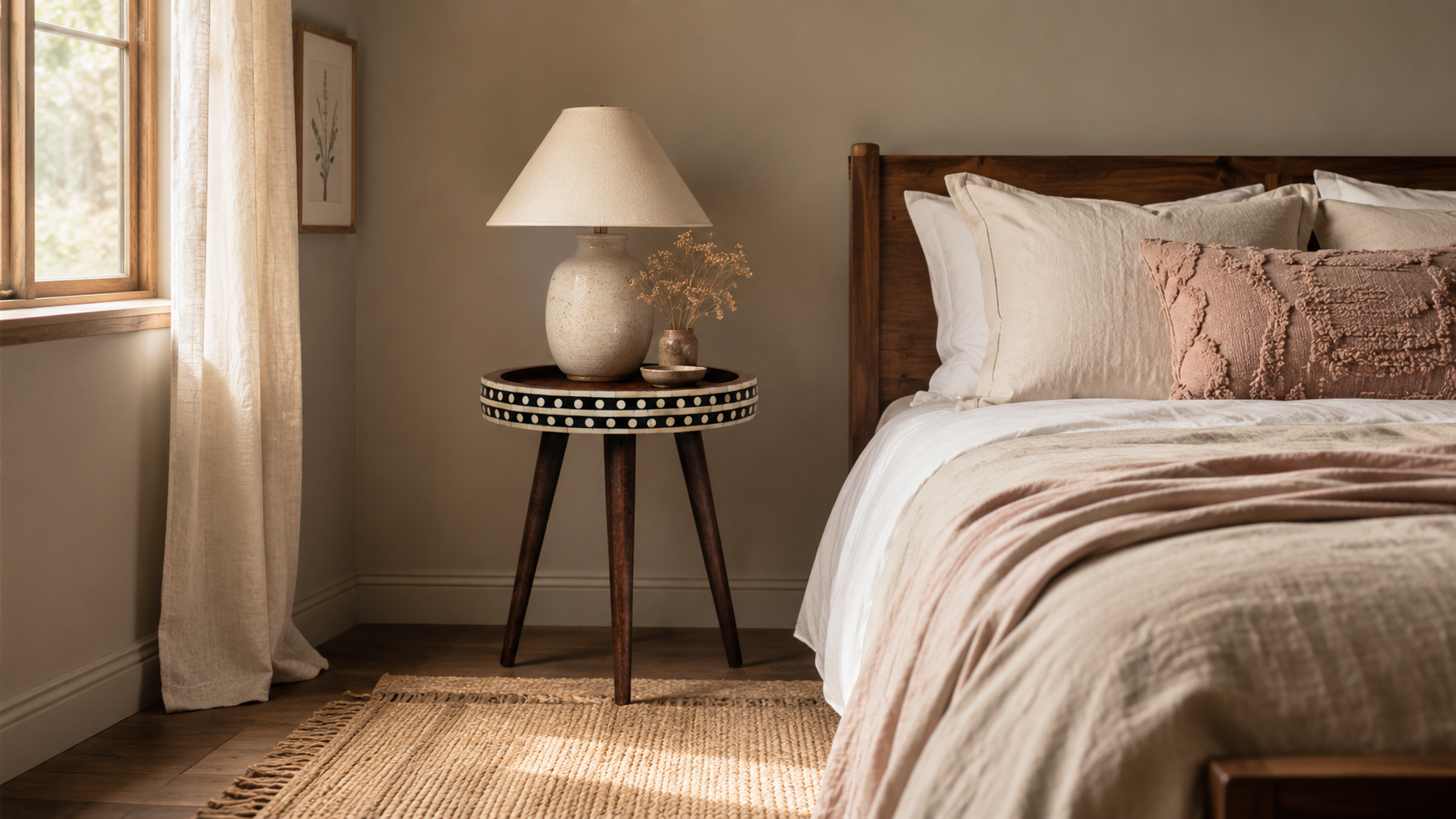
Nightstands: small pieces, big impact
- Aim for at least one drawer if you prefer a tidy surface.
- Consider the height: ideally, the tabletop sits around mattress height so it feels effortless to use.
Chests of drawers: the everyday workhorse
- Deep drawers are great for knitwear and denim.
- Multiple shallower drawers can be better for folded t-shirts, gym gear, and smaller items that otherwise become messy piles.
Wardrobes: decide what you truly need
Think in zones:
- Hanging space for shirts, dresses, coats.
- Shelves for knitwear and bags.
- A drawer or two for socks, underwear, and accessories.
If you’re choosing real wood beds and wardrobes, try to keep the wood tone consistent across the key pieces. A bedroom feels more restful when the main materials repeat rather than compete.
And don’t underestimate how much visual calm comes from doors and drawers that sit flush and close properly—details that tend to come with better craftsmanship.
Styling solid wood bedroom furniture so it feels timeless, not ‘matchy’
There’s a difference between a cohesive bedroom and one that looks like a showroom set. Solid wood makes it easier to strike the balance because it brings natural texture on its own.
Use wood as the warm foundation
- Let the grain do some of the decorating. Keep walls and bedding fairly simple so the furniture can add depth.
Mix shapes, not materials
- If your bed has clean, straight lines, soften the look with a rounded lamp, a curved mirror, or tactile textiles.
- If you love mid-century modern, pair warm wood with matte black or aged brass accents (handles, lighting, frames).
Repeat one tone, vary the scale
- Matching every piece perfectly can feel flat.
- Instead, repeat a similar wood tone across bed and key storage, then vary sizes (a wider chest, slimmer nightstands) to keep the room feeling considered.
Real-home example
In a rented flat where you can’t change flooring or wall colour, solid wood pieces add instant warmth. A simple solid wood bed plus a practical chest of drawers can transform the room even if the carpet is beige and the walls are magnolia—because the furniture introduces natural contrast and a more “settled” feeling.
Craftsmanship, sustainability, and long-term value: what to ask before you invest
Most people aren’t looking for “perfect” wood—they’re looking for furniture that stays reliable and looks good as life happens.
Craftsmanship questions worth asking
- How is the frame built and supported?
- Are drawers and doors designed for frequent use?
- What finish is used, and how should it be cared for?
On sustainability (without the greenwash)
It’s reasonable to want reassurance, but it’s also worth focusing on practical, measurable choices:
- Buying fewer, better pieces you’ll keep for longer.
- Choosing real timber over disposable composites when possible.
- Caring for surfaces so they don’t need replacing.
Solid mango wood is often valued because it’s durable and characterful, making it well suited to everyday furniture. Over time, the natural grain and gentle variation can help a bedroom feel warmer and more personal rather than overly polished.
Ultimately, “value” in bedroom furniture is the quiet satisfaction of things working properly: a bed that stays sturdy, drawers that glide, and surfaces that don’t look tired after one busy season.
Conclusion
A calmer, warmer bedroom usually comes down to a few smart decisions: choose pieces that feel structurally solid, prioritise storage that genuinely suits your routines, and let natural materials bring depth without visual noise. Solid wood furniture for bedroom spaces isn’t just about aesthetics—it’s about creating a room that feels settled, dependable, and worth coming home to.
If you’re ready to upgrade from furniture that chips or wobbles, explore our handcrafted solid mango wood furniture collection and find the pieces that will make your bedroom feel quietly confident for years to come.