Solid wood furniture for kids: what to buy (and what to avoid) for a room that lasts
If you’ve ever tightened the same wobbly screw for the third time, or watched the corner of a drawer front chip after one enthusiastic game of “tidy up”, you’ll know the real frustration: kids’ rooms put furniture through daily stress. And replacing flimsy pieces every couple of years isn’t just expensive — it’s also a headache.
That’s where solid wood furniture for kids can make a noticeable difference. The right pieces feel sturdier under hand, stand up better to everyday knocks, and still look good as your child’s room changes from toddler to school-age (and beyond). The trick is knowing what to look for — not just “solid wood” on a label, but the details that make furniture safer, more practical, and genuinely long-lasting.
Why kids’ rooms break furniture faster than anywhere else
Kids don’t use furniture “gently” — and that’s normal. A bedside table becomes a launching pad for bedtime stories, a chest of drawers doubles as a costume stage, and a bed frame takes the impact of nightly climbing, bouncing, and the occasional midnight spill.
Common failure points in cheaper furniture tend to be predictable:
- Wobble at joints where screws loosen over time (especially on flat-pack frames).
- Swollen panels if a drink spills and soaks into engineered wood.
- Chipped corners and peeling finishes after repeated knocks from toys, hoovers, or moving furniture around.
- Drawer runners that stick once the frame shifts out of square.
Solid timber pieces — particularly those with well-made joinery and sensible thickness — typically handle this kind of life better. That doesn’t mean indestructible, but it does mean the furniture is less likely to feel “temporary” after a single busy year.
Solid wood furniture for kids: what really matters (beyond the label)
“Solid wood” is a helpful starting point, but parents usually care about the practical details: safety, stability, and whether it’ll still work when your child’s needs change.
Here’s a checklist worth keeping in mind while you browse:
- Stability and weight: A solid, well-balanced piece is harder to shift accidentally. Look for furniture that sits flat, doesn’t rock, and feels planted.
- Quality of joinery: Strong construction (rather than lots of small fixings) helps furniture stay square and sturdy with daily use.
- Edges and corners: Slightly softened edges are a practical choice in a busy room. You don’t need everything rounded like a playroom, but harsh, sharp corners are best avoided.
- Finish you can live with: In children’s spaces, you’ll want a finish that’s easy to wipe and doesn’t show every fingerprint. If you’re sensitive to smells, it’s also reasonable to look for low-odour finishes and allow time to air a new piece before use.
- Repairability: Solid wood often gives you more options long-term — small marks can sometimes be gently sanded or re-oiled, rather than living with permanent swelling or peeling.
If you’re drawn to mango wood, it’s worth knowing why it works so well in real homes: it’s a solid hardwood with a naturally warm tone and visible grain, which tends to look inviting rather than “kid-themed”. That makes it easier to keep the room feeling calm and grown-up even as posters, toys, and colours change.
Choosing a bed that stays sturdy through growth spurts
A kids’ bed has to do a lot: support a growing body, survive climbing and jumping, and anchor the whole room visually. If you’re buying one key piece, make it the bed.
Things to look for:
- A strong frame with sensible proportions: Thin rails and spindly legs can look elegant, but in a child’s room you’ll usually appreciate something more substantial.
- A supportive base: A bed that feels firm under movement will generally stay quieter and sturdier.
- Headboard practicality: A solid headboard can protect walls from scuffs and gives a comfortable backrest for reading.
- Under-bed clearance (or storage): If your child’s room is short on storage, consider whether you want space for boxes underneath, or whether a lower profile bed better suits a smaller room.
Real-world example: In a typical UK box room, a simple solid wood bed paired with one good chest of drawers often works better than squeezing in lots of narrow, lightweight pieces. You get clear floor space for play now — and later, for homework or hobbies.
If you’re shopping specifically for beds, it helps to browse by proportion and style so you can picture how it will feel in the room.
Suggested internal link: Beds collection — https://www.grainandloom.com/collections/beds
Storage that can handle real family life (not just look neat on day one)
The unsung hero of a child’s room isn’t the cute décor — it’s storage that still opens smoothly when it’s overfilled with jumpers, Lego, and bedding.
For durable kids wooden furniture, prioritise storage pieces that are built to take constant use:
- Chests of drawers: Look for drawers that feel solid when pulled, with a stable outer frame. Deep drawers are useful for bulky items (hoodies, spare blankets), while smaller top drawers are great for socks and school bits.
- Bookcases and shelves: Adjustable shelves are a bonus as your child’s interests change from picture books to larger hardbacks, games, and storage baskets.
- A mix of open and closed storage: Open shelves make daily tidy-ups easier (“just pop it in the basket”), while closed drawers hide the visual noise.
Real-world example: A low bookcase can work as a “landing zone” for bedtime books now, then later become display and revision storage. Add two or three baskets and you’ve got an easy system that doesn’t rely on perfect folding.
Suggested internal links:
- Chests — https://www.grainandloom.com/collections/chests
- Bookcases & shelves — https://www.grainandloom.com/collections/bookcases-shelves
Safety and finishes: sensible questions to ask before you buy
Parents often worry about safety, but it’s not about buying something that looks like nursery equipment. It’s about choosing furniture that behaves predictably in a busy space.
A few sensible, practical checks:
- Does it feel stable when you apply pressure? Give taller storage a gentle wobble test in-store, or check reviews/specs online for build quality.
- Are there obvious pinch points or sharp hardware? Handles should be easy to grip; exposed sharp metal edges are best avoided.
- How easy is it to clean? In kids’ rooms, wipeable surfaces matter. Natural wood with a good protective finish is often easier to live with than delicate painted coatings that show chips.
- What’s the finish like day-to-day? If you prefer a more natural look, a wood finish that lets grain show through tends to age gracefully — little marks can become part of the lived-in character rather than looking like damage.
It’s also worth thinking about placement: keep heavier items low, avoid stacking unstable pieces, and leave enough space for drawers to open without being forced — furniture often gets damaged simply because it’s squeezed into a tight corner and scraped daily.
Style that grows with them (so you’re not redecorating every two years)
One reason parents choose solid wood children’s furniture is that it doesn’t lock you into a “theme”. A warm timber piece can move through different ages and styles without looking out of place.
If you like mid-century modern, Scandinavian, Japandi, rustic modern, or organic modern interiors, you’ll usually do well with:
- Simple silhouettes and clean lines (easier to restyle with bedding and art).
- Warm wood tones that make a room feel calmer — especially helpful if the rest of life feels busy.
- Texture and grain for character, so the room feels considered even with playful accessories.
Styling tips that make a kids’ room feel intentional:
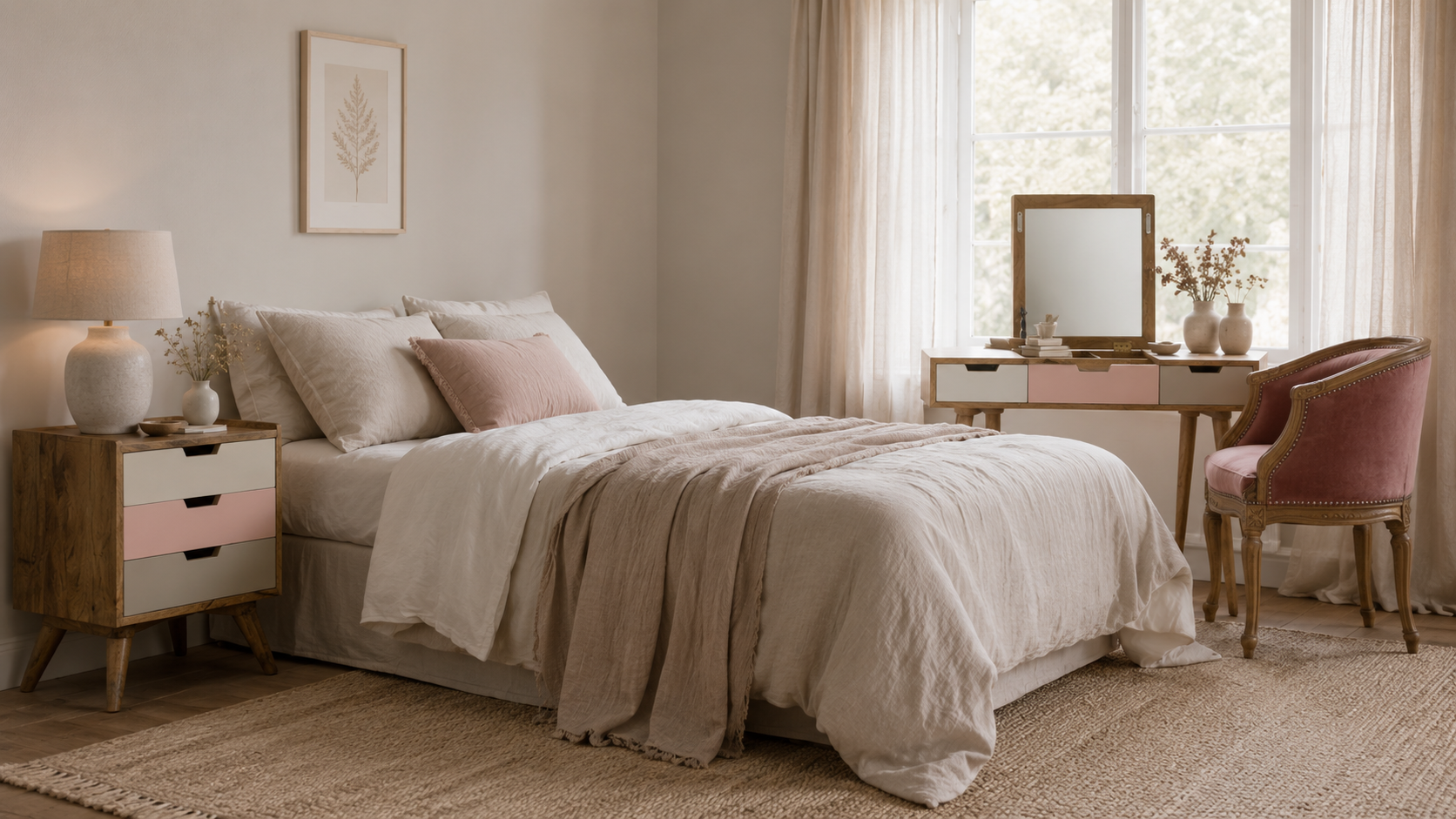
- Let the wood be the ‘steady’ element, then change colour through textiles: bedding, a rug, curtains.
- Choose one “grown-up” light (a paper shade, a simple pendant) and one playful element (prints, cushions). It balances the space.
- Use baskets on shelves for quick tidy-ups. Natural fibres pair well with mango wood and keep the room from feeling overly plastic.
This approach is also kinder to your budget: you’re investing in the bigger pieces once, then refreshing the look with smaller updates as their tastes change.
How to get the best long-term value from solid wood pieces
The goal isn’t to buy the most expensive option — it’s to buy pieces that you won’t resent in 18 months.
A few ways to make solid wood furniture go further:
- Buy fewer, better basics: A sturdy bed and one genuinely useful storage piece often outperform a room full of flimsy units.
- Measure for real use: Leave space to open drawers properly, and think about where laundry will land (a basket spot saves your floor).
- Plan for the “next version” of the room: If it could work in a guest room later, or move to a sibling, that’s real value.
- Maintain gently: Use coasters for drinks, wipe spills quickly, and avoid harsh cleaners. With natural wood, small scuffs are part of life — and many can be improved over time.
If you’re furnishing more than one space, it can be useful to view bedroom pieces together so the overall feel stays warm and cohesive.
Suggested internal link: Bedroom collection — https://www.grainandloom.com/collections/bedroom
Conclusion
Kids’ rooms are hard on furniture — which is exactly why solid wood furniture for kids can be such a smart, calming choice. Prioritise sturdy construction, sensible edges, practical storage, and a finish that’s easy to live with. Choose a bed and core storage that feel timeless, and you’ll spend less time fixing, replacing, and re-buying as your child grows.
If you’re ready to invest in pieces that bring warmth, character, and long-term practicality to family life, explore our handcrafted solid mango wood furniture collection.