Solid wood for furniture making: how to choose the right timber for a table that lasts
If you’re searching for solid wood for furniture making, you’re probably trying to avoid the same disappointments: a table that wobbles, a top that marks easily, or a surface that looks tired after one busy season of family life. The tricky part is that “solid wood” covers a lot of options—some are beautifully stable and hard-wearing, others are more prone to dents, movement or a fussy finish.
A better question than “what’s the best wood?” is: what’s the best wood for the way you actually live. Below is a practical, no-nonsense guide to help you compare furniture making timber by durability, grain, stability, weight and how it feels in a real home—especially if you’re choosing something as hardworking as a dining table.
What matters most when choosing furniture making timber
Different species look gorgeous in photos, but day-to-day performance is usually what separates a forever piece from a “why did we buy this?” purchase. When comparing furniture making timber, focus on these six factors:
- Hardness and dent resistance: Softer woods pick up marks quickly. That’s not always bad (some people like a lived-in patina), but it matters if you’ve got kids, pets or you use the dining table as a desk.
- Stability (movement and warping): All solid wood moves a little with seasonal humidity. Some species are more predictable than others, and good construction matters just as much as the timber.
- Grain character and colour: Straight grain tends to feel calm and minimal; more varied grain reads warmer, more organic and forgiving of everyday marks.
- Weight and practicality: Heavy can mean “solid and grounded”, but it also affects delivery, moving house and how easy it is to rearrange a room.
- Finish and maintenance: Some woods take oil beautifully; others are often sealed with lacquer. Think about whether you want a natural matte look or a more protected surface.
- Joinery and build quality: Even the best wood for handmade furniture can disappoint if it’s poorly joined. Look for well-fitted joints, sturdy underframes, and tops designed to allow natural movement.
Solid wood for furniture making: the most common options (and what they’re like to live with)
If you’re buying in the UK, you’ll typically come across a handful of reliable furniture woods. Each has a different look and personality.
Oak
A classic for a reason: strong, long-lasting and often fairly stable when properly seasoned. Oak’s grain is pronounced and can feel traditional or modern depending on the design. It’s a great choice for dining tables, but it can be pricier and the grain can dominate a very minimal room.
Walnut
Richer, darker and often used in mid-century modern silhouettes. Walnut tends to look “grown-up” instantly. It’s usually more expensive and may show lighter scratches against the dark colour, depending on finish.
Beech
Hard and widely used, often with a more uniform look. It can be a practical choice, but visually it can read a bit plain unless the design details are doing the heavy lifting.
Ash
Known for its lighter colour and lively grain. Works beautifully in Scandinavian and Japandi-leaning homes. It’s strong, though the open grain can influence how it looks under different finishes.
Pine and other softwoods
Budget-friendly and easy to work, but much more prone to dents. If you like a rustic, relaxed look and don’t mind patina, softwood can be charming. For a “one table for everything” family home, it can feel high-maintenance.
Mango wood
Solid mango wood sits in a sweet spot for many homes: naturally characterful grain, a warm tone that suits organic modern and rustic modern interiors, and a good balance of strength and usability when crafted well. It’s also popular in dining furniture because it feels substantial without looking overly formal.
Rather than getting hung up on a single “best”, decide what you want your furniture to do: be a calm backdrop, a statement surface, or a forgiving, everyday workhorse.
What’s the best wood for handmade furniture? Match the wood to the room
The best wood for handmade furniture is the one that fits the way the piece will be used.
For dining tables (the hardest-working surface in most homes)
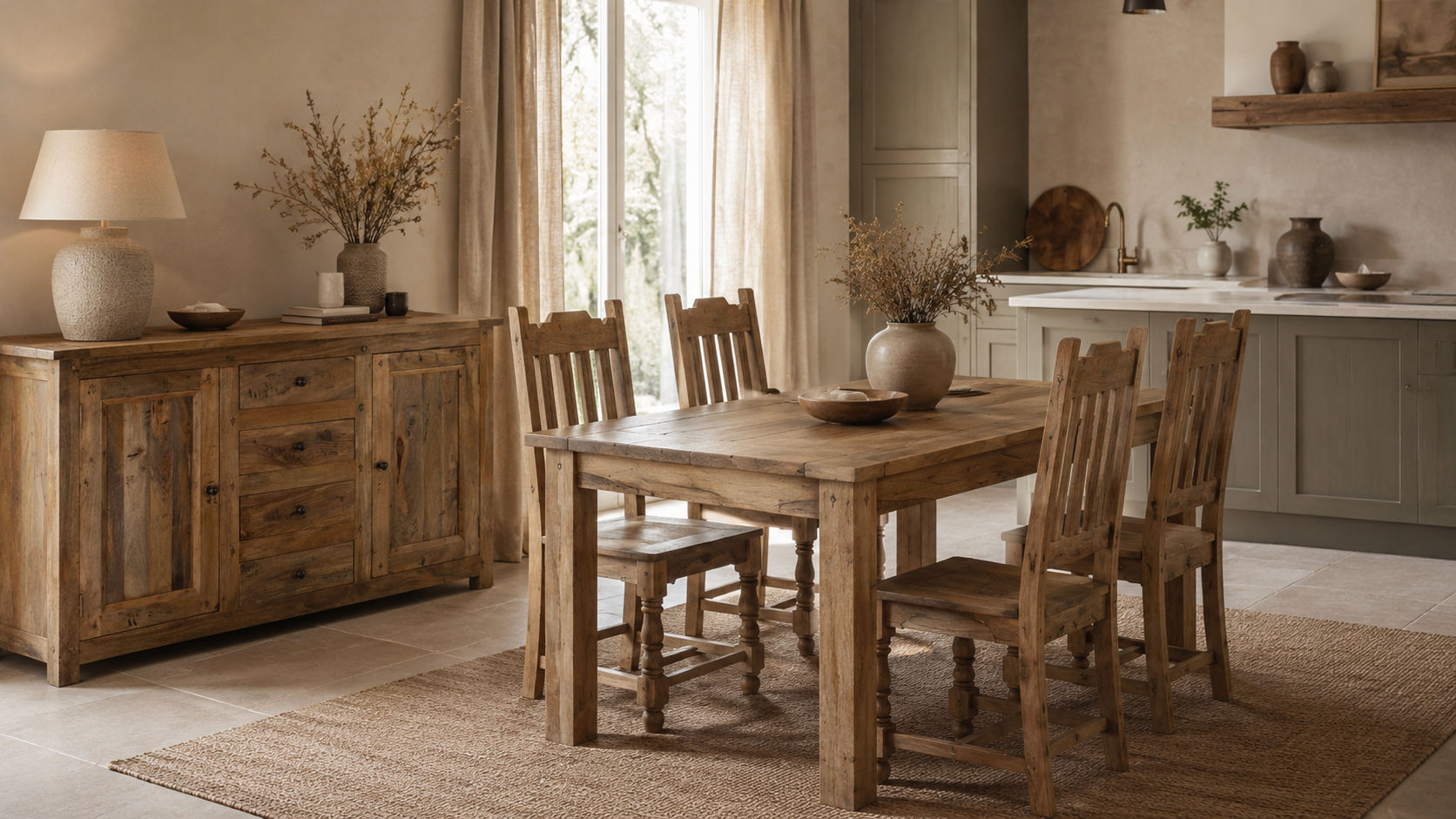
Look for a wood that can cope with hot mugs, rushed breakfasts, laptops, craft projects and the odd spill. Hardness matters, but so does a sensible finish and a stable build. A well-made solid wood dining table should feel steady at the corners, with an underframe that supports the top without fighting natural wood movement.
Real-life example: if your dining table doubles as a weekday home office, you’ll want a surface that doesn’t show every pen mark and a finish that won’t go tacky under a warm laptop.
For coffee tables and side tables
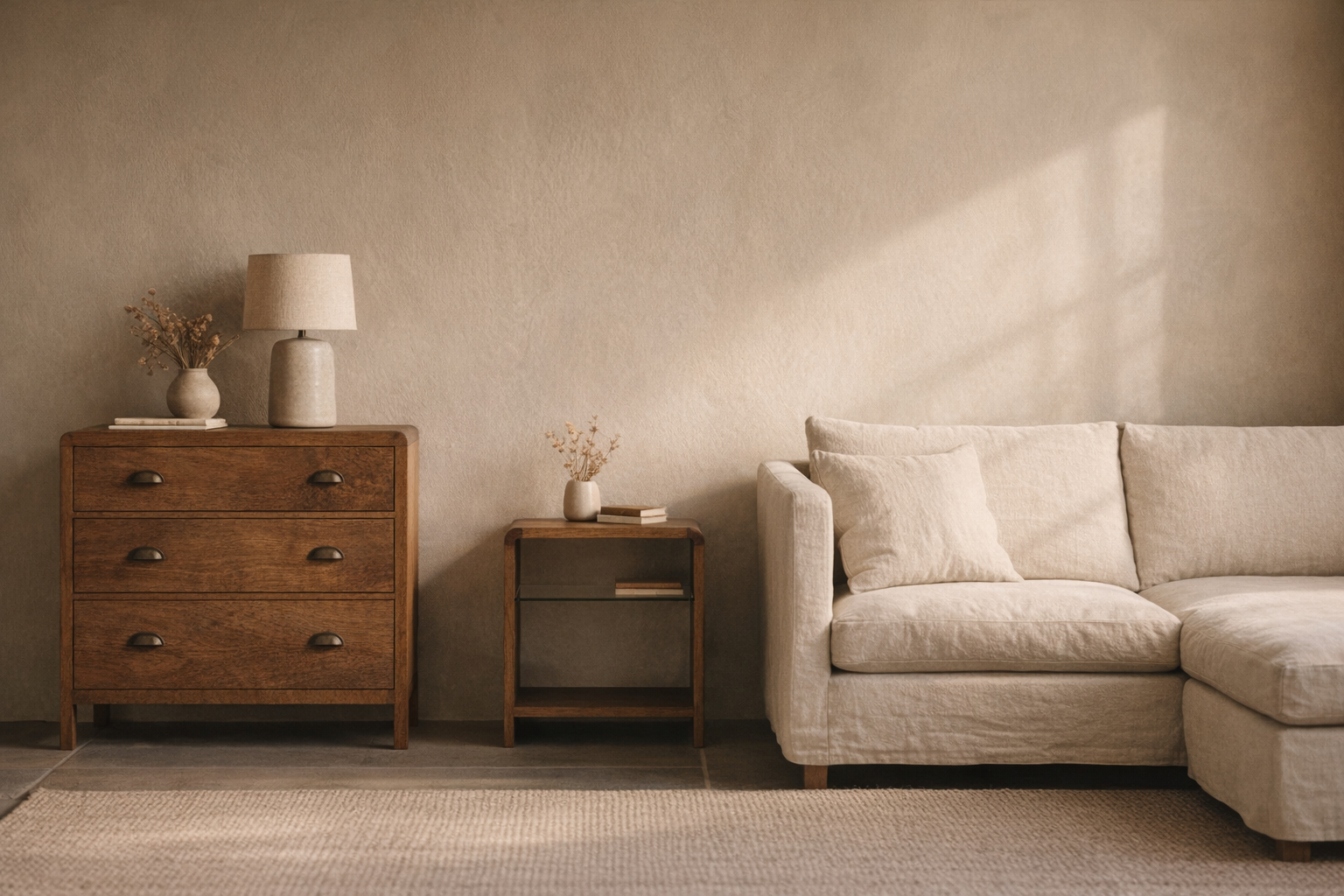
These get a lot of “impact moments”: keys dropped, feet up, takeaways, and the occasional plant pot ring. A wood with visible grain can be more forgiving—natural variation helps small marks blend in.
For bedroom furniture
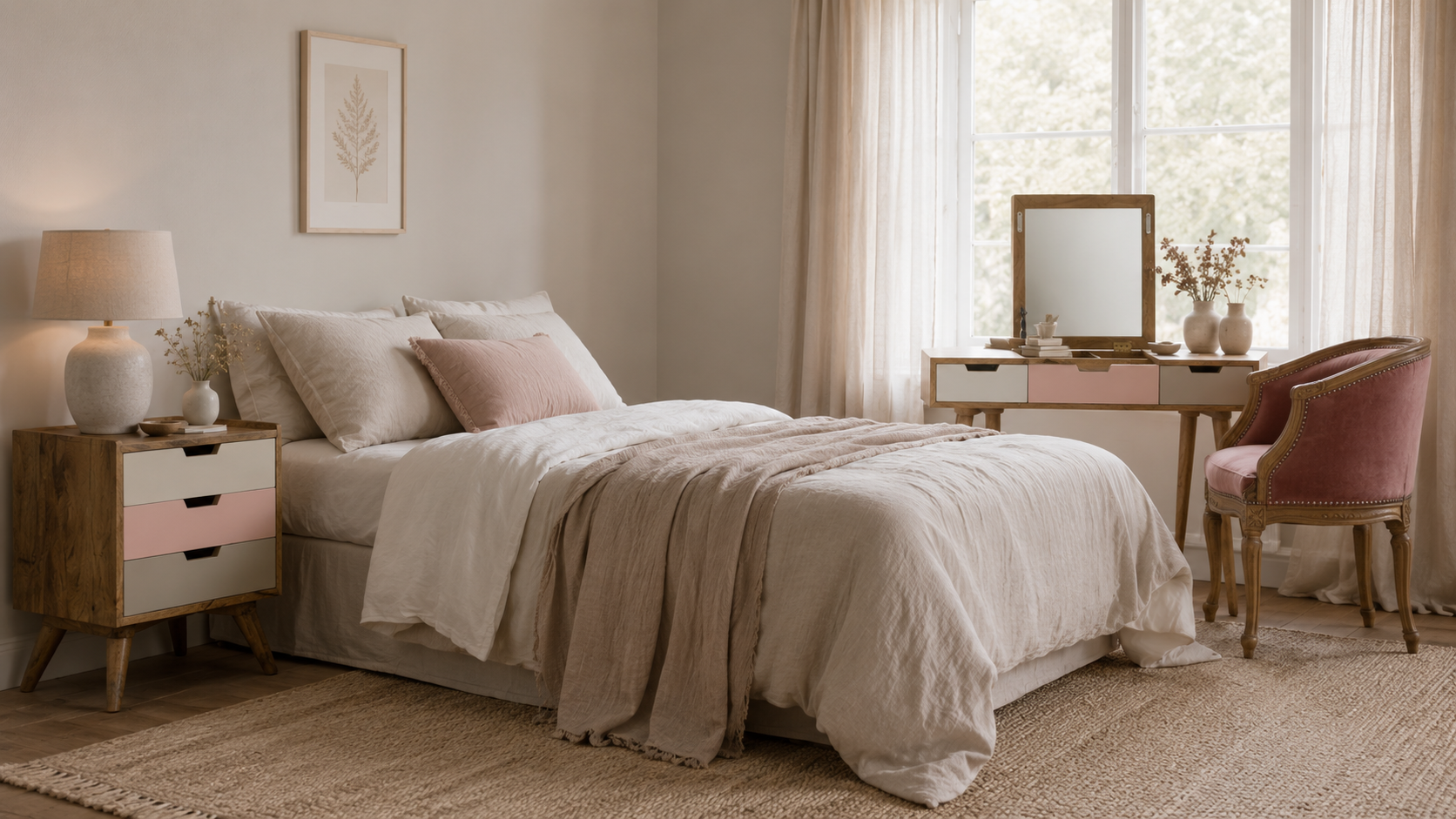
Here it’s more about feel than armour. You might prefer calmer grain and softer colour for a restful room. Drawers should run smoothly and feel sturdy—timber choice matters, but so does construction.
For open-plan living
If your dining table is always on display, consider how the tone works with your flooring. Warm woods (including mango) can make a space feel welcoming and layered, especially alongside neutral textiles and black or brushed metal accents.
Strength vs stability: how to avoid warping and wobble
A common misconception is that choosing a “hard” wood automatically means the furniture won’t warp. In reality, stability is a mix of timber choice, drying/seasoning, and smart construction.
Here’s what to look for when you’re buying:
- A top thickness that suits the span: Very thin tops can feel less substantial and may show movement more obviously, especially on larger tables.
- A properly designed apron/underframe: The structure under the tabletop should support it, while still allowing seasonal movement (wood expands and contracts across the grain).
- Even grain and good panel construction: Wide, single-plank looks are beautiful, but large surfaces are often made from multiple boards joined together. When done well, this improves stability and keeps the top looking balanced.
- Level, confident leg joinery: Wobble is often about joinery and floor tolerance rather than the species. A solid wood table should feel planted, not springy.
In UK homes, central heating in winter and open windows in summer create real swings in humidity. Any solid wood for furniture making should be treated as a living material—choose a well-built piece, then keep it away from direct radiators and persistent damp spots where possible.
Grain, colour and finish: choosing a look you won’t tire of
Wood is as much about mood as it is about mechanics. Grain and finish change how a room feels.
If you love calm, minimal spaces
Leaner grains and lighter tones can look clean and considered. Pair with textured linens, wool throws and matte ceramics so the room doesn’t feel flat.
If you want warmth and character
More varied grain reads relaxed and inviting. It works brilliantly with mid-century modern forms, curved silhouettes, and organic shapes. Solid mango wood is a good example of this kind of visual warmth—especially in dining rooms where you want the space to feel welcoming rather than showroom-perfect.
Matte vs satin vs glossy
- Matte finishes tend to feel natural and modern, and they hide small reflections.
- Satin can be a practical middle ground: still warm, with a little more wipe-clean ease.
- High gloss can look smart but may highlight scratches and fingerprints.
Practical tip: if you have strong daylight (big bay windows, bifolds), a very glossy surface can show every mark. A more natural finish often looks better in real, bright rooms.
Cost, longevity and sustainability: what ‘value’ really means with solid wood
Solid wood furniture often costs more upfront, but it can be better value over time—especially for pieces like dining tables that take daily wear.
A few grounded ways to think about value:
- Repairability: Solid wood can often be refreshed. Small marks can blend into the grain over time, and some finishes can be re-oiled or lightly refinished (depending on how the piece is sealed).
- Timelessness: Wood with warmth and honest grain tends to outlast trend-led finishes. If your style shifts from Scandi to rustic modern, a good solid wood table usually still works.
- Buying fewer, better pieces: A sturdy dining table can be the anchor of your home for years—school projects, Sunday roasts, work-from-home days and celebrations.
If sustainability matters to you, look for brands that are transparent about materials and craftsmanship, and choose pieces you genuinely plan to keep. Longevity is often the most meaningful form of sustainability in a family home.
Conclusion
Choosing solid wood for furniture making isn’t about chasing a single perfect species—it’s about matching the timber’s strength, stability, grain and finish to how you’ll actually use the piece. If you want a dining table that feels warm, substantial and characterful (and that you won’t be precious about every day), well-crafted solid woods like oak, walnut, ash and mango can all be excellent choices when built properly.
If you’re ready to focus on a table you’ll enjoy living with, not just looking at, explore our handcrafted solid mango wood furniture collection. Start with our dining range and choose a size and silhouette that suits your space and routine.