How to Refinish Solid Wood Furniture (Without Losing the Grain or the Charm)
If you’re staring at a much-loved solid wood piece covered in scratches, cloudy water rings, or a finish that’s gone dull and tired, you’re not alone. The worry is real: how to refinish solid wood furniture without sanding through the surface, muddying the grain, or ending up with something that looks worse than before.
The good news? Most solid wood furniture is absolutely worth saving. With a bit of patience, the right prep, and a finish that suits how you actually live, you can restore warmth, colour, and character—and often improve durability at the same time. Here’s how to decide what’s salvageable, choose the right approach, and refinish with confidence.
Is it worth refinishing? A quick assessment before you start
Before you pick up sandpaper, take ten minutes to work out what you’re dealing with. This step can save you hours (and prevent accidental damage).
1) Check whether it’s truly solid wood.
Solid wood can be refinished again and again. Veneer can be refinished too, but it needs a much lighter touch because the top layer is thin. Look at edges, underside, and any chips: solid wood shows the same material through and through; veneer often reveals a different core beneath.
2) Identify the problem: surface vs structure.
- Surface issues (light scratches, faded patches, water marks, sticky residue) are usually straightforward.
- Structural issues (wobbly joints, splits, loose legs) should be fixed before refinishing. A dining chair that rocks slightly may just need tightening and re-gluing; refinishing won’t solve instability.
3) Work out what finish is already on it.
A quick test in an inconspicuous spot helps:
- If a little denatured alcohol softens the finish, it may be shellac.
- If lacquer thinner softens it, it may be lacquer.
- If neither affects it, it may be polyurethane or varnish.
You don’t need to become a chemist—just know that some finishes strip easily, while others need more sanding.
4) Consider how you’ll use the piece.
A bedside table can cope with a more delicate oil finish if you use coasters. A family dining chair or kitchen stool needs something tougher and easier to wipe down. This is the key to choosing a finish that feels good in real life, not just on day one.
If the piece is solid wood, reasonably sound, and you like its proportions, it’s almost always worth the effort to restore solid wood furniture rather than replace it with something that won’t age as well.
Tools and materials you actually need (and what to avoid)
You don’t need a workshop full of kit. A calm, minimal setup tends to produce the best results.
Essentials
- Screwdriver (for removing hardware and, for chairs, separating seats where possible)
- Clean cloths and a vacuum
- Mild cleaner (dish soap in warm water works for general grime)
- Sandpaper: 120, 180, and 240 grit (plus a sanding block)
- Wood filler (only if needed, and ideally stainable)
- Tack cloth or a slightly damp microfibre cloth
- Finish of choice (more on that below)
- A good-quality brush or lint-free cloth (depending on finish)
Nice to have
- Random orbital sander (helpful for flat surfaces like tabletops; less useful on spindles and curves)
- Painter’s tape (for masking areas you don’t want to sand)
What to avoid (if you want the grain to stay crisp)
- Over-aggressive low-grit sanding (like 60–80 grit) unless you’re dealing with very thick, damaged finish on a flat surface.
- Rushing straight to stain to “fix” uneven colour. Stain can exaggerate patchiness if the surface prep isn’t even.
- Heavy wax as a topcoat on high-traffic pieces. Wax can look lovely but it’s not always practical for dining chairs and daily-use surfaces.
For sanding and refinishing wood furniture, the secret is consistency: even pressure, patient progression through grits, and good dust control.
How to refinish solid wood furniture: a step-by-step method that protects the grain
If you want a reliable approach that works for most solid wood pieces, follow this sequence.
Step 1: Clean properly first
You’d be surprised how many “finish problems” are actually dirt, polish build-up, or cooking grease. Clean with a mild solution, wipe with clean water, and let it dry fully.
Step 2: Make any repairs before sanding
Tighten screws, re-glue loose joints, and let adhesives cure. On chairs, check the rungs and legs. A beautifully refinished chair that wobbles will still feel cheap.
Step 3: Decide between stripping and sanding
- If the existing finish is flaking, very thick, or uneven, a chemical stripper may be easier than endless sanding.
- If the finish is intact but tired, sanding is often enough.
For many pieces, a light sand is all you need to refresh the surface without removing lots of wood.
Step 4: Sand in stages (don’t skip grits)
Start at 120 grit to remove the old finish, then move to 180, then 240 for a smoother feel.
- Always sand with the grain.
- On edges and corners, go gently—these areas lose material fastest.
- For curved chair parts, wrap sandpaper around a flexible sanding pad so you don’t create flat spots.
Step 5: Remove dust like it matters (because it does)
Vacuum thoroughly, then wipe. Dust left behind becomes grit in your finish, dulling the look and feel.
Step 6: Apply finish in thin, even coats
Most finishing disasters come from applying too much product at once. Thin coats dry more evenly and keep the grain looking clear and lively.
Step 7: Lightly de-nib between coats
A very light sand with 240–320 grit between coats (once fully dry) knocks back any raised grain or dust nibs.
Step 8: Cure time is part of the process
Dry to the touch isn’t the same as fully cured. Treat freshly refinished surfaces gently for the first week or so—especially on chair seats and arms where friction is constant.
Choosing the right finish for real homes (not just a showroom)
The “best” finish depends on how the piece is used and what look you love.
Hardwax oil (great all-rounder)
- Look: natural, warm, matte to satin
- Feel: smooth, not plasticky
- Practicality: generally durable and easy to patch-repair
Ideal for: dining chairs, sideboards, coffee tables—especially if you want a modern, natural look that suits Scandinavian, Japandi, and organic modern interiors.
Oil (beautiful but a little more care)
- Look: brings out grain and depth
- Practicality: can need re-oiling over time
Ideal for: pieces you don’t mind maintaining, or where you want maximum tactile warmth.
Varnish or polyurethane (tough, slightly more “sealed”)
- Look: can range from matte to gloss, but may look more “coated”
- Practicality: very protective for high-use items
Ideal for: family dining spaces, busy kitchens, homes with pets—anywhere you want wipe-clean resilience.
Stain (use with care)
Stain can be brilliant if you’re changing the colour significantly, but it will highlight uneven sanding. If you love the natural warmth of woods like mango, you may not need stain at all—often a clear finish is enough to revive colour and let the grain do the talking.
A helpful rule: choose the finish that matches your lifestyle, not your aspirations. If your dining chairs need to cope with spaghetti night, go for durability and easy cleaning first.
Common refinishing mistakes (and how to avoid them)
A few small missteps can flatten the grain or make a solid piece look oddly “new” in the wrong way. Here’s what to watch for.
Sanding too aggressively on edges
Edges and corners lose wood quickly, which can change the profile and make a piece look softened or worn in the wrong places. Use lighter pressure and higher grit on edges.
Trying to sand out deep stains that have soaked in
Water or heat marks sometimes go beyond the finish into the wood fibres. Chasing them can lead to uneven surfaces. In many cases, it’s better to reduce the mark and accept a faint shadow as part of the piece’s story.
Using filler where grain should be
Filler doesn’t take finish like wood. Use it only for true gaps or damage, and keep it minimal—especially on prominent areas like chair backs and arms.
Choosing a finish sheen that fights the style
High gloss can read quite traditional and show every fingerprint. If your home leans mid-century modern or rustic modern, a matte or satin finish usually feels more relaxed and grown-up.
Not testing first
Always do a small test area with your chosen finish. Wood can shift in tone dramatically once oil or varnish hits it, and mango wood in particular can show rich variation that’s worth previewing before you commit.
Real-world examples: what refinishing changes in everyday rooms
Refinishing isn’t only about “fixing” a piece—it’s about how it makes the room feel.
A set of dining chairs that look tired
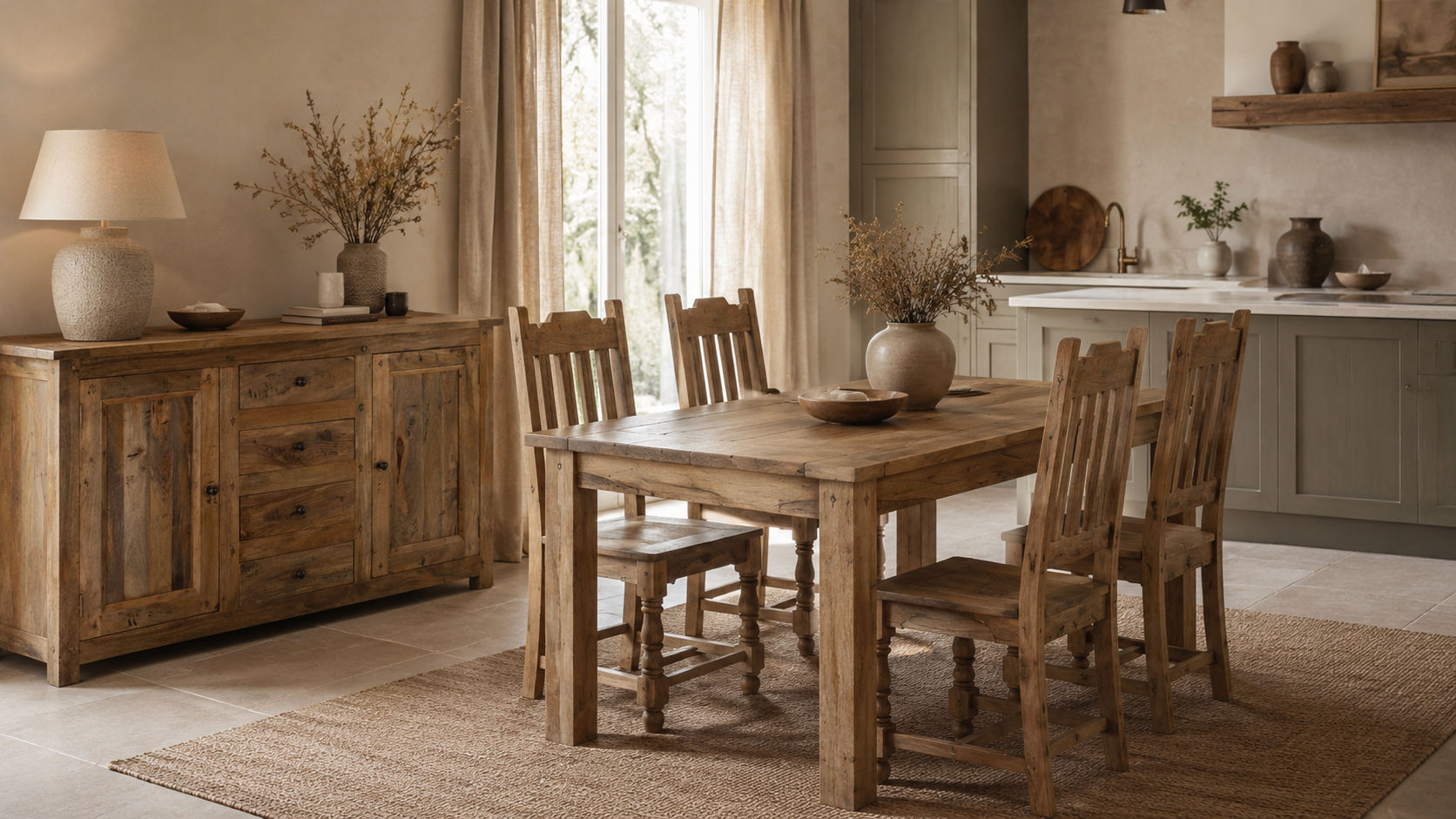
If the frames are sturdy but the finish is scratched and dull, refinishing can bring back warmth and make the whole dining area feel more intentional. Pair them with a simple linen tablecloth and a warm pendant, and suddenly the space looks considered rather than thrown together.
A single statement chair in the bedroom
A refinished wooden chair with a clean satin finish works beautifully as a reading corner perch or a place to drape tomorrow’s outfit. Add a textured cushion, and the wood grain becomes part of the room’s layering.
A hallway chair or occasional seat
In real homes, chairs often end up in hallways to pull on shoes, in kitchens as extra seating, or next to a bookcase. A durable finish here matters more than perfection—because it will be used.
If you enjoy the process of restoring solid wood furniture, it can also sharpen your eye for quality when you buy: solid joinery, good proportions, and timber with character tend to be worth the investment because they can be maintained rather than replaced.
Conclusion
Refinishing can feel intimidating, but the fundamentals are simple: check the piece is sound, clean thoroughly, sand carefully in stages, and choose a finish that fits your day-to-day life. Done well, how to refinish solid wood furniture becomes less about chasing perfection and more about bringing back what you liked in the first place—the warmth, the grain, and that sense of a piece that belongs in your home.
If you’re restoring a favorite but also thinking about adding a few long-term staples, explore our handcrafted solid mango wood furniture collection for pieces designed to age beautifully with use.