How to Arrange Living Room Furniture With TV: A Comfortable, Balanced Layout Guide
If you’ve ever tried to figure out how to arrange living room furniture with TV and ended up with a room that feels lopsided, cramped, or weirdly “all eyes on the screen,” you’re not alone. TVs are practical, but they’re also a big black rectangle that can hijack your layout—especially in open-plan spaces, narrow living rooms, or family rooms that need to do more than one job. The good news: a comfortable setup is less about copying a showroom layout and more about a few reliable measurements, sightlines, and furniture choices that make everyday life easier.
Start with the real goal: comfortable viewing (not perfect symmetry)
Before you move a single piece, decide what “good” looks like for your household. For most American homes, the TV is one of several priorities—conversation, lounging, kid-proof pathways, and sometimes a desk corner or reading chair.
A few viewing basics help you anchor the plan:
- Eye level matters. A TV is usually most comfortable when the center of the screen sits roughly at seated eye level. Mounting too high (the classic “over the fireplace” problem) often leads to neck strain and a room that feels like it’s arranged around the wall, not the people.
- Distance is flexible. You don’t need a calculator, but you do want breathing room. If you feel like you’re constantly turning your head or squinting at subtitles, the screen is likely too big for the distance—or your seating is too far.
- Control glare early. Notice windows, sliders, and overhead lighting. If you can, place the TV perpendicular to the brightest window rather than directly opposite it.
Once viewing comfort is set, styling becomes much easier—because the room will already function well.
How to arrange living room furniture with TV: 6 layout rules that work in most homes
If you want a living room furniture arrangement that feels calm and intentional, these rules handle most of the “why does this feel off?” issues:
1) Float furniture when you can. Even pulling the sofa 6–12 inches off the wall can make a room feel more designed. In open-plan spaces, floating the sofa can also create a natural “TV zone.”
2) Keep a clear walkway. Try to maintain an easy path from entries to seating (often about 30–36 inches if space allows). If people constantly squeeze past a coffee table corner, the layout will never feel relaxing.
3) Aim for a gentle U-shape. A sofa facing the TV, plus one or two chairs angled in, creates both a viewing zone and a conversation zone. The key is angle—chairs don’t have to face the TV head-on.
4) Don’t force everything to face the screen. If every seat is aimed at the TV, the room can feel like a waiting area. Instead, keep the main sofa oriented to the TV and let secondary seating support conversation.
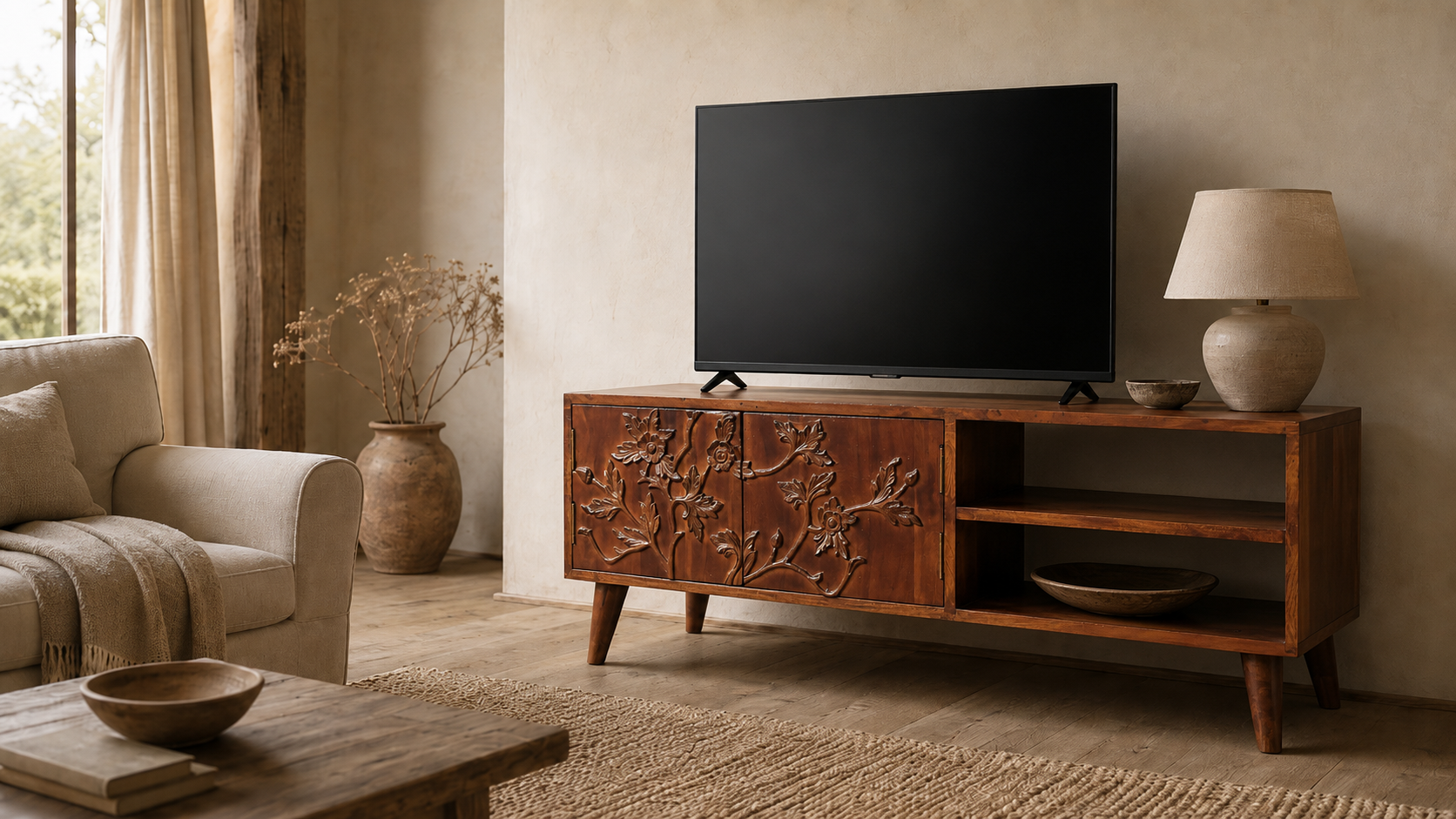
5) Use a media unit to “ground” the TV. A well-proportioned TV stand or media console visually anchors the screen, hides components, and adds warmth—especially important if you have a lot of black-and-gloss electronics.
6) Scale is everything. A too-small console makes the TV look oversized; a too-small rug makes the layout feel disconnected. Prioritize pieces that look substantial and stable—especially if you’re upgrading from lightweight, wobbly furniture.
These are simple principles, but they’re what make the difference between a room that’s merely functional and one that feels finished.
TV placement in living room: choose the wall based on light, traffic, and “visual noise”
The best TV placement in living room setups is rarely about the “center wall” and more about avoiding the three common layout traps: glare, traffic, and clutter.
1) Pick a low-glare wall
If your TV sits opposite big windows, daytime viewing becomes a constant battle. Try placing the TV on a wall adjacent to windows (or use curtains/shades if the layout can’t change).
2) Avoid putting the TV where people walk through the sightline
If the TV faces a hallway or the kitchen pass-through, someone will always be crossing in front of the screen. In family rooms, this is a daily annoyance. Rotate the layout or shift seating to reduce that “cross-traffic.”
3) Watch the “clutter zone”
The TV wall is where cords, routers, soundbars, consoles, and remotes tend to gather. Plan for it. A media unit with real storage—drawers, cabinets, or shelf zones—helps keep the room feeling calm.
Real-world example: In a typical open-plan living room (sofa with kitchen behind it), placing the TV on the longest uninterrupted wall often works best. Float the sofa to create a clear walkway behind it, then add a chair by a window for reading that can still angle toward the screen when needed.
Choose the right TV stand or media unit: height, width, and storage that actually helps
If you’re investing in a better living room setup, the media unit is one of the most important pieces—because it influences proportions, hides mess, and adds the “furniture” feeling a wall-mounted TV can lack.
Here’s what to look for:
- Width: As a general visual rule, a console looks best when it’s wider than the TV (or at least close). That extra width creates balance and gives you landing space for speakers, books, or a lamp.
- Height: If the TV sits on the console, you want a height that keeps the screen comfortable from the sofa. If the TV is wall-mounted, the console still matters—it should sit low enough to feel grounded, but tall enough to offer useful storage.
- Storage mix: Open shelves are great for a cable box or game console; closed storage is what keeps the room from feeling busy. Many homes benefit from both.
- Cable management: Even simple pass-through openings help keep cords from spilling down the wall.
Material makes a difference, too. A solid wood console—like a handcrafted solid mango wood piece—adds warmth and grain variation that softens the look of electronics. It’s also the kind of piece people keep when they move, because it doesn’t feel disposable.
If you’re browsing options, start with Grain & Loom’s TV & Media Units collection and compare sizes and storage styles against what you actually use day to day: streaming device, soundbar, kids’ games, spare remotes, or board games.
Layout solutions for common room shapes (small, long/narrow, and open concept)
Most living rooms don’t look like a catalog. Here are practical living room furniture arrangement approaches that work with the rooms people actually have.
Small living room (apartment or snug family room)
- Put the TV on the longest wall you can.
- Use a sofa facing the TV and one compact chair that can angle in.
- Consider a slimmer media unit with closed storage to prevent visual clutter.
- Keep side tables light and functional—where drinks actually go.
Long or narrow living room
- Resist lining everything against the walls like a hallway.
- Float the sofa to create a distinct seating zone.
- Use a rug to define the TV area and keep front legs of seating on the rug for cohesion.
- If the room is very long, add a console table behind the sofa to create a “stop” and improve flow.
Open concept (living + dining + kitchen)
- Treat the sofa as the “back wall” of the living zone.
- Place the TV so it’s not competing with the dining room focal point.
- Choose a media unit that looks like real furniture from all angles (because you’ll see it constantly).
Real-world example: In an open-plan suburban home, a medium-size sectional can face the TV wall, while the chaise points toward the windows. Add one chair near the edge of the rug—angled toward the sofa—so the room works for movie nights and conversation when the TV is off.
Make the TV wall feel designed: balance, layers, and warmth
A TV wall doesn’t have to be a design dead zone. A few easy moves make it feel intentional without turning it into a project.
- Anchor with a substantial console. The right media unit adds weight and warmth, especially in rooms with lots of white walls or gray upholstery.
- Add asymmetry on purpose. Try a floor lamp to one side, or a tall plant that breaks up the rectangle of the screen.
- Use a limited palette. If the room already has a lot going on, keep the TV wall calm: a couple of books, a ceramic piece, maybe a framed photo. Let the wood grain do the work.
- Hide what you can. Baskets, drawers, and cabinets reduce that “electronics on display” look.
If you love warm, timeless interiors—mid-century modern, Scandinavian, Japandi, organic modern—natural wood tones are often what make the room feel lived-in and grown-up. Mango wood’s characterful grain can be especially helpful here: it adds movement and depth even when the rest of the palette is quiet.
Conclusion
The best answer to how to arrange living room furniture with TV is the one that supports real life: comfortable viewing, easy walkways, and a layout that still feels welcoming when the screen is off. Start with glare and sightlines, choose a media unit with the right proportions and storage, then build a simple U-shaped seating zone that encourages both lounging and conversation.
If you’re ready to upgrade from temporary, wobble-prone pieces to furniture with warmth and staying power, explore our handcrafted solid mango wood furniture collection—starting with Living Room Furniture, TV & Media Units, and The Vale Collection from Grain & Loom.