Where Can I Donate Dining Room Furniture? Trusted Options (and How to Prep It)
If you’re staring at a dining table and chairs you’ve outgrown—and you want them to do some good—you’re not alone. The hard part isn’t deciding to donate; it’s figuring out where can I donate dining room furniture in a way that’s convenient, trustworthy, and actually useful to the next home. Donation policies vary widely (especially for bulky items), and a little prep can be the difference between a quick pickup and a polite “sorry, we can’t take that.” Here’s a practical, US-focused guide to donating dining tables and dining sets responsibly—plus a few thoughtful tips if you’re upgrading your dining space afterward.
Why donating dining furniture can be surprisingly tricky
Dining furniture is one of the most useful categories to donate—and one of the most commonly declined. Most organizations are balancing limited storage, staffing, and safety/quality standards.
Common reasons dining tables and chairs get turned away:
- Damage that affects function: wobble, broken joints, missing hardware, loose legs, cracked tops.
- Hygiene issues: mold, strong pet odors, smoke smell, heavy staining on upholstered seats.
- Scale and logistics: very large tables, heavy solid-wood pieces, or sets in upper-floor walkups with tight stairs.
- Liability and resale guidelines: some nonprofits can’t accept items that require repair.
A good rule of thumb: if you’d feel comfortable having a friend use it tonight at dinner—without apologizing for it—there’s a good chance it’s donation-ready.
Real-life example: A four-chair set with a stable 60-inch table is often an easy “yes” for charities that support families moving into housing. A wobbly pedestal table with stripped screws might be better suited for a local repair-minded group (or a free curb listing with clear disclosure).
Where can I donate dining room furniture? Trusted US options to start with
If you want your donation to land with a reputable organization, start with groups that have clear intake policies and established furniture programs.
1) Habitat for Humanity ReStore
ReStores accept donated furniture and home goods, then sell them to fund Habitat’s work. Many locations take dining tables and chairs, but policies vary by store.
- Best for: sturdy, gently used dining furniture; solid wood pieces; sets in good condition.
- Tip: Search your closest ReStore and check their donation page for size limits and pickup availability.
2) Goodwill (select locations)
Some Goodwill regions accept furniture; others limit bulky items. Call ahead, especially for larger dining tables.
- Best for: smaller dining sets or individual chairs in clean condition.
- Tip: Ask if they offer home pickup—some regions do through partners or scheduled routes.
3) The Salvation Army (in many areas)
In some cities, The Salvation Army offers furniture donation pickup, but schedules can book out.
- Best for: complete sets and sturdy dining tables.
- Tip: Confirm what they can take and whether they’ll require ground-floor pickup or disassembly.
4) Local shelters, transitional housing, and refugee resettlement partners
These organizations often furnish apartments for people moving out of homelessness, escaping domestic violence, or resettling. Needs can be specific, and they may prioritize functional basics.
- Best for: complete dining sets, simple and durable pieces.
- Tip: Call or email with photos and dimensions. Many are thrilled to see a clean, ready-to-use table.
5) Furniture banks
Furniture banks specialize in distributing donated furnishings to families in need. Many cities and counties have one.
- Best for: practical, durable dining tables and chairs.
- Tip: Search “furniture bank + [your city]” and check their accepted items list.
6) Buy Nothing groups and community giving networks
Neighborhood-based giving is often the fastest path—especially for bulky items.
- Best for: quick pickup, direct-to-neighbor donations.
- Tip: Include measurements, whether it disassembles, and carry requirements (stairs, elevator, etc.).
If your goal is the highest likelihood of acceptance for a dining table, start with a ReStore or a furniture bank, then widen to community networks if scheduling or policies don’t match your timeline.
Donating dining tables: what charities typically accept (and what they won’t)
For donating dining tables, condition and usability matter more than style. Even a modest table is a big help if it’s stable, clean, and ready to use.
Most organizations look for:
- Stability: no wobble; legs are tight; base is secure.
- A sound top: no major warping, deep cracks, or sticky finishes.
- Reasonable wear: light surface scratches are usually fine.
- Complete parts: leaves, brackets, and hardware included (if applicable).
They often won’t accept:
- Tables with broken structural joints or a split base.
- Items with active infestation signs (rare, but taken seriously).
- Pieces that require major repair before use.
Chairs and benches have similar standards:
- Chairs should feel solid when you lean back.
- Upholstered seats should be clean and odor-free.
A helpful mindset: many donated dining sets go to households that need something dependable for nightly meals, homework, and hosting. A table that’s easy to wipe down and doesn’t demand special care is ideal.
Example: A simple rectangular table that seats four can be perfect for a small apartment—especially paired with sturdy chairs. A delicate vintage chair with loose rungs might be beautiful, but it’s better offered to someone who enjoys restoring furniture rather than a charity trying to place it quickly.
How to prep your dining set so it’s actually usable (and more likely to be accepted)
A little prep makes your donation easier to handle—and shows respect for the next home.
Clean it like you’d want to receive it
- Wipe the table and chairs with a gentle cleaner.
- Remove crumbs from corners, chair joints, and any carved detail.
- For wood, avoid soaking; a barely damp cloth followed by a dry wipe is usually safest.
Tighten and stabilize
- Check screws/bolts under the table and chairs.
- Tighten what you can; replace missing standard hardware if it’s simple.
Gather the “extras”
- Include leaves, extension rails, and installation hardware.
- Tape small parts in a labeled bag underneath the table.
Measure and photograph
Most organizations (and neighbors) will ask.
- Table dimensions: length, width, height.
- If it extends: both sizes.
- Chair count and seat height.
- Take clear photos in natural light: full piece, top surface, and any wear.
Be honest about condition
A transparent note like “light scratches on top, sturdy and level” helps the item move quickly and avoids wasted trips.
If your table is solid wood (including mango wood), mention that—it helps set expectations around weight and durability, and it can make the piece more appealing to someone who’s tired of furniture that feels temporary.
Pickup vs drop-off: how to donate without the headache
The biggest practical barrier is often logistics. Dining tables are awkward, and many donation centers have limited capacity.
If you need pickup:
- Ask about lead times (some book weeks out).
- Confirm what they’ll take before scheduling—some won’t accept chairs with upholstery, for example.
- Clarify whether the item must be on the ground floor or disassembled.
If you can drop off:
- Call ahead for hours and dock procedures.
- Bring a friend—tables are safer and easier with two people.
- Protect your car with a blanket to avoid scuffs.
If time is tight:
Community networks are often fastest. Posting “free dining table, pickup only” with measurements can move a piece in 24–48 hours in many neighborhoods.
A smart hybrid approach:
1) Try a furniture bank or ReStore first.
2) If they can’t take it quickly, list it locally with clear photos.
3) If it’s not moving, consider a low-cost hauling service and recycle what you can—especially if it’s damaged beyond practical reuse.
Upgrading after you donate: choosing a dining table you won’t want to replace in two years
Often, donating is part of an upgrade—especially if your current table wobbles, chips, or simply doesn’t fit your life anymore.
If you’re buying your next dining table, focus on the details that make it feel “grown-up” and long-lasting:
1) Choose stable construction over clever shortcuts
Look for tables that feel solid when you lean on them, with well-supported bases and sensible joinery. A dining table gets used hard: weeknight dinners, kids’ crafts, holiday spreads, laptop work.
2) Pick a size that fits real life
- For everyday comfort, many homes do well with a table that seats 4–6.
- If you host, consider an extendable table—or plan for a consistent 6–8 seat footprint if your room allows.
- Leave enough clearance to walk around chairs comfortably.
3) Embrace wood grain and natural character
Solid wood brings warmth that flat, printed “wood look” surfaces can’t mimic. Mango wood, in particular, is loved for its expressive grain and inviting tone—great for mid-century modern, Scandinavian, Japandi, rustic modern, and organic modern spaces.
4) Think about the finish you can live with
A practical finish should handle daily wipe-downs without feeling precious. If you’ve lived with a table that shows every mark instantly, it’s worth prioritizing a surface you’ll feel relaxed around.
Real-home examples:
- In an open-plan American kitchen/dining space, a warm wood table can soften white cabinetry and black hardware.
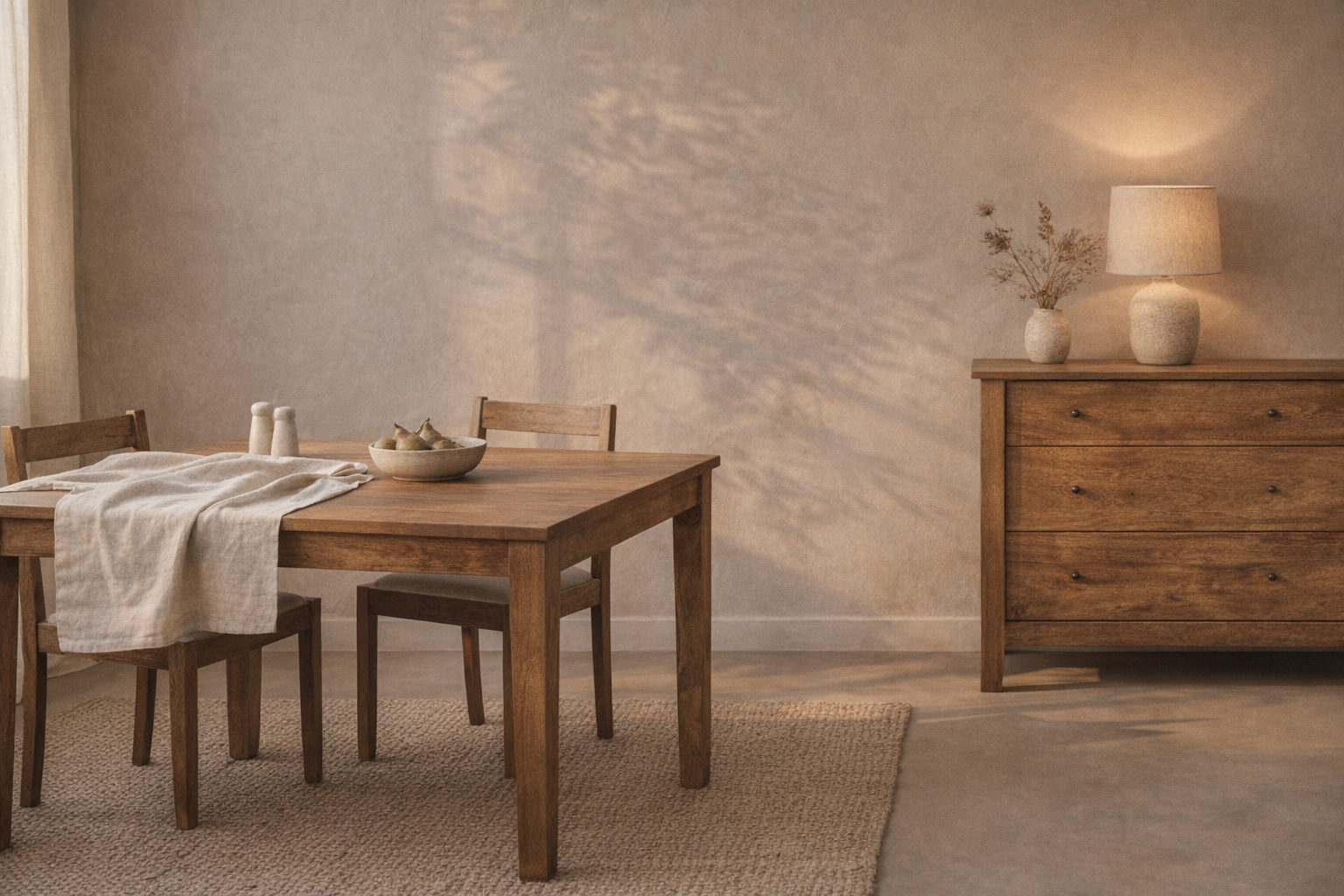
- In a smaller dining nook, a clean-lined rectangular table anchors the space and makes it feel intentional—even with simple chairs and a linen runner.
If you’re ready to browse options that balance warmth, durability, and timeless proportions, Grain and Loom’s Dining Room Furniture collection is a natural next step.
Conclusion
Donating a dining set shouldn’t feel like a maze. With a few quick checks (stability, cleanliness, completeness) and a short list of reputable organizations, you can answer the question—where can I donate dining room furniture—with confidence and get your table into a home that truly needs it. And if donating is part of an upgrade, choosing a solid-wood piece with honest materials and thoughtful construction can help you buy once and live with it for years.
Explore our handcrafted solid mango wood furniture collection when you’re ready to find a dining table that brings lasting warmth and character to your everyday meals.