

How to Clean Solid Wood Furniture (Without Dulling the Finish)
If you’ve invested in real wood furniture (or you’re about to), it’s only natural to worry about doing the wrong thing: water marks, cloudy patches, a stripped finish, or tiny scratches that seem to catch the light forever. The good news is that once you know how to clean solid wood furniture properly, it’s not high-maintenance at all. It’s mostly about using the gentlest tools, keeping moisture under control, and building a simple routine that protects the finish while letting the grain stay warm and characterful.
Start here: what finish do you have (and why it matters)?
Before you reach for any product, it helps to understand what you’re actually cleaning. Most modern solid wood furniture is protected by a finish designed for everyday life—think spills, fingerprints, and the occasional enthusiastic toddler.
In practical terms, your approach depends on whether the surface is sealed (common) or oil/wax-finished (less common, but lovely). A sealed finish usually tolerates a slightly damp cloth for day-to-day cleaning. Oil or wax finishes can be more sensitive to water and household sprays, and they may need occasional re-oiling or waxing.
If you’re not sure:
- Look at how water behaves. A tiny drop left for a minute: if it beads, the surface is likely well-sealed; if it soaks in or darkens quickly, it may be more porous.
- Feel the surface. Sealed finishes tend to feel smoother and a bit more “slippy”; oil/wax can feel more natural and matte.
Either way, the safest default is: minimal water, no harsh chemicals, soft cloths, and dry straight after.
Buying tip: If you’re choosing pieces for busy rooms (dining spaces, family living rooms, kitchen-diners), ask yourself whether you want a more forgiving, easy-clean finish. It’s not about the wood being “delicate”—it’s about picking a finish that suits how you live.
Daily care: the best way to clean wooden furniture without damage
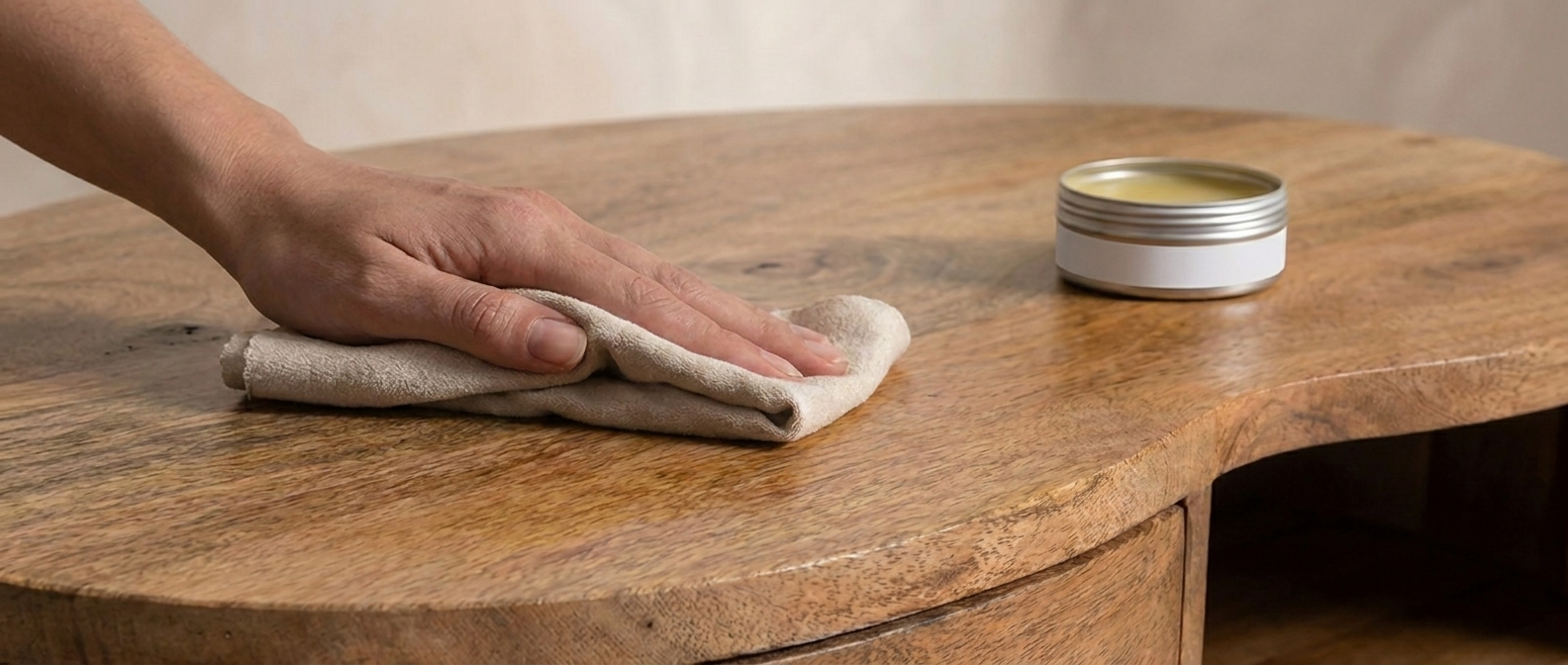
For everyday dust, fingerprints, and light marks, keep it simple. The best way to clean wooden furniture is usually the least exciting: a soft, clean cloth and a light touch.
A quick, reliable routine:
1) Dust first with a dry microfibre cloth (or a soft cotton cloth). Dust is mildly abrasive; rubbing it around with pressure can create fine scratches over time.
2) For smudges, use a barely damp cloth (water only). Wring it out thoroughly so it’s just slightly moist.
3) Dry immediately with a second clean, dry cloth.
A few small habits make a big difference:
- Wipe with the grain where you can. It’s gentler and helps avoid a hazy look.
- Lift items rather than dragging them (vases, lamps, centrepieces).
- Use coasters and placemats, especially on dining tables and sideboards.
Real-world example: In a busy dining room, chairs get handled constantly—hands on the top rail, fingers along the sides, the occasional bump against the table. A quick weekly wipe-down of chair backs and seats (particularly around edges) keeps natural oils from building up and helps the wood stay even-toned.
How to clean solid wood furniture when it needs more than a wipe
Sometimes “daily care” doesn’t touch it—think sticky patches, cooking residue in an open-plan space, or a dining chair seat that’s picked up grime around the edges.
For a deeper clean, use a gentle solution:
- Mix a few drops of mild washing-up liquid into a bowl of warm water.
- Dip a soft cloth in, wring it out very well, and wipe the area lightly.
- Follow immediately with a clean damp cloth (plain water) to remove any soap residue.
- Dry straight away.
Key rule: never let water sit on the surface. Standing moisture is what causes most of the drama—marks, swelling around joints, or a dull-looking patch.
If you’re cleaning real wood furniture that has carved detail, grooves, or corners:
- Use a soft, dry toothbrush or a soft detailing brush first to loosen dust.
- Then wipe with a barely damp cloth, and dry thoroughly.
What about disinfecting?
In most homes, regular cleaning is enough. If you do need to disinfect a high-touch area, avoid strong sprays and never soak the wood. Test any product on an inconspicuous spot first and use it sparingly—many disinfectants can soften or cloud finishes over time.
What to avoid (these are the products that cause water marks and dull patches)
If you’re worried about ruining a piece, this section is your safety net. Most damage happens because the product is too harsh, too wet, or leaves residue.
Avoid:
- All-purpose sprays (especially anything with solvents). They can strip or haze finishes.
- Vinegar or lemon mixtures. They’re popular online, but acidic cleaners can etch some finishes and leave a patchy sheen.
- Abrasive creams or scouring sponges. They scratch—sometimes subtly at first, then more obviously in sunlight.
- Excess furniture polish. Many polishes build up a waxy film that attracts dust and makes future cleaning harder.
- Steam cleaners. Heat and moisture are a risky combo for solid wood and joinery.
Also be cautious with “miracle” oils.
Oil can be appropriate for certain oil-finished pieces, but using it randomly on sealed furniture can create sticky patches and uneven shine. If you’re unsure, stick to the gentle cleaning method above.
Real-world example: A sideboard in a living room often becomes the drop zone—keys, post, coffee cups, houseplants. A quick spray-and-wipe with a household cleaner feels efficient, but it’s one of the fastest ways to end up with cloudy patches. A damp cloth and immediate dry takes the same time and keeps the finish consistent.
Fixing common marks: rings, sticky spots, and light scratches
Not every mark needs a dramatic solution. The trick is to start gently and stop once it improves.
Water rings and cloudy marks
These often come from moisture sitting on the finish. First, try the simplest approach:
- Clean lightly (barely damp cloth), then dry.
- Buff with a clean, dry microfibre cloth.
If it’s persistent, it may be in the finish rather than on it. At that point, the safest next step is to check the care guidance from the maker or seek professional advice—aggressive DIY fixes can turn a small mark into a larger patch.
Sticky residue
For things like tape residue or a sugary spill:
- Use the mild washing-up liquid solution (very well wrung cloth).
- Rinse with a plain damp cloth and dry immediately.
Light scratches
Very fine scratches are often just in the surface residue layer.
- Clean the area, dry it, then buff gently with a soft cloth.
- If a scratch is through the finish, avoid sanding unless you know the finishing system. Spot-fixing can look worse if the sheen doesn’t match.
A note on natural variation
With solid wood (including mango wood), grain and tone shift naturally across a piece. That warmth and character is part of the appeal, but it’s also why heavy-handed “restorers” can leave an uneven look. Gentle care keeps the character without creating patchiness.
Keeping solid wood looking beautiful for years: prevention and placement
Cleaning matters, but prevention is what makes solid wood feel easy to live with.
Protect from heat and moisture
- Use coasters and mats in dining and living spaces.
- Keep hot mugs off bare wood—use a coaster even for “just a minute”.
Watch sunlight and radiators
- Strong sun can gradually change the tone of natural wood. If one side of a room gets direct light, rotate objects occasionally (lamps, vases) so the colour shifts more evenly.
- Don’t push pieces right up against radiators. Big temperature swings can stress timber over time.
Mind the floor contact
For chairs especially, add felt pads to feet. It helps protect both your floor and the chair legs, and it reduces the small knocks that can chip edges.
Real-world example: In an open-plan kitchen-diner, dining chairs get the toughest life—pulled in and out daily, wiped down often, and exposed to cooking vapours. Choosing solid, well-made wooden chairs with a durable finish, then using felt pads and a simple weekly wipe-down, keeps them looking “newer” without making your life harder.
Buying advice: choosing solid wood furniture that’s easy to care for
If part of your hesitation is “Will I have to baby it?”, focus on the practical details when you’re shopping.
Look for:
- A finish that matches your lifestyle. If you want low-fuss care, a well-sealed finish is your friend.
- Solid joinery and stability. Wobble leads to stress on joints, which can make maintenance feel constant.
- Rounded edges and thoughtful proportions. They tend to wear better in busy homes (and feel nicer to live with).
- Real timber character. Solid mango wood, for example, brings warmth and visible grain—great for mid-century modern, Scandinavian, Japandi, and organic modern spaces where you want the room to feel calm but not flat.
Styling tip: Use real wood to add warmth to “clean” interiors.
If your home leans white, stone, or grey, introducing solid wood chairs around a dining table (or as occasional chairs in a bedroom corner) instantly makes the space feel more lived-in and grown-up—without needing lots of extra décor.
Conclusion
Solid wood doesn’t need fussy maintenance. Once you know how to clean solid wood furniture with a soft cloth, minimal moisture, and gentle products, you’ll protect the finish, avoid water marks, and keep that natural grain looking rich and inviting. If you’re ready to bring more warmth and long-term character into your home, explore our handcrafted solid mango wood furniture collection.


,%20it%E2%80%99s%20only%20natural%20to%20worry%20about%20doing%20the%20wrong%20thing:%20water%20marks,%20cloudy%20patches,%20a%20stripped%20finish,%20or%20tiny%20scratches%20that%20seem%20t...)