

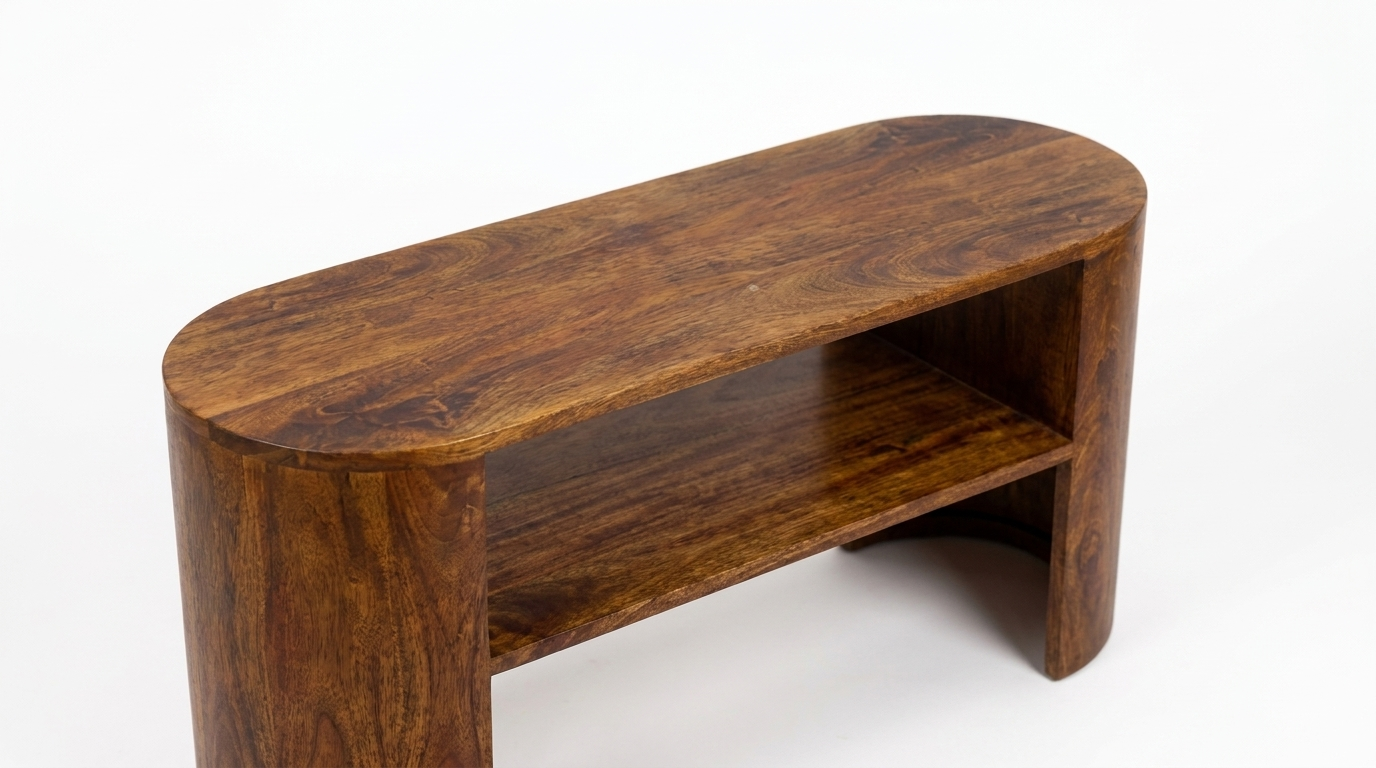
How to Take Care of Wood Furniture (Without Babying It)
If you’ve invested in real wood furniture (or you’re about to), it’s completely normal to worry about water rings, heat marks, scratches, fading, or using the wrong cleaner and making the finish go cloudy. The good news: learning how to take care of wood furniture isn’t about fussing over it every day. It’s about a few simple habits and the right products—so your pieces stay warm, characterful, and good-looking for years, even in a busy home.
1) Start with the basics: what finish are you actually caring for?
A lot of the confusion around wood furniture maintenance comes from not knowing what you’re cleaning.
Most household-friendly wood furniture is protected by a finish (often lacquer, varnish, oil, or wax). The finish is what takes the day-to-day wear—spills, fingerprints, dinner-party chaos—so the wood beneath doesn’t have to.
Here’s a simple way to think about it:
- Sealed finishes (lacquer/varnish): Typically the easiest to live with. They’re designed to resist minor spills and wiping.
- Oiled finishes: Beautifully natural and matte, but they like occasional re-oiling. Small marks can be easier to spot-repair.
- Waxed finishes: Soft, warm sheen; need gentle cleaning and periodic re-waxing.
If you’re unsure what you have, check any care notes that came with your furniture. And when in doubt, treat it gently: avoid aggressive sprays, anything abrasive, and anything that promises a “high shine” in one step.
Buying tip: If you’re choosing dining chairs or a dining table for everyday use (kids, guests, homework sessions), look for a finish that suits real life. A practical finish doesn’t mean you lose character—it just means you’ll worry less.
2) How to take care of wood furniture day-to-day (quick routine that actually works)
For caring for real wood furniture, the simplest routine is also the safest.
Dust little and often
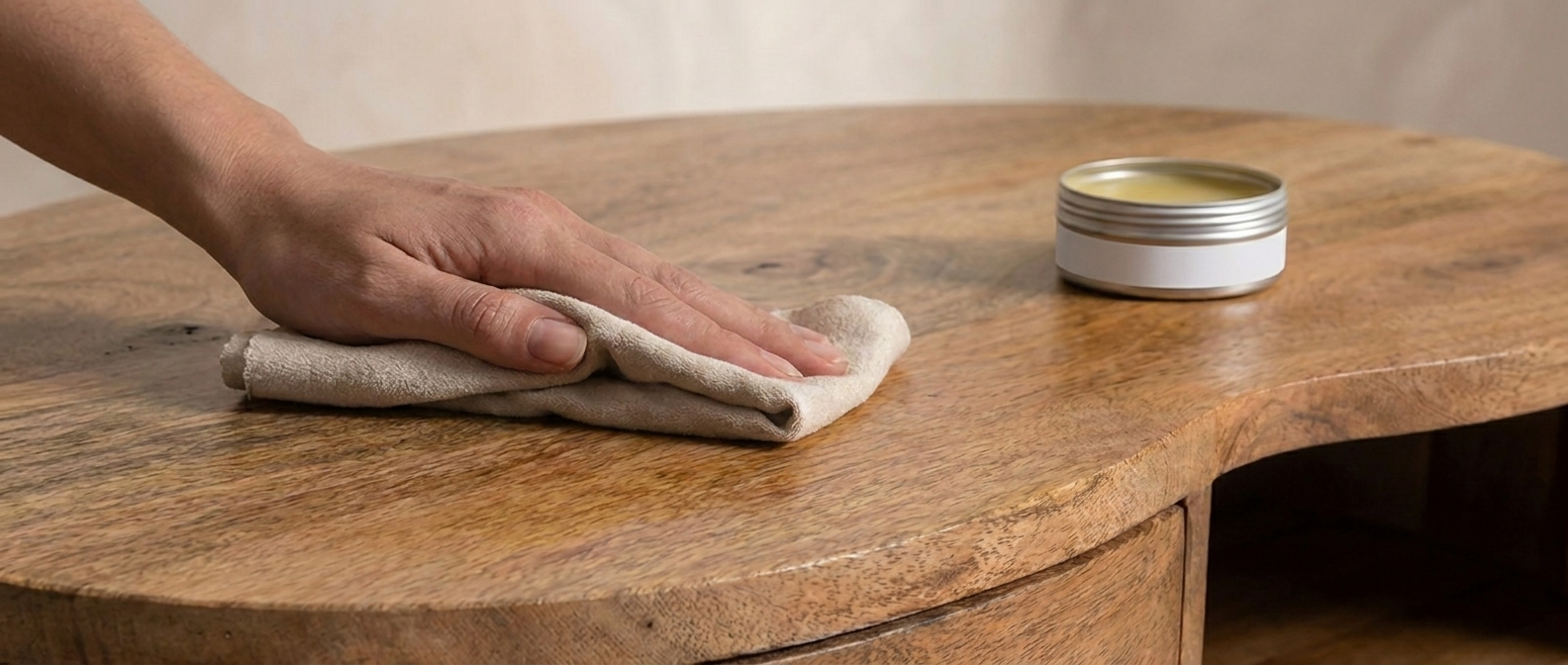
Use a soft, dry microfibre cloth. Dust is slightly abrasive; letting it build up is one of the quiet causes of dullness over time.
Wipe spills quickly (especially around dining spaces)
Use a barely damp cloth, then dry straight away. Water sitting on the surface is what leads to rings and dull patches.
Skip the multi-surface sprays
Many all-purpose cleaners contain solvents or degreasers that can gradually strip or cloud finishes. If you need more than a damp cloth:
- Use a small amount of mild washing-up liquid diluted in warm water.
- Wring the cloth well so it’s damp, not wet.
- Wipe, then dry.
Real-life example: If your mango wood dining chairs live near the kitchen, they’ll pick up hand marks and the occasional splash. A quick weekly wipe with a damp cloth (then dry) keeps them looking fresh without building up residue.
3) Prevent water marks, heat damage, and stains (the stuff that makes people panic)
Wood furniture is made to be used—but a few protections stop the most common “Oh no” moments.
Water rings and cloudy marks
These usually come from moisture being trapped in (or on) the finish. Prevention is easier than cure:
- Use coasters for hot mugs and cold drinks.
- Don’t leave damp cloths or wet plant pots directly on wood.
- If you love greenery, use a waterproof liner inside planters and add felt pads under the pot.
Heat damage
Hot plates, hair tools, or a slow cooker on “warm” can soften some finishes.
- Use trivets or heat mats, even for “just a second”.
- Keep radiators and strong heat sources at a sensible distance where possible.
Food stains and oily marks
Especially relevant for dining rooms and kitchen-adjacent seating.
- Wipe quickly with a damp cloth and a drop of mild soap if needed.
- Avoid leaving oily takeaway bags or pizza boxes directly on the surface.
Real-life example: A sideboard used as a coffee station is a classic trouble spot—steam, drips, teaspoons. Put a small tray beneath the kettle and canisters; it protects the surface and looks intentional.
4) Scratches, dents, and everyday wear: what’s normal (and what helps)
If you’ve moved on from flat-pack furniture, you’ll notice something: solid wood tends to age more gracefully. That doesn’t mean it won’t mark—it means the marks can feel like a lived-in patina rather than “ruined”.
That said, you can reduce the obvious wear with a few easy steps:
Use felt pads everywhere
On chair legs, stools, lamps, vases—anything that shifts. Replace pads when they compress or pick up grit.
Lift, don’t drag
Dragging chairs is a fast route to floor damage and scuffed chair feet. If you have a busy dining space, consider a rug with a low pile that chairs can still move on.
Be careful with zips, studs, and rough denim
It sounds fussy, but metal details can scratch chair arms or the top edge of a dining table surprisingly quickly.
Small scratches
For minor marks, start with the gentlest approach: clean first (sometimes it’s just residue), then see what’s left. If your piece has a waxed or oiled finish, a suitable maintenance product may help blend small marks—always patch test in an inconspicuous area.
Buying tip: If you’re choosing wood dining chairs, look for practical design details: slightly thicker legs, stable joinery, and a finish that suits daily wiping. Good proportions and solid construction matter as much as the wood itself.
5) Conditioning and polishing: what to use (and what to avoid)
This is where people often overdo it. The aim isn’t to make wood shiny; it’s to keep it protected and looking like itself.
Do you need polish?
If your furniture has a sealed finish, you may not need any polish at all—regular dusting and gentle wiping can be enough.
If you want an occasional refresh, choose a product designed for wood furniture and use it sparingly. Too much polish can create a sticky layer that attracts dust and goes dull.
Oils and waxes
Only use oil or wax if your furniture is designed for it. Applying oil to a sealed finish can lead to patchiness.
What to avoid
- Silicone-based sprays: They can leave a hard-to-remove film and may complicate future refinishing.
- Abrasive cream cleaners: They can scratch or haze finishes.
- Strong solvents (including some disinfectant sprays): These can dull or strip the surface.
Patch test, always
Pick a hidden spot (inside a leg, underside of a seat) and test first.
Real-life example: In a living room, a coffee table often gets “cleaned” with whatever spray is nearest. Keeping a simple microfibre cloth in a drawer nearby makes it far more likely you’ll do the right thing in the moment.
6) Long-term care: sunlight, humidity, and seasonal changes
One of the best bits of advice for caring for real wood furniture is to remember it’s a natural material. It responds to its environment.
Sunlight and fading
Direct sun can gradually lighten wood and fabrics.
- If a piece sits by a bright window, consider rotating accessories or rearranging occasionally so the light hits evenly.
- Use curtains or blinds during the strongest sun if you notice uneven colour.
Humidity and movement
Central heating in winter and open windows in summer can change indoor humidity. Wood can expand and contract slightly with the seasons.
- Try not to position furniture right next to radiators or fires.
- Keep rooms well ventilated, especially if you dry laundry indoors.
Tighten and check occasionally
If your chairs are used daily (and pulled in and out from a table), it’s sensible to check fittings now and then. Solid construction should feel stable, but a quick check helps everything stay that way.
Why this matters for mango wood
Solid mango wood is valued for its warm tone and expressive grain. Like any real wood, it benefits from a stable home environment and gentle cleaning—nothing complicated, just consistent.
Conclusion
Wood furniture shouldn’t feel like a fragile investment. Once you know how to take care of wood furniture with a few sensible habits—gentle cleaning, quick spill wipe-ups, basic protection from heat and water, and the right maintenance products for your finish—your pieces can stay rich, warm, and characterful for the long haul.
If you’re choosing furniture with longevity in mind, it’s worth prioritising solid materials, good joinery, and proportions that feel right for everyday living. Explore our handcrafted solid mango wood furniture collection when you’re ready to bring that lived-in warmth home.


,%20it%E2%80%99s%20completely%20normal%20to%20worry%20about%20water%20rings,%20heat%20marks,%20scratches,%20fading,%20or%20using%20the%20wrong%20cleaner%20and%20making%20the%20finish%20go...)