Eco-friendly living room furniture companies: how to choose sustainable pieces that still feel elevated
If you’ve tried to shop for eco-friendly living room furniture companies, you’ve probably run into the same problem: plenty of “green” claims, but not enough clarity—and a lot of furniture that looks temporary or feels flimsy in real life. You shouldn’t have to choose between a living room that feels warm and elevated and one that’s made with more environmental responsibility.
The good news is that sustainable living room furniture is absolutely achievable when you know what to look for: better materials, smarter construction, and brands that are transparent about what they do (and don’t) do. Below is a practical, design-forward checklist to help you buy with confidence—without sacrificing comfort, character, or longevity.
What “eco-friendly” really means in a living room (and what it doesn’t)
“Eco-friendly” is often used as a catch-all, but living room furniture is a bundle of decisions: wood sourcing, adhesives, finishes, packaging, and how long the piece will realistically stay in your home.
A useful way to think about it is impact over time:
- Materials: Solid wood, responsibly sourced wood, recycled metals, and natural fibers tend to age better than low-density engineered boards.
- Chemistry: Finishes and glues matter—especially in enclosed spaces where you spend a lot of time. Look for brands willing to discuss what finishes they use, rather than hiding behind vague language.
- Longevity: The most sustainable item is often the one you don’t replace in five years. A sturdy coffee table that keeps its shape through moves, kids, and daily life can be a better choice than a “green” option that doesn’t hold up.
What eco-friendly doesn’t automatically mean: perfect. Even solid wood pieces can involve adhesives, hardware, and shipping. The goal is to reduce harm where possible and choose furniture built to last, maintain, and keep out of landfills.
A quick checklist for comparing eco-friendly living room furniture companies
When you’re comparing brands, it helps to ask questions that cut through marketing.
1) Are they clear about materials?
If a product is described as “wood” but not solid wood, it may be veneer over composite board. Veneers can be fine in some contexts, but the core material often determines durability.
2) Do they explain sourcing and manufacturing at a high level?
You’re looking for transparency: where it’s made, what the primary materials are, and what choices are intentional (like using solid timber or limiting overly plastic packaging). No brand needs to share trade secrets—but they should be able to tell a coherent story.
3) How is it built?
Living room pieces take a beating: remotes, snacks, board games, feet on ottomans, laptop corners, and the occasional move. Look for details like robust joinery, stable frames, and sensible proportions.
4) What finishes are used (and how do you care for them)?
A finish should protect wood from daily life while still letting the grain feel like wood—warm, tactile, and not overly “plastic.” Brands that offer care guidance usually understand how their furniture behaves long-term.
5) Does the design feel timeless enough to keep?
This one is underrated. If a piece is highly trend-driven, you may tire of it quickly. Warm woods, honest materials, and clean lines tend to stay relevant across mid-century modern, Scandinavian, Japandi, rustic modern, and organic modern spaces.
Wood, upholstery, and finishes: the choices that matter most
Living rooms are typically a mix of wood furniture (coffee tables, consoles, cabinets) and upholstered seating. Each category has its own sustainability “pressure points.”
Solid wood vs. engineered cores
Solid wood furniture can be a strong choice for sustainability because it’s repairable and tends to hold up structurally over time. It also brings depth—natural grain, subtle color variation, and that warmth that makes a room feel more settled.
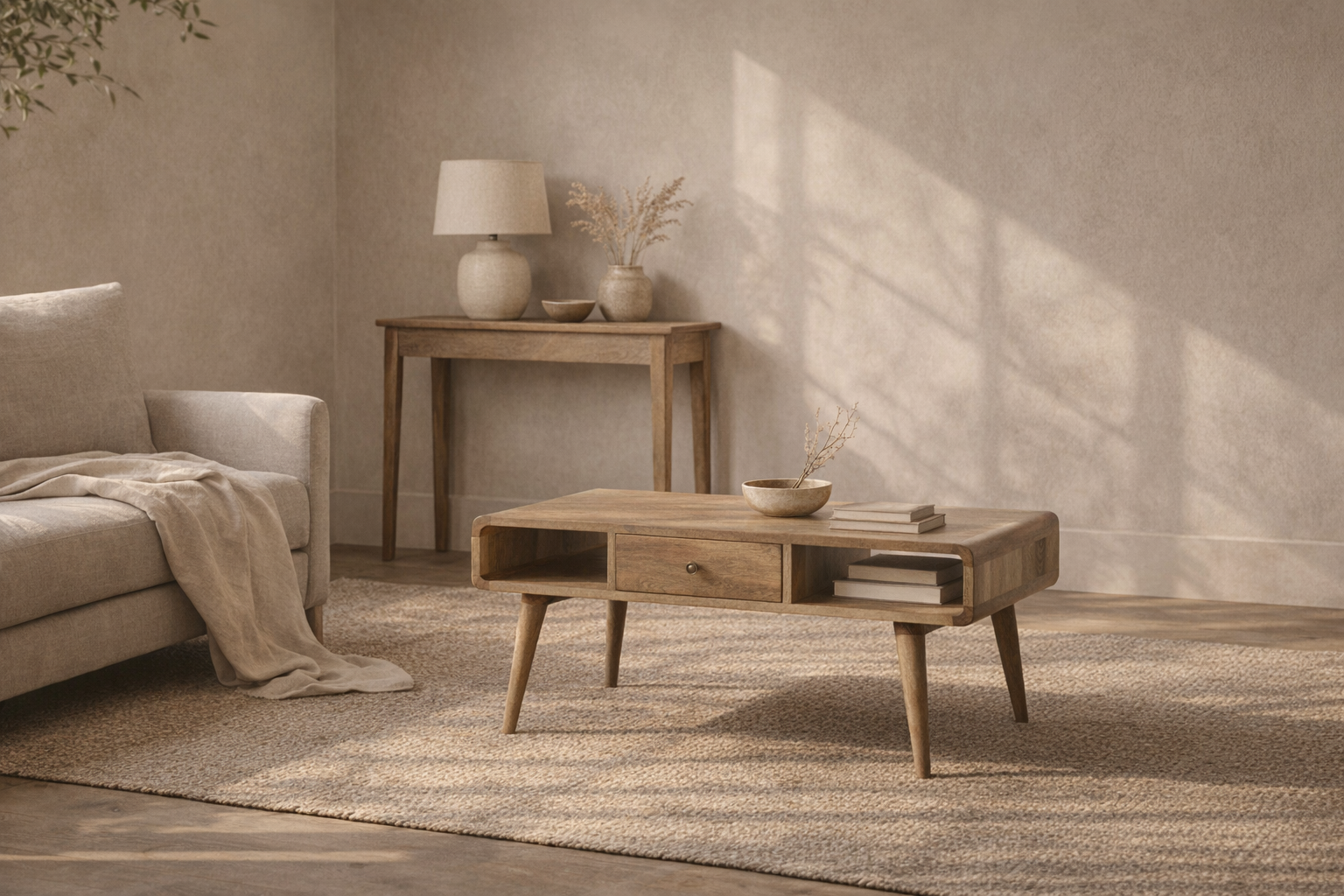
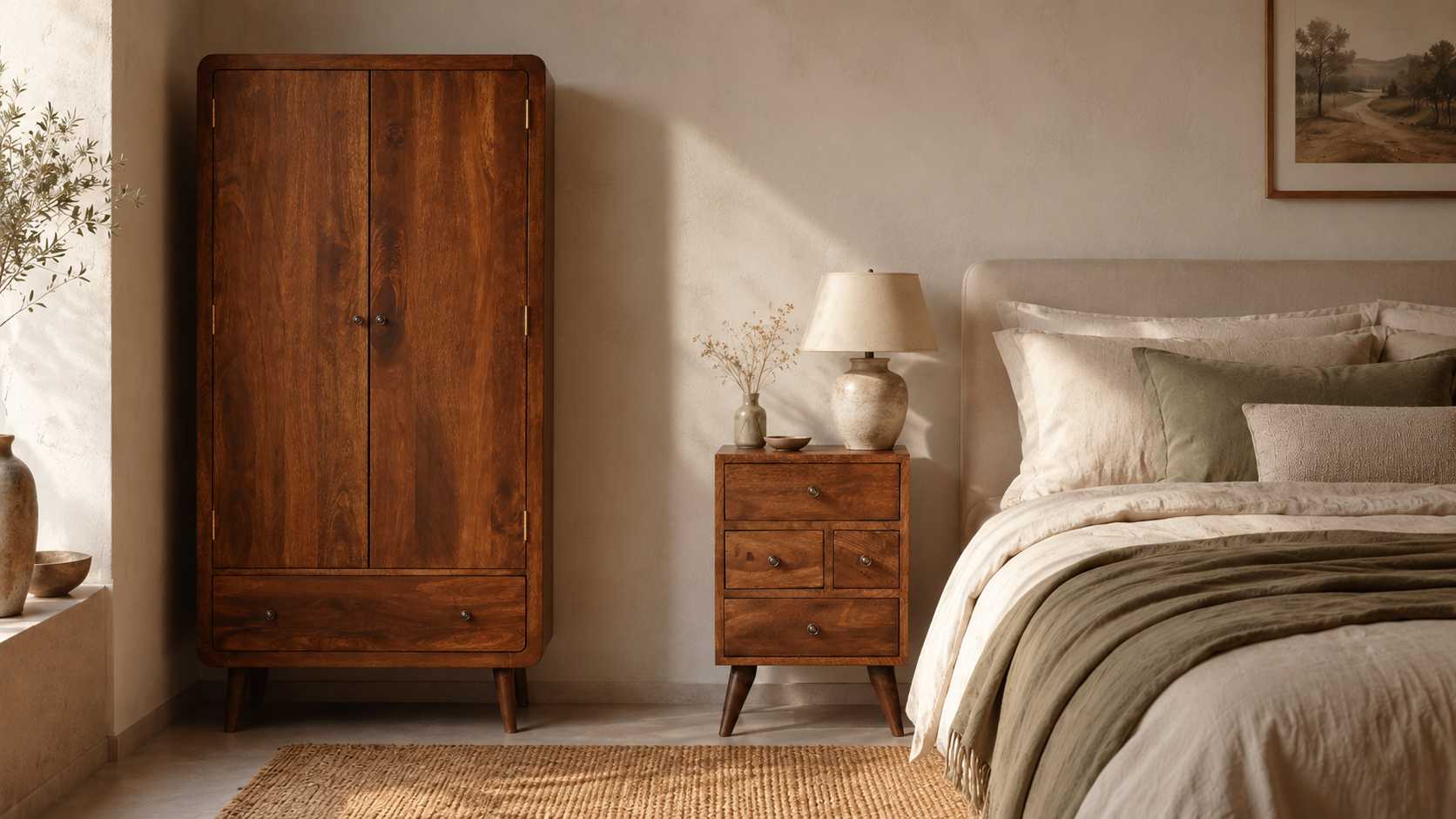
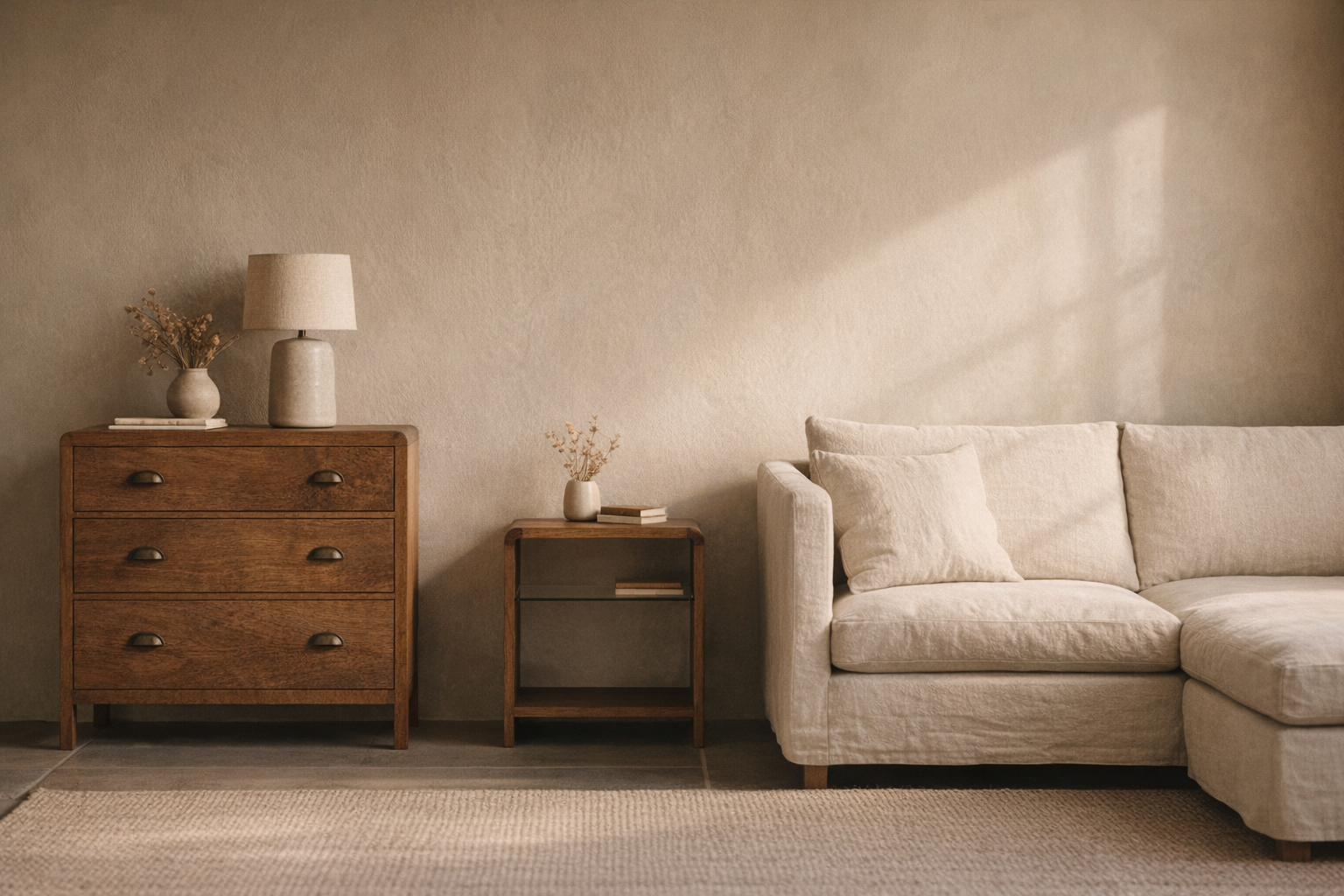
At Grain and Loom, many living room pieces are crafted from solid mango wood, a hardwood known for expressive grain and a naturally warm tone. Like any real wood, it will show variation from piece to piece—part of the character—and it generally develops a lived-in patina rather than just looking worn.
Upholstery (including eco-friendly wooden sofas)
If you’re specifically searching for eco-friendly wooden sofas, pay attention to what’s actually “wooden.” Many sofas have a wood frame (great), but the environmental footprint often comes from foam, fabrics, and adhesives.
Practical things to look for:
- Frame material and whether it’s built to avoid wobble over time
- Cushion construction and whether components can be replaced instead of tossing the whole sofa
- Fabric durability and cleanability (so you keep it longer)
Finishes and everyday durability
A sustainable choice should also be realistic. A finish that can’t handle condensation rings or everyday wiping can push you toward replacement sooner. Look for brands that talk openly about maintenance—coasters, gentle cleaners, and what to do if you get a scuff—because that’s where longevity is won.
Eco-friendly living room furniture companies: green flags (and common red flags)
A few signals can help you quickly filter your options.
Green flags
- Specific material language: “Solid mango wood,” “solid oak,” “recycled steel,” etc.
- Care instructions: Brands that expect you to live with the furniture (and maintain it) tend to build for real homes.
- Repair-friendly design: Replaceable hardware, sensible construction, and sturdy components.
- A design point of view: Not just “eco,” but furniture that looks considered—proportions, warmth, and versatility.
Common red flags
- Vague claims without details: “Eco,” “green,” “responsible,” with no substance.
- Ultra-lightweight case goods: Coffee tables and consoles that feel too light often rely on thinner materials that can rack or wobble.
- Disposable design: Pieces that can’t be tightened, repaired, or refinished when life happens.
If you’re outfitting a family living room—say, a sectional facing the TV, a large coffee table for puzzles, and a media console that hides toys—durability isn’t a luxury. It’s what keeps the purchase from becoming waste.
How to build a more sustainable living room (without it looking like a showroom)
Sustainability is also about how you plan the room. A few design moves can reduce over-buying while making the space feel better.
Start with the “anchor” pieces you’ll keep longest
Typically:
- A solid coffee table you actually use daily
- A media console with real storage (cord management, closed cabinets, drawers)
- A sideboard or cabinet that can flex between toys now and bar storage later
If those are well-made, you can change softer elements—pillows, throws, even a rug—without replacing the bones of the room.
Choose wood tones that play well with change
Warm, natural wood (like mango wood) pairs beautifully with:
- Cream and oatmeal upholstery (Scandi/Japandi)
- Camel leather and black accents (mid-century modern)
- Linen slipcovers and aged brass (farmhouse modern)
- Textured neutrals and curved silhouettes (organic modern)
Plan for real life: storage counts
A “sustainable” living room that’s always cluttered doesn’t feel good to live in, and that often leads to impulse buys. Closed storage—consoles, cabinets, and sideboards—helps you maintain calm without constantly adding baskets and bins.
Example: In a typical American open-plan space, a low console can double as a TV stand and a landing zone for charging stations, board games, and kids’ art supplies. The room stays functional, and you’re less tempted to replace furniture just to regain a sense of order.
What to expect from solid wood over time (and how to care for it)
One reason design-conscious buyers move toward solid wood is that it ages honestly. Instead of peeling, it develops small signs of life—subtle shifts in tone, a bit of patina, maybe a tiny mark that reminds you of a gathering.
A few practical tips help keep wood looking its best:
- Use coasters and trivets for hot mugs and takeout containers.
- Wipe spills quickly with a soft, slightly damp cloth; avoid harsh cleaners.
- Keep furniture away from direct heat sources (like tight placement near radiators or vents) to reduce drying and movement.
- Expect natural variation in grain and color—especially in expressive woods like mango.
This is the long-game advantage: a solid wood coffee table can remain stable and good-looking even as your life changes—new apartment, new house, kids, pets—because the material is inherently more forgiving and maintainable than many disposable alternatives.
Conclusion
Shopping for eco-friendly living room furniture companies can feel like sorting through a lot of noise. The clearest path is to prioritize transparent materials, durable construction, sensible finishes, and designs you’ll genuinely want to keep. That’s what turns “sustainable living room furniture” from a label into a real, livable decision.
If you’re drawn to warm, characterful pieces made from solid wood, explore Grain and Loom’s living room collection—crafted to bring natural grain, practicality, and long-term value into the heart of your home. Explore our handcrafted solid mango wood furniture collection.