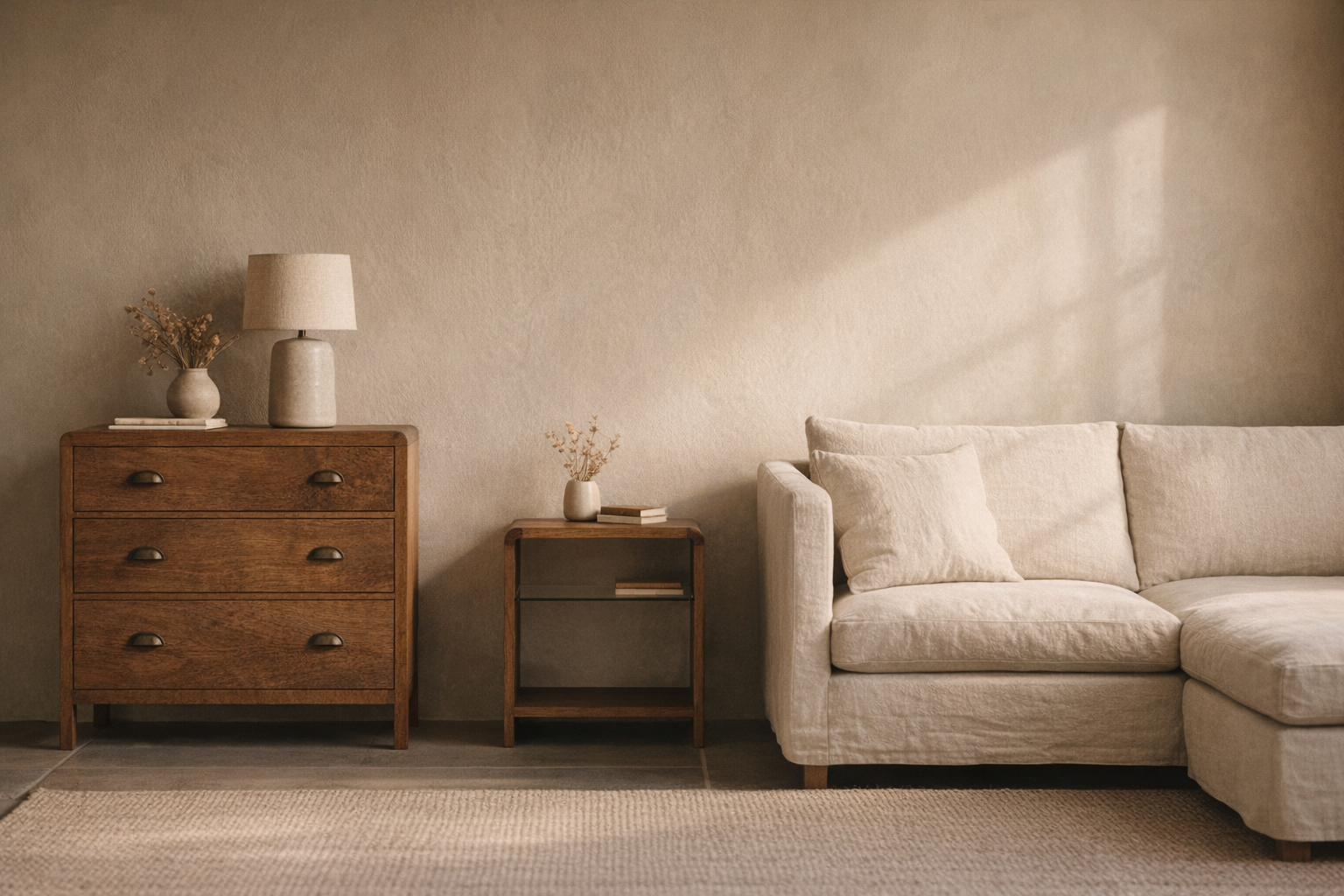
Article: How to Place Furniture in a Living Room: A Warm, Practical Layout Guide
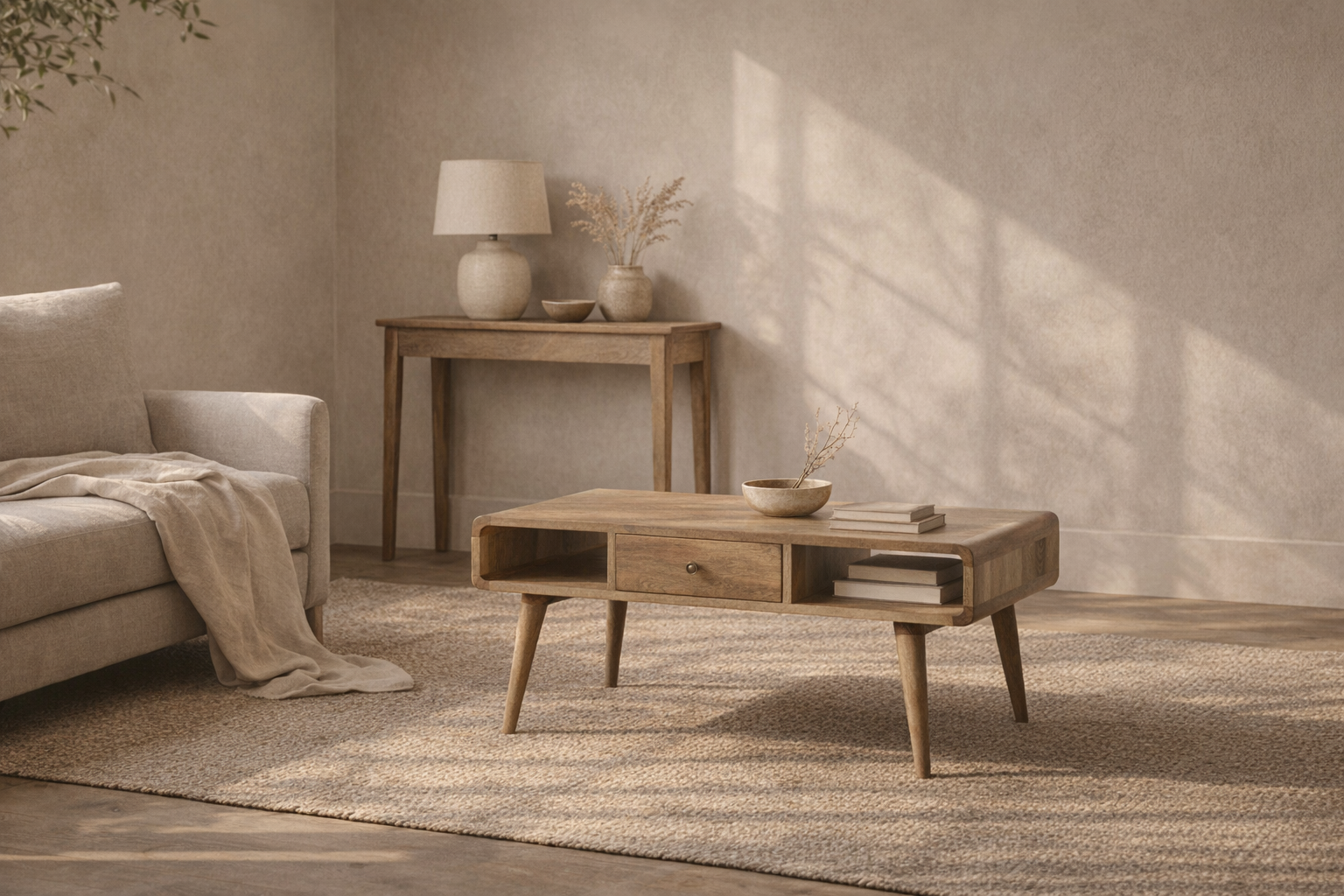
How to Place Furniture in a Living Room: A Warm, Practical Layout Guide
If your living room never quite feels settled—sofas floating awkwardly, a walkway that cuts through the seating, corners that feel empty, or a space that looks fine but somehow feels cold—your layout is usually the culprit, not your taste. Knowing how to place furniture in a living room is less about rules and more about creating comfort, clear routes through the room, and a natural place for people to sit, talk, and put a cup of tea down without balancing it on a knee.
The good news: a few thoughtful decisions will make the room feel calmer and more inviting. And if you’re investing in pieces with real presence—like handcrafted solid wood furniture—good placement helps you enjoy the warmth and character of the materials rather than hiding them behind awkward spacing.
Start with how you actually live (then build the layout around it)
Before you move a single piece, decide what the room is for most days. That one choice will steer everything else.
Ask yourself:
- Is it primarily for relaxed TV evenings, or more for conversation and hosting?
- Do you need a clear play space for children, or a spot to work on a laptop?
- Does the room need to do double duty as a dining area, hallway route, or reading nook?
A practical trick: write down your “top three” uses (for example: TV, chatting with friends, kids’ play). Then give each use a zone, even if the zones overlap.
Real-world example: In a typical UK terrace living room, you might set up the sofa and a chair as the main seating zone, keep a clear walkway from the door to the stairs, and use a slim console or shelving along one wall for storage rather than bulky pieces that shrink the room.
When you’re choosing furniture, look for pieces that support those daily habits—comfortable seating depth, arms you can lean on, and surfaces that are genuinely useful. Solid wood occasional tables are especially helpful in busy homes because they tend to feel stable and resilient for everyday knocks.
Measure first, then map the ‘flow’ (the part most people skip)
Most layout frustration comes from blocked pathways. A room can look stylish and still feel annoying if you’re constantly squeezing past the coffee table or edging around the sofa arm.
Do a quick measuring session:
- Measure the room (length, width) and note door swings, radiators, fireplaces, and windows.
- Mark where power sockets sit if you’ll want a lamp near seating.
Then plan your circulation routes:
- Identify the main route people take through the room (often door to door, or door to stairs).
- Keep that route as direct as possible.
A simple way to test it: stand at the doorway and imagine walking to the most-used destination (the sofa, the window, the hallway). If you have to zig-zag, the furniture is doing too much.
If you’re working with substantial pieces—say, a generous sofa and a solid wood coffee table—good flow becomes even more important. These are pieces with presence; they look best when they have a little breathing room and aren’t crammed into pinch points.
How to place furniture in a living room around a focal point (without forcing it)
Most living rooms naturally have a focal point. Sometimes it’s obvious (a fireplace), sometimes it’s practical (the TV), and sometimes it’s a feature you create (a large artwork, or a beautiful window).
Choose one main focal point and let it anchor your layout:
- If it’s the fireplace: float the seating to face it, then place the TV to the side if possible (rather than above the mantel) for a calmer, less ‘screen-first’ feel.
- If it’s the TV: keep the sofa directly opposite or slightly angled, and avoid pushing all seating hard against the walls—bringing it in can make the room feel more intentional.
- If it’s a window/view: angle a chair towards it as a secondary spot for reading or morning coffee.
Aim for a conversation-friendly arrangement. A living room works best when seats can ‘talk’ to each other, not just point at the television.
Real-world example: In an open-plan lounge, place the sofa so its back defines the edge of the seating area. Behind it, you can create a subtle boundary with a console or low storage, keeping the main zone cosy without building walls.
Build a seating ‘zone’ that feels cosy, not cluttered
The secret to a warm, inviting living room is a clear seating zone: a defined area where everything feels within easy reach.
For most rooms, start with the sofa:
- Place the sofa first, then add one or two extra seats (an armchair, a compact loveseat, or occasional chair depending on space).
- Keep seats close enough that conversation feels natural.
Then add surfaces where people actually need them:
- A coffee table or ottoman in the centre.
- One side table per seat if you can—especially if you love having lamps, books, or drinks nearby.
If you’re aiming for a relaxed but grown-up look, solid mango wood works beautifully for these supporting pieces because the grain adds depth and warmth. It also tends to wear in rather than look instantly tatty, which matters in rooms where life happens.
A common mistake is choosing a coffee table that’s either too large (making the room feel tight) or too small (making the seating feel disconnected). As a rule of thumb, a coffee table that visually sits comfortably with your sofa—without dominating it—will make the whole arrangement feel calmer.
Styling tip: Keep the centre of the room lighter and the edges slightly more substantial. That balance helps the room feel open while still grounded.
Living room furniture placement for small rooms: use corners and ‘float’ pieces wisely
Small living rooms don’t need tiny furniture; they need smart placement.
Try these layout moves:
- Float the sofa slightly (even a small gap) if it helps align the room and improves circulation. Pushing everything to the walls can make the centre feel oddly empty.
- Use corners deliberately: a compact chair or a floor lamp in a corner can make the room feel finished, rather than leaving dead space.
- Choose one hero piece (usually the sofa) and keep other items visually lighter.
- Avoid blocking light: keep tall storage away from windows if possible.
Real-world example: In a narrow living room, place the sofa along the longer wall, then add a single chair opposite at an angle rather than a bulky second sofa. This keeps the walkway clear and avoids the ‘corridor’ feeling.
If you’re deciding what to buy, think about legs and visual weight. Pieces with a bit of lift can feel airier, while solid wood elements add warmth and stability—useful if you’re trying to make a smaller space feel less temporary and more settled.
How to arrange living room furniture in open-plan spaces (without losing intimacy)
Open-plan rooms are brilliant—but they can feel like a showroom if everything is pushed to the edges.
To create a living area that feels like a proper room:
- Use the back of the sofa as a divider. It naturally separates lounging from dining or kitchen areas.
- Add a rug to anchor the seating zone. It visually pulls the pieces together.
- Repeat materials for cohesion. A warm wood tone in side tables or a media unit helps the living zone feel grounded and intentional.
- Create a ‘landing strip’ near the entry point. A slim table or storage piece keeps everyday items tidy so the seating area stays calm.
If you love a mid-century modern, Scandinavian, Japandi, or organic modern look, this is where material choice shines. Natural wood grain brings softness to open-plan layouts, balancing all the hard surfaces (painted walls, glass, screens, and flooring) that can make the space feel echoey.
Practical note: In open-plan layouts, prioritise comfort and durability. Furniture gets used more intensely because it’s always on show—so it pays to choose pieces that age well.
Buying choices that make placement easier (and the room feel better for longer)
A good layout is much easier to achieve if your furniture is designed with real homes in mind.
A few buying considerations that directly affect how your room feels:
- Sofa scale and proportions: A sofa that’s too deep can swallow a small room; one that’s too shallow can feel perching. Think about how you sit day-to-day.
- Arms and sides: Chunky arms take up more floor space than you think. Slimmer profiles can give you more seating without increasing the footprint.
- Storage needs: If clutter is what’s making your room feel unsettled, prioritise a couple of practical storage pieces rather than trying to ‘style your way out’ of it.
- Material and longevity: Rooms feel warmer when the materials have depth—wood grain, textured fabrics, and well-made pieces that don’t wobble or look tired after a year.
If you’re drawn to handcrafted solid wood pieces, they’re often easier to place because they add a natural focal point. A beautifully grained wood table, for example, can anchor a seating area all by itself—meaning you can keep the rest of the room quieter and more restful.
Above all, give your best pieces space to be noticed. Overcrowding is the fastest way to make a room feel smaller and less considered.
Conclusion
Once you know how to place furniture in a living room—starting with your daily habits, protecting the walkways, and building a clear seating zone—the whole space feels more restful and welcoming. The aim isn’t perfection; it’s a room that works smoothly, looks balanced from the doorway, and feels warm in the evenings.
If you’re ready to refine your layout with pieces that bring natural character and long-term practicality, explore our handcrafted solid mango wood furniture collection.