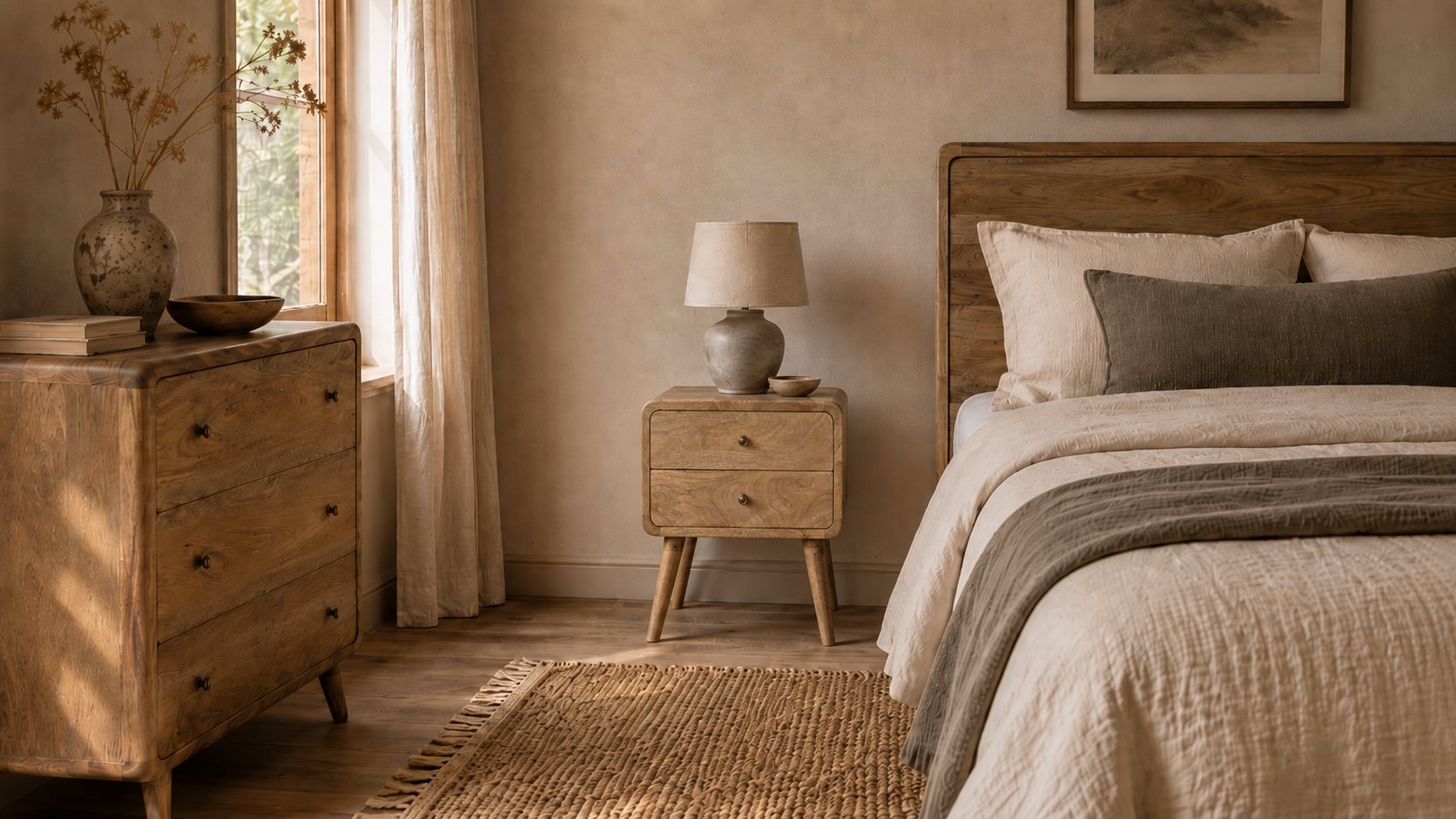
Solid Wood Furniture Is Good or Bad? A Practical Guide for Real Homes
If you love the idea of solid wood but you’re hesitating, you’re not alone. The biggest worry tends to be regret: spending more and then finding it scratches too easily, feels too heavy, needs babying, or reacts badly to everyday life (spills, radiators, damp air, kids, pets). So, is solid wood furniture good or bad? The honest answer is that it depends on how you live, what you’re buying, and what you expect it to look like over time. Here’s a clear, real-world way to decide—especially if you’re considering something hard-working like a dining table.
Solid wood vs veneer vs MDF: what you’re actually comparing
A lot of the confusion comes from the label “wood” covering several very different materials.
Solid wood means the table top (or legs, frame, etc.) are made from real timber, not a core with a thin surface layer. It’s strong, repairable, and develops a lived-in patina.
Veneer is a thin slice of real wood bonded to a core (often MDF or plywood). Veneer can look beautiful and can be stable, but it’s limited in how often it can be sanded or repaired. Once the veneer chips or lifts, the damage is harder to disguise.
MDF/particleboard is made from wood fibres or chips and resin, pressed into boards. It’s usually the most budget-friendly and can be fine for lighter-use pieces, but it’s vulnerable to water, edge damage, and screw-holding issues over time.
For a dining table—the surface that takes daily knocks, heat, spills, and constant wiping—these differences matter. If you’ve had a table swell around the edges, wobble at the joints, or show “bubbling” on the surface after a few months, that’s often the core material and construction, not just bad luck.
The real pros and cons of solid wood furniture (beyond the sales talk)
If you’re weighing the pros and cons of solid wood furniture, it helps to be realistic about what you’re gaining—and what you’re accepting.
### The upsides
1) Longevity you can feel
A well-made solid wood table can last for years because the material has substance: joints can be tightened, surfaces can be refreshed, and the structure isn’t reliant on a thin skin staying perfect.
2) Warmth, depth, and grain
Solid wood tends to make a room feel more grounded. You get natural grain variation and a depth that painted or printed surfaces rarely match.
3) It ages rather than simply wearing out
Small marks can become part of the story. Many people prefer a dining table that looks “lived in” rather than one that needs to stay pristine to look good.
4) Repairability
Light scratches can often be improved with careful cleaning and an appropriate wood balm or oil (depending on the finish). Deeper damage can sometimes be sanded and refinished—something you can’t usually do with MDF.
### The trade-offs
1) It costs more upfront
You’re paying for material, construction, and often craftsmanship. The key question is whether you want to pay once for something that lasts, or pay less more often.
2) It’s heavier
A solid wood dining table is not a “one-person carry” situation. If you move frequently, weight and stair access are practical considerations.
3) It can mark and move a little
Wood is a natural material—it can expand and contract slightly with seasonal humidity changes. And yes, it can scratch. The goal is choosing the right finish and accepting that perfection isn’t the point.
4) It needs sensible care
Not intensive care—just the basics: coasters, mats for hot dishes, and wiping spills without leaving pooled water.
Solid wood furniture is good or bad for families, renters, and everyday life?
A dining table isn’t a showroom piece; it’s where life happens. Here’s how solid wood tends to behave in real homes.
If you’ve got kids: Expect pen marks, craft glue moments, and the occasional fork scrape. A solid wood top can cope with that reality better long-term because it has “wear allowance”—there’s material to work with if you ever want to refresh it.
If you love hosting: Think about hot serving dishes, red wine, and constant wiping. Solid wood with a protective finish can be a calm choice because it’s sturdy and stable under daily use. Add placemats and trivets and you’ll reduce the chances of heat marks.
If you rent or move often: Weight matters, but so does resilience. Solid wood is less likely to arrive at your next place looking tired and chipped at the corners. If you’re climbing narrow stairs, measure carefully and think about leg styles and whether it can be manoeuvred through doorways.
If your home runs humid or dry: Wood responds to its environment. If your dining area sits beside a radiator, large window, or a frequently used patio door, you’ll want to be a bit more mindful about placement and protection. The goal isn’t to worry—it’s to avoid the obvious risk zones.
A helpful way to frame it: solid wood is often great for “busy” households because it’s durable, but it suits people who are comfortable with natural materials looking natural.
Is solid wood furniture a good investment? What “worth it” really means for dining tables
If you’re asking is solid wood furniture a good investment, it’s worth defining what you mean by “investment”. Most people don’t mean resale value—they mean not having to replace it, and enjoying it every day.
For a dining table, “worth it” usually comes down to three things:
1) The table still feels solid after years of use
A stable base, good joinery, and a substantial top matter. Wobble is often a construction issue rather than a wood issue—so look for tables that feel structurally confident.
2) The surface doesn’t punish normal living
A dining table should handle everyday wiping, plates sliding, and occasional spills. Ask what the finish is designed to cope with (and what it isn’t). No finish makes wood indestructible, but the right one makes it practical.
3) You still like it as your home evolves
Solid wood has a timeless quality that tends to work across styles—mid-century modern, Scandinavian, Japandi, rustic modern, organic modern—because it brings warmth without shouting.
A real-world example: a couple buying their first “proper” dining table often starts with something flat-packed and light. It does the job, but after a year of dinners, laptops, and friends dropping by, the surface looks tired and the legs loosen. The upgrade to solid wood isn’t just about status—it’s about the table quietly coping with daily life and still looking good doing it.
What to check before you buy: construction, finish, and grain (the stuff that actually matters)
If you’re leaning towards solid wood, these practical checks will help you buy with confidence.
Look at the thickness and structure
A dining table should feel stable when you lean on it. Consider the thickness of the top, the leg design, and how the frame supports the surface. A well-supported top is less likely to feel bouncy.
Ask about the finish and how to care for it
Different finishes behave differently. Some are more protective; others are more natural-looking and easier to refresh. The best choice depends on your household. If you know you’ll have frequent spills, prioritise protection.
Expect natural variation—without surprises
Wood grain is part of the appeal. With mango wood in particular, you’ll often see characterful grain patterns and tonal variation that add warmth. If you prefer a very uniform look, you may want to choose pieces that lean more minimal in tone and styling.
Check the proportions for your room
A table can be beautiful and still wrong for your space. Measure properly and think about chair clearance and walkways. As a rule of thumb, leaving enough space to pull chairs out comfortably makes everyday use feel calmer.
Think about edge profiles and corners
If you have small children, softer edges can feel more practical. If you love a crisp, tailored look, a sharper profile can suit mid-century or Scandinavian interiors—just be mindful of how it lives day to day.
How to keep a solid wood dining table looking good (without fussing over it)
Solid wood doesn’t need precious treatment—it needs a few simple habits.
Do:
- Wipe spills promptly, especially liquids like wine, coffee, or anything acidic.
- Use coasters and placemats for daily meals; use trivets for hot pans and serving dishes.
- Dust regularly with a soft, dry cloth.
- Keep the table out of direct, intense heat sources where possible (right beside radiators) and avoid prolonged direct sunlight if you can.
Don’t:
- Leave wet rings or damp cloths sitting on the surface.
- Use harsh chemical sprays or abrasive pads.
- Drag heavy ceramics or rough-bottomed items across the top.
About scratches:
Most dining tables will pick up a few marks over time. The difference with solid wood is that those marks don’t have to be the end of the story. Depending on the finish, light scratches can often be softened with the right care product and a gentle approach.
If your goal is a table that looks perfect forever, solid wood may frustrate you. If your goal is a table that looks better as it becomes part of your life, it tends to be a very satisfying choice.
Conclusion
So, is solid wood furniture good or bad? For most real homes, it’s good—provided you’re buying well and you’re happy with the honest, natural character that comes with it. The upfront cost and a bit of basic care are the trade-offs, but the payoff is warmth, durability, and a piece that can live with you for years rather than feeling temporary. If you’ve been stuck between solid wood and cheaper alternatives, focusing on construction, finish, and how you actually use your dining table will make the decision much clearer.
If you’re ready to browse, you can softly start with the pieces that work hardest in a home: Explore our handcrafted solid mango wood furniture collection.