Who Makes Solid Wood Bedroom Furniture? A Practical Guide to Finding the Real Makers
If you’ve been hunting for a bed that feels properly sturdy and grown-up, you’ve probably hit the same wall: lots of “wood look”, “oak effect”, and “solid wood frame” wording, but very little clarity on who makes solid wood bedroom furniture — and whether it’s actually the real thing.
That frustration is valid. Bedroom furniture gets used every single day: drawers opened half-asleep, bed frames taking years of movement, and surfaces living through mugs of tea, chargers, and the odd knocked-over glass. If you’re done with wobbly flat-pack pieces and want something timeless, the key isn’t just choosing a style you love — it’s knowing how to identify genuine real-wood makers, what to ask, and what quality looks like in the details.
Why it’s so hard to tell what’s “real wood” online
Retailers aren’t always trying to mislead, but product descriptions can be vague. A few common terms cause the most confusion:
- “Oak effect” / “wood effect”: usually a printed finish (often on MDF or chipboard) designed to mimic grain.
- “Wood veneer”: a thin layer of real wood over an engineered core. Veneer can be beautifully made, but it isn’t solid wood.
- “Engineered wood”: a broad category that can mean plywood, MDF, or particleboard. Some are stable and practical; none are solid timber.
- “Solid wood frame”: often means the structural parts are timber, but large surfaces (headboard panels, drawer bases, side panels) may be veneered or engineered.
If your priority is the warmth, weight, and longevity of solid timber, you’ll want clearer answers than a single line in the spec list. That’s why it helps to think in terms of real wood bedroom furniture makers: brands and workshops that are happy to explain materials, construction, and finish — because that’s their value.
Who makes solid wood bedroom furniture — and what “maker” really means
In practice, there are a few different types of businesses behind solid wood bedroom furniture brands:
1) Small workshops and artisan makers
Often produce in shorter runs, with a strong focus on joinery, finishing, and character. You’ll usually see clear material callouts and close-up photography.
2) Specialist solid wood furniture brands
Brands that design collections and work with dedicated manufacturing partners who focus on timber furniture. The best ones are transparent about wood species, thickness, and construction.
3) Mass-market retailers offering a “solid range”
Some high-street brands have a solid-wood line within a wider catalogue. Quality can be variable — worth checking exactly what is solid and what isn’t.
So when you’re asking who makes solid wood bedroom furniture, the most useful question is: who is accountable for the build quality? Look for brands that can tell you (plainly) what the piece is made from, how it’s assembled, and how it should wear over time — not just how it looks in a styled photo.
At Grain and Loom, the focus is on handcrafted solid mango wood furniture designed to feel warm, substantial, and timeless in real homes — the kind of pieces you buy once and enjoy for years, rather than treating as temporary.
A solid wood checklist: what to look for before you buy
If you’re comparing solid wood bedroom furniture brands, this checklist will help you sort the genuinely well-made pieces from the ones doing a lot of marketing heavy lifting.
1) Clear material language
A good listing should state “solid [wood species]” (for example, solid mango wood). If it’s a mix, it should say where: e.g., “solid wood frame with veneered panels”.
2) Sensible thickness and proportions
Solid wood pieces tend to have a visual calm and confidence: bed rails that don’t look flimsy, legs that don’t taper to nothing, headboards that feel properly framed. Overly thin sections can look good in photos but feel less stable long-term.
3) Joinery and construction details
You don’t need to be a carpenter to spot care. Look for signs such as:
- neat corner joins and well-finished edges
- drawer fronts that sit flush and even
- strong fixings that don’t rely solely on cam locks
- bed frames designed to reduce movement (a common cause of squeaks)
4) A finish that suits real life
Bedrooms are low-key spaces, but they still need practicality. A good finish should feel smooth, not plasticky, and be able to cope with day-to-day use — think bedside rings from water glasses, skin oils, and gentle knocks.
5) Photos that show grain up close
Real wood has variation. You should be able to see natural grain patterning and tone changes rather than a repeated, identical print.
If a retailer can’t answer these points, it doesn’t automatically mean the furniture is poor — but it does mean you’re buying with less certainty than you need for a piece you’ll live with every day.
What makes a solid wood bed worth it (beyond the “nice material” bit)
A bed is the anchor of a bedroom, and it’s also the piece that suffers most from movement over time. The benefits of solid wood show up in ways you’ll notice daily:
- Stability and feel: a well-built solid wood bed tends to feel quieter and more grounded. Less flex can mean fewer creaks as the years go by.
- Longevity: solid timber can be maintained and refreshed. Small marks become part of the story rather than instant “ruined” moments.
- Warmth and character: natural grain brings softness to modern rooms, which is especially helpful if your space has lots of white paint, hard floors, or black metal accents.
- Timeless styling: solid wood sits comfortably with mid-century modern, Scandinavian, rustic modern, Japandi, and organic modern interiors because it adds texture without shouting.
A real-life example: if you’re working with a smaller UK bedroom, a solid wood bed with a simple, considered frame can make the room feel calmer than an upholstered bed that visually dominates. Pair it with matching or coordinated wooden bedside tables, and the space instantly looks more intentional — even if the rest of the room is still evolving.
Spotting quality in bedroom storage: chests and nightstands
Beds get most of the attention, but storage is where poor construction shows up fastest.
Nightstands:
If you use a bedside table for a lamp, books, a charger, and the inevitable glass of water, you’ll appreciate:
- a stable stance (no wobble on carpet)
- drawers that glide smoothly and sit evenly
- edges that feel properly finished (especially on corners you’ll brush past)
Chests of drawers:
Drawers are a daily stress test. Signs of good making include:
- consistent gaps between drawer fronts
- sturdy bases that don’t bow
- a weighty feel when you open and close
In real homes, these pieces do a lot of work: a chest might hold everything from knitwear to kids’ spare bedding; a nightstand might be a mini charging station. Solid wood is particularly satisfying here because the furniture stays feeling substantial even with constant use.
If you’re building a cohesive bedroom set over time, it can help to start with the bed and add storage as you go — ensuring materials and tones sit together naturally, rather than feeling like a mix of quick fixes.
Design and styling tips: making solid wood feel modern (not heavy)
Some people avoid solid wood because they worry it’ll look dark or bulky. In reality, it’s all about balance.
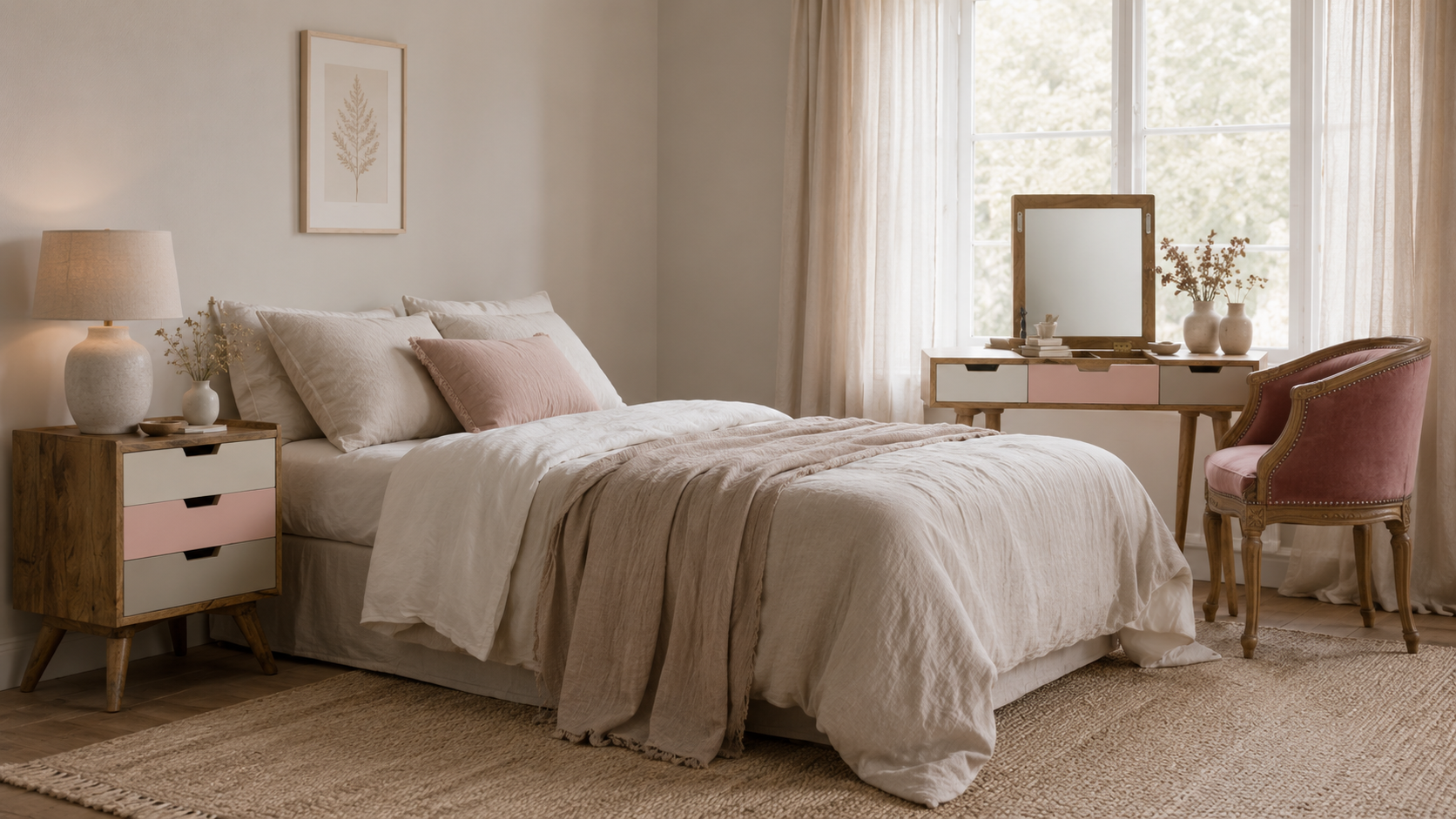
- Keep the surrounding palette light: warm timber looks brilliant with off-whites, clay tones, and soft greys. It’s especially good with textured linens.
- Mix with matte black or brushed metal: this keeps the look current and stops the room leaning overly traditional.
- Use negative space: if your bedroom is compact, choose pieces with tidy proportions and avoid overcrowding every wall.
- Add texture, not more “stuff”: a wool rug, a woven shade, or a quilted throw complements the grain without making the room busy.
Solid mango wood, in particular, suits homes that want warmth without the fuss. The grain adds interest even in simple shapes, so you can keep the overall design clean and still have a bedroom that feels layered and considered.
Questions to ask any solid wood bedroom furniture maker (and what good answers sound like)
If you’re trying to work out which real wood bedroom furniture makers are worth trusting, these questions quickly reveal how transparent a brand is:
1) Is it solid wood throughout, or a mix of materials?
Good answer: clear breakdown of what’s solid and what isn’t.
2) What wood species is it, and how will it look over time?
Good answer: an honest description of grain variation and how the finish may mellow.
3) How is the bed constructed to stay stable?
Good answer: details about rails, slats/support, and how components fit together to reduce movement.
4) What should I expect from natural wood?
Good answer: acknowledgement that timber has variation and that this is part of its character.
5) How do I care for it day to day?
Good answer: simple, realistic guidance — not a long list of warnings.
If a brand answers plainly, you’ll feel more confident that you’re buying a piece designed for real life, not just for a product photo.
Conclusion
If you’ve been wondering who makes solid wood bedroom furniture, the most helpful approach is to look beyond the headline and check for transparency: solid wood clearly stated, thoughtful construction, close-up grain detail, and practical information that shows the maker stands behind how the piece is built.
If you’re ready to invest in something warm, durable, and characterful, explore our handcrafted solid mango wood furniture collection — starting with beds and building out a bedroom that feels calm, timeless, and properly made.